Short answer
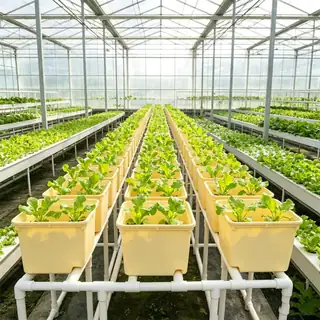
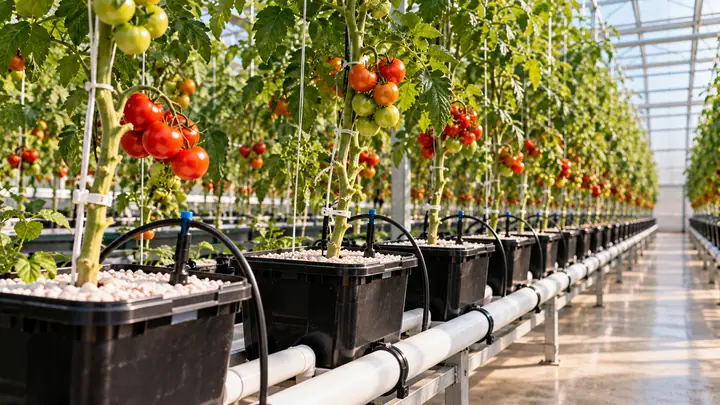
A Dutch bucket hydroponic system is a row of individual buckets, usually about 10 to 12 liters each, filled with perlite, expanded clay or a perlite and coir mix. Drip emitters feed each bucket, and a siphon elbow holds a 2.5 to 5 cm reserve while draining excess solution into a shared 40 mm return pipe. It suits tomatoes, cucumbers, peppers and other large fruiting crops.
What is a Dutch bucket hydroponic system?
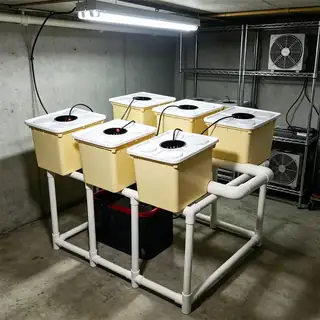
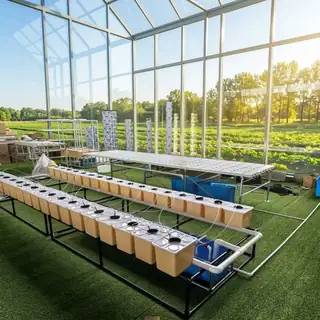
A Dutch bucket hydroponic system is a row of individual containers, usually about 10–12 L each, filled with an inert medium such as perlite or expanded clay and fed by drip lines, with each bucket draining through a siphon elbow into a shared return pipe. The Dutch bucket, also called a Bato bucket, is built for large, long-season fruiting crops such as tomatoes, cucumbers and peppers.
Because every plant has its own root zone and the system drains between irrigations, Dutch bucket hydroponics combines the oxygen-rich root environment of substrate growing with the water savings of recirculation. This guide explains how the system works, how it differs from other hydroponic buckets, which media and crops suit it, and how to set up and run one from a small greenhouse to a commercial bay.
How does a Dutch bucket system work?
A Dutch bucket system works by dripping nutrient solution onto the medium in each bucket several times a day and letting the excess drain away, so roots get water, nutrients and air in each cycle. A standard layout has these parts:
- Buckets: rectangular, stackable buckets, commonly about 30 × 25 × 23 cm (12 × 10 × 9 in), made of UV-stabilized polypropylene (PP), often black or dark inside to block light.
- Siphon elbow: a small elbow fitting in the bucket floor that holds back a reserve of about 2.5–5 cm (1–2 in) of solution, a safety buffer if a pump stops, and drains everything above that level.
- Drain line: a 40 mm (1.5 in) PVC pipe under the bucket row that collects runoff. Buckets sit on top with their elbows over holes drilled in the pipe.
- Feed line and emitters: a 16–20 mm (1/2–3/4 in) polyethylene supply line along the row with one or two drippers or dripper stakes per bucket, often at 2–4 L/h each.
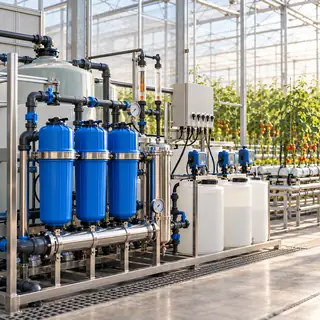
- Reservoir, pump and timer: a lightproof tank, a submersible or inline pump sized for the number of emitters, a filter and a timer or irrigation controller.
Recirculating or run-to-waste?
In a recirculating Dutch bucket system the drain pipe returns runoff to the reservoir, which saves water and fertilizer but means the solution needs regular EC and pH checks, and ideally filtration and disinfection to limit root disease spread. In a run-to-waste (drain-to-waste) setup the runoff leaves the system, typically about 10–30% of each irrigation, which keeps the root zone fresh and isolates diseased plants but uses more water and fertilizer. Small growers often recirculate; many commercial greenhouses use run-to-waste or collect and treat drainage for reuse, depending on local discharge rules.
How is a Dutch bucket different from other hydroponic buckets?
The term hydroponic bucket covers several different systems, and the Dutch bucket is the only common one that uses media with periodic drip irrigation. The table compares it with other bucket systems.
| System | Container | Root zone | Power | Best for |
|---|---|---|---|---|
| Dutch (Bato) bucket | Rectangular 10–12 L bucket with siphon elbow | Perlite, clay or coir that drains between drip cycles | Water pump and timer | Tomatoes, cucumbers, peppers, eggplant, vining crops |
| Deep water culture (DWC) bucket | Round 19 L (5 gal) bucket with lid and net pot | Roots hang in aerated solution | Air pump | Leafy greens, herbs, single large plants |
| Recirculating DWC (RDWC) | Several lidded buckets linked to a control bucket | Shared aerated solution | Air pump and water pump | Fast vegetative growth; skilled growers |
| Kratky bucket | Lidded bucket, no pump | Still solution with air gap | None | Lettuce and herbs |
| Grow bags or slabs | Coir bags or rockwool slabs on gutters | Substrate, drip fed | Water pump and controller | Large commercial tomato and cucumber houses |
A five-bucket hydroponic kit sold for home use is usually a set of round buckets with lids for DWC or RDWC, not Dutch buckets, so check how the kit drains before buying. Hydroponic buckets with lids suit leafy crops in water; Dutch buckets suit heavy fruiting plants in media. For a wider system comparison, see NFT vs DWC vs Dutch bucket and our Kratky method guide.
What growing media work best in Dutch buckets?
Dutch buckets need a coarse, inert, free-draining medium that holds some water but leaves plenty of air space after each irrigation. The most common choices are:
| Medium | Water holding | Drainage and air | Reuse | Notes |
|---|---|---|---|---|
| Coarse perlite | Low to moderate | Excellent | Reusable after cleaning | Light; can float or blow; rinse dust before use |
| Expanded clay pebbles (LECA) | Low | Excellent | Highly reusable | Heavy; needs more frequent irrigation |
| Perlite and coir mix (for example 70:30 to 50:50) | Moderate | Good | Partly | Popular balance of buffer and air; buffer coir first |
| Pumice or lava rock | Low to moderate | Excellent | Reusable | Heavy; check for fines and pH |
| Coir chips | Moderate to high | Good | Usually one or two crops | Use washed, buffered, low-sodium grades |
Avoid fine media such as sand or potting soil, which clog the siphon elbow and stay waterlogged. A layer of larger clay pebbles over the elbow helps keep the drain clear. More detail is in our hydroponic growing media guide.
How do you set up a Dutch bucket system?
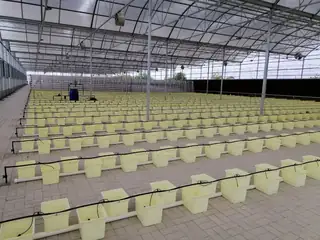
Setting up a Dutch bucket system means laying a sloped drain line, placing buckets on it, running a drip feed line and connecting a reservoir and pump. These steps suit a greenhouse row of 10–40 buckets:
- Plan the row. Space buckets about 40–60 cm (16–24 in) center to center, depending on crop and trellis. Leave walkways of at least 80–100 cm (32–40 in) between rows.
- Install the drain line. Lay 40 mm (1.5 in) PVC on blocks or a bench with a fall of about 1–2% toward the reservoir, and cap the high end. Drill holes at each bucket position for the siphon elbows.
- Prepare buckets. Fit the siphon elbows, rinse the medium, add a few centimeters of clay pebbles over the elbow and fill with the main medium to about 2–3 cm below the rim.
- Run the feed line. Lay a 16–20 mm PE line along the row and insert one or two pressure compensating drippers or dripper stakes per bucket, so the first and last bucket get the same flow.
- Connect reservoir, filter and pump. Use a lightproof tank, a screen or disc filter on the pump outlet and a pump sized for total emitter flow plus head. Our hydroponic pump and plumbing sizing guide walks through the calculation.
- Test before planting. Run water, check every dripper, confirm the drain flows freely and no bucket overflows, then pre-soak the medium with nutrient solution.
- Transplant. Set rooted seedlings in rockwool or plugs into the medium, set up the trellis, and start irrigation.
How big should the reservoir be?
For a recirculating Dutch bucket hydroponic system, a practical starting point is about 4–8 L (1–2 gal) of reservoir per bucket, plus the volume needed to fill the pipes. Mature tomato and cucumber plants can use roughly 1–3 L of water per plant per day in bright, warm weather, so larger tanks or automatic top-up keep EC and level steadier.
What can you grow in Dutch buckets, and how many plants per bucket?
Dutch buckets are best for crops that grow large, live for months and need strong support. Typical plant counts and spacing are:
- Indeterminate tomatoes: one or two plants per bucket, trained up strings in a V or single-row layout. See growing tomatoes indoors.
- Cucumbers: one or two plants per bucket on a high wire.
- Peppers and eggplant: one or two plants per bucket.
- Melons, squash and pole beans: one plant per bucket with vertical support.
- Cut flowers and roses: common in some commercial bucket systems.
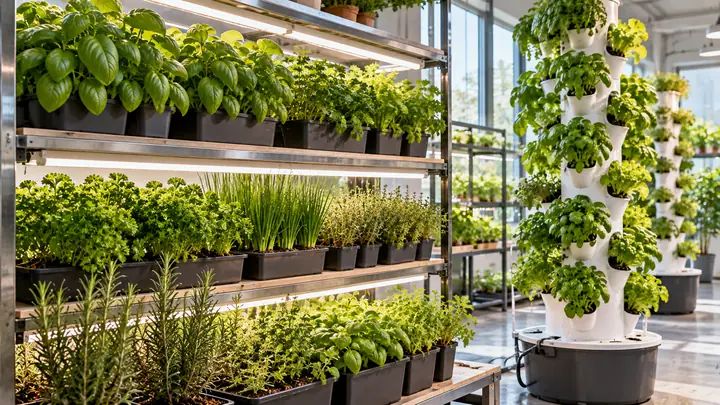
Leafy greens and herbs grow in Dutch buckets, but the bucket is oversized for them; NFT, deep water culture or tidal benches are more space-efficient. Strawberries usually perform better in troughs or A-frames, as explained in hydroponic strawberries and tomatoes.
How do you feed, irrigate and maintain Dutch buckets?
Dutch buckets run on short, frequent drip irrigations with a complete hydroponic nutrient solution, adjusted to plant size and light. Typical targets are:
- EC: about 2.0–3.5 mS/cm for tomatoes, lower for young plants; cucumbers and peppers usually run slightly lower than tomatoes.
- pH: 5.5–6.5, checked at the reservoir and in the drain.
- Irrigation: several events per day, often 2–5 minutes each, more frequent on sunny days and for coarse media like clay. Aim for some runoff from every bucket at each event.
- Solution temperature: roughly 18–24°C (64–75°F) to protect root health.
Weekly maintenance includes checking drain EC compared with feed EC (rising drain EC means salts are building up), cleaning filters, flushing drip lines, and confirming every siphon elbow is clear. Between crops, empty and wash buckets, sterilize reusable media and check pumps and timers. For larger houses, an automatic fertigation unit doses nutrients and acid to set points; see how to size a fertigation system.
DIY bucket hydroponic system or commercial Dutch bucket system?
A DIY bucket hydroponic system can be built from food-grade 19 L buckets with a side drain, and it is a fair way to trial the method with a handful of plants. For more than a few dozen plants, purpose-made Dutch buckets save time and avoid leaks. When comparing buckets and complete systems, check:
- Material: UV-stabilized, food-safe PP or HDPE with a dark interior.
- Shape and stacking: nesting buckets reduce shipping volume per container.
- Elbow and fittings: included siphon elbows, grommets, drain caps and drip stakes.
- System scope: drain pipe, feed line, emitters, reservoir, pump, filter, timer and trellis hardware.
- Spare parts: spare elbows and drippers for the life of the system.
Mars Vertical Farm supplies complete bucket systems for greenhouses, including the commercial-grade Dutch bucket greenhouse system and the complete Dutch bucket planting system with pump.
Getting a quote
A Dutch bucket system is one of the most forgiving ways to grow hydroponic tomatoes, cucumbers and peppers at any scale. If you are planning a greenhouse row or a full bay, send us your crop, greenhouse dimensions and plant count and we will propose a factory-direct Dutch bucket layout with buckets, drainage, drip and fertigation sized to your site.