


Short answer
The best herbs to grow indoors are basil, mint, parsley, chives, cilantro, oregano and thyme. Group herbs by care: Mediterranean herbs such as rosemary, thyme, oregano and sage together; moisture-loving basil, parsley, chives and cilantro together; and mint alone. Most herbs need about 6 to 8 hours of direct sun or 14 to 16 hours under LED grow lights indoors.
What are the best herbs to grow indoors?
The best herbs to grow indoors are basil, mint, parsley, chives, cilantro, oregano and thyme, because they stay compact, regrow after cutting and tolerate container life. Which herbs to grow depends mostly on light: soft, leafy herbs such as basil, parsley and chives grow well under modest artificial light, while woody Mediterranean herbs such as rosemary and thyme need brighter light and drier roots.
This guide helps you choose herbs, decide which herbs grow well together, and pick pots, water culture or hydroponics. For hydroponic system types, nutrient levels and commercial layouts, see our indoor herb garden hydroponics guide.
Indoor herb plants compared: light, water and warmth
Indoor herb plants fall into a few groups with similar needs, and matching those needs is the key to a healthy herb garden. The ranges below are typical; varieties and growing systems vary.
| Herb | Light need | Water preference | Ideal temperature | Easiest start | Group |
|---|---|---|---|---|---|
| Basil | High | Evenly moist | 21–27 °C (70–80 °F); dislikes below 10 °C | Seed | Leafy, warm |
| Parsley | Medium | Evenly moist | 15–24 °C (59–75 °F) | Seed (slow, 2–4 weeks to sprout) | Leafy |
| Chives | Medium | Evenly moist | 13–24 °C (55–75 °F) | Seed or division | Leafy |
| Cilantro | Medium | Evenly moist | 15–21 °C (59–70 °F); bolts in heat | Seed | Leafy, cool |
| Mint, lemon balm | Medium | Moist | 15–24 °C (59–75 °F) | Cuttings or divisions | Spreader (keep separate) |
| Oregano, marjoram | High | Dry between waterings | 18–27 °C (64–80 °F) | Cuttings or seed | Mediterranean |
| Thyme | High | Dry between waterings | 16–24 °C (60–75 °F) | Cuttings or young plants | Mediterranean |
| Rosemary, sage | High | Dry between waterings | 16–24 °C (60–75 °F) | Cuttings or young plants | Mediterranean, woody |
Easy herbs to grow indoors for beginners are basil, chives, mint and parsley. Common herbs to grow for a kitchen garden add cilantro, oregano and thyme. Rosemary is the most demanding indoors because it needs strong light, airflow and careful watering, and growing thyme indoors also calls for your brightest spot.
What herbs can be planted together?
The best herbs to plant together are those that share the same light, water and temperature needs. In practice, that means three groups: Mediterranean herbs together, moisture-loving leafy herbs together, and mint on its own.
- Mediterranean herbs that grow well together: rosemary, thyme, oregano, sage and marjoram. All like bright light, a gritty, free-draining mix and soil that dries between waterings. Lavender also fits this group.
- Leafy herbs that grow well together: basil, parsley, chives and cilantro all prefer evenly moist soil and moderate feeding. Basil likes it warmer than cilantro, so in a warm room cilantro may bolt sooner, but they share a container without trouble.
- Mint and lemon balm: mint spreads aggressively by underground runners and will crowd out other herbs in a shared pot, so give it its own container. Lemon balm is a milder spreader but is easiest kept separate too.
Which herbs to plant together is less about companion planting lore and more about compatible care. Combinations that tend to fail are basil with rosemary (one wants constant moisture, the other dry roots) and mint with anything. Fennel is traditionally grown apart from other herbs as well.
Herb garden designs and layouts for indoor spaces
Good herb garden designs and layouts put plants with similar needs in the same container or zone and place tall herbs where they will not shade short ones.
- Window box: a 60–90 cm (24–36 in) planter with one group, such as basil, parsley and chives, with tall basil at the back.
- Separate pots on a tray: the most flexible layout; each herb gets its own watering and you can rotate pots toward light.
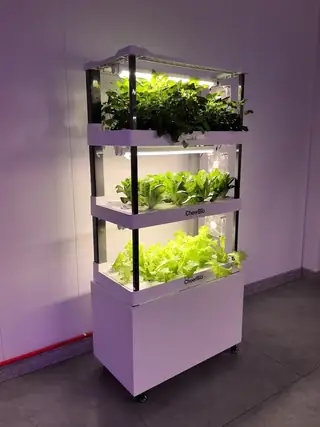
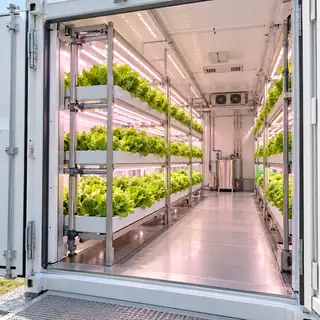
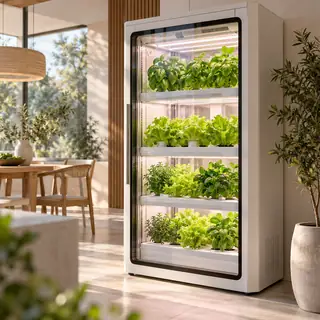
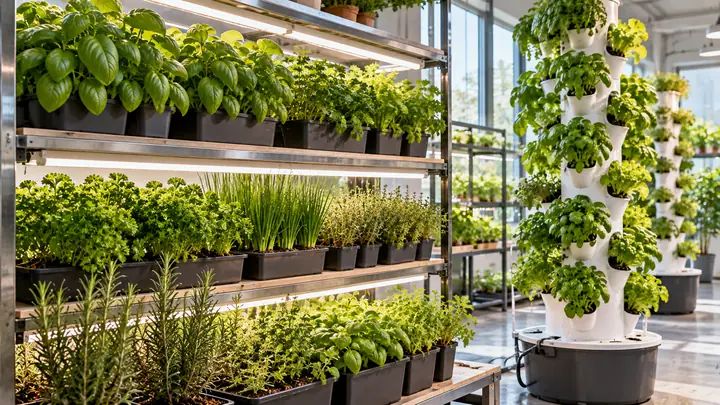
- Vertical racks and cabinets: put high-light herbs such as basil, oregano and thyme on the brightest tier, and parsley, chives and mint on lower or dimmer tiers.
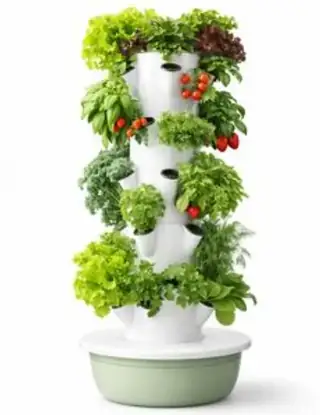
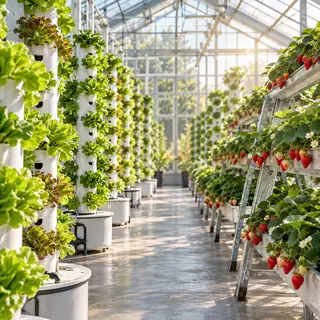
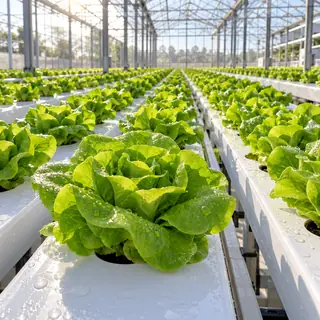
- Hydroponic channels or towers: herbs on one reservoir share the same nutrient solution, so group herbs with similar nutrient strength; basil, mint, oregano and chives are a common combination.
How much light do herbs need indoors?
Most herbs need far more light than a typical room provides, which is why growing herbs with artificial light is the most reliable indoor method. Do herb plants need a lot of sun? Outdoors, most culinary herbs want full sun, about 6–8 hours of direct light a day, while parsley, chives, mint and cilantro tolerate about 4–6 hours. When growing herbs outdoors, plant tender basil only after the last frost, while hardy perennials such as chives, thyme, oregano and mint can go in earlier in spring.
- Windowsills: a bright south-facing window (north-facing in the Southern Hemisphere) can grow herbs in summer, but winter light is usually too weak and plants become leggy.
- LED grow lights: run lights 14–16 hours a day. A photosynthetic photon flux density (PPFD) of roughly 200–400 µmol/m²/s at the canopy suits most herbs, giving a daily light integral (DLI) of about 12–20 mol/m²/day. Basil and Mediterranean herbs prefer the upper end.
- Distance: keep LED fixtures about 15–45 cm (6–18 in) above the plants, following the manufacturer's PPFD map.
Growing herbs indoors in winter works well under LEDs, with room temperatures around 18–24 °C (64–75 °F). Keep basil away from cold windows and drafts. Our guide to grow lights for indoor farming compares fixture types and coverage.
Growing herbs in containers: pots, mixes and watering
Growing herbs in containers works well when each container is large enough, drains freely and matches the herb's watering needs. Raising herbs in pots also makes it easy to bring tender perennials indoors for winter.
- Pot size: most herbs need at least 15–20 cm (6–8 in) diameter and depth; rosemary, sage and mature mint do better in 20–30 cm (8–12 in) pots.
- Drainage: always use pots with drainage holes. Terracotta helps Mediterranean herbs dry out; plastic or glazed pots keep leafy herbs moist longer.
- Mix: use a quality potting mix, adding about one-quarter perlite or grit for rosemary, thyme and oregano. Never use garden soil in containers.
- Watering: water leafy herbs when the top 2 cm (about 1 in) feels dry; let Mediterranean herbs dry further. Overwatering kills more indoor herbs than underwatering.
- Feeding: a diluted balanced liquid feed every 2–4 weeks during active growth is enough; heavy feeding reduces flavor.
- Harvesting: pinch basil just above a pair of leaves to make it bushy, remove flower buds, and never cut more than about one-third of a plant at once.
Planting herbs in small pots, such as 8–10 cm (3–4 in), is fine for starting seedlings or growing compact chives and thyme for a few months, but move herbs up a size once roots circle the pot. The best herbs to grow in containers long term are basil, chives, parsley, thyme, oregano and mint.
Can you grow herbs in water or hydroponics?
Yes, many herbs grow in water: cuttings of mint, basil, oregano and lemon balm root in a glass of water within about 1–3 weeks. Plain water does not contain nutrients, so for long-term growing herbs in water you need a hydroponic nutrient solution, which turns the jar into a simple hydroponic system.
- Kratky jars and containers: a static, no-pump method that suits basil, mint and parsley. See the Kratky method.
- Hydroponic basil: basil is the most widely grown hydroponic herb. A hydroponic basil plant typically does well at an electrical conductivity (EC) of about 1.0–1.6 mS/cm and pH around 5.5–6.5.
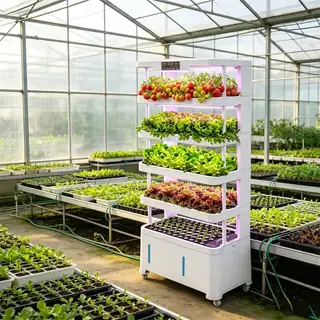
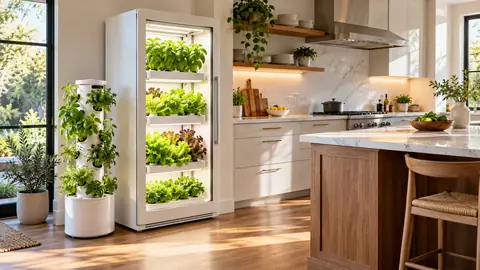
- Towers, NFT and cabinets: vertical towers fit many herb plants in a small footprint; see the hydroponic towers guide. A home herb grow kit or grow cabinet adds built-in lights and pumps; compare options in grow cabinets and grow boxes.
- Micro herbs: if you want herbs within two to four weeks, grow them as micro herbs; see how to grow microgreens.
Should you start herbs from seed or buy live herb plants?
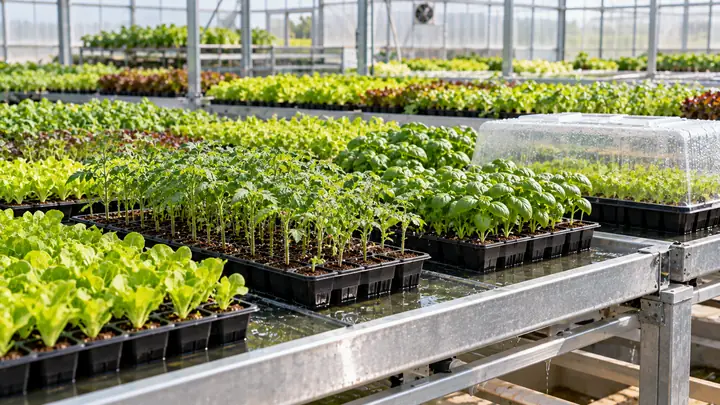
Start fast herbs from seed and buy slow, woody herbs as live plants or cuttings. Basil, cilantro, dill, parsley and chives are easy to grow from seed, while rosemary, thyme, oregano and sage are slow and variable from seed, so most growers buy them as young plants.
Planting herb seeds indoors follows a simple routine:
- Fill cells or plugs with moist seed-starting mix, coir or sponge plugs. See seed starting trays and germination.
- Sow several seeds per cell for basil, chives and parsley, which are often grown as small clumps. Cover lightly; many small herb seeds need light or only a thin covering.
- Keep warm and moist at about 20–25 °C (68–77 °F) under a humidity dome. Basil sprouts in about 5–10 days; parsley can take 2–4 weeks.
- Move under lights as soon as seedlings appear, 14–16 hours a day.
- Transplant into final pots or a hydroponic system after 3–5 weeks, once roots hold the plug together.
- Start harvesting lightly when plants have several sets of true leaves, usually 4–8 weeks after sowing for basil and cilantro.
When you buy herb plants online or from a nursery, check leaves and undersides for aphids, whitefly and spider mites, avoid root-bound plants, and keep new arrivals apart for a week before placing them near other plants. Mail-order plants ship best in spring and early autumn, avoiding extreme heat or cold in transit. The same checks apply to medicinal herbs such as chamomile.
Next steps
The best herbs to grow are the ones that match your light and space, and the herbs that grow well indoors share a simple formula: leafy herbs together, Mediterranean herbs together, mint on its own, and LED light for reliable indoor growth year-round. When you move from a windowsill to a shelf, cabinet or small farm, purpose-built systems make herbs far easier to manage. Mars Vertical Farm manufactures household hydroponic cabinets, compact hydroponic towers and larger vertical systems factory-direct, with custom sizes for retailers and commercial growers. Tell us which herbs and quantities you plan to grow, and we will recommend a setup.