Plant factories
In short
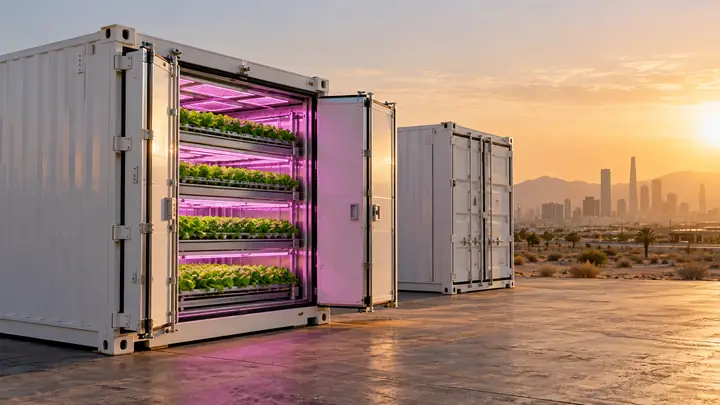
This is a two-container hydroponic farm for leafy greens and herbs, designed to run indoors through Gulf summers with outside temperatures near 50 °C. It fits a vegetable distributor, hotel supplier or retail chain that wants a steady weekly supply of fresh greens from its own yard instead of relying only on air-freighted imports.
Typical buyer: Vegetable distributor
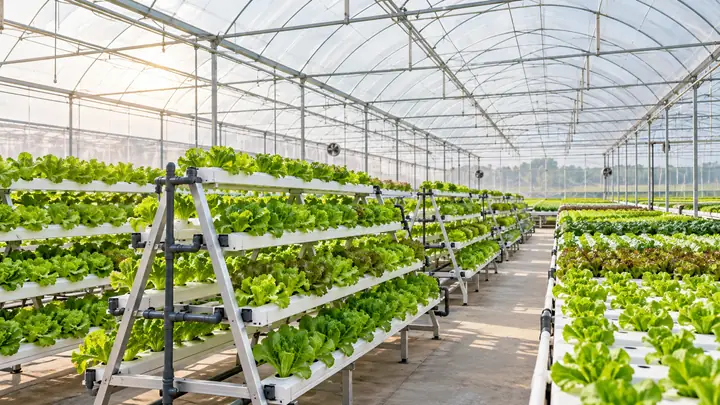
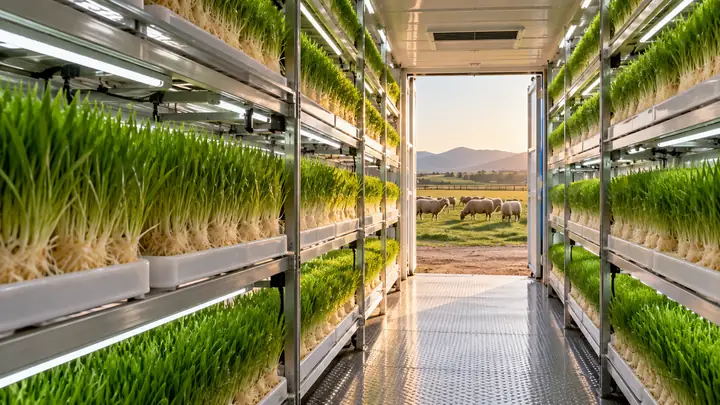
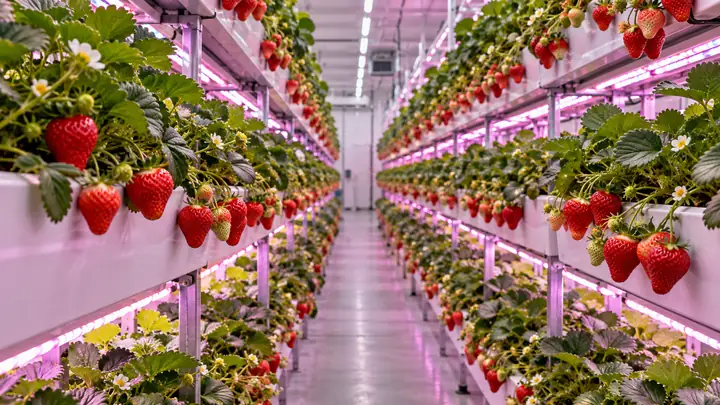
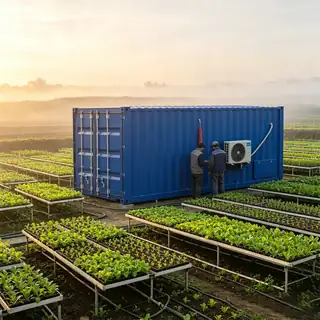
Cover image is illustrative.
System at a glance
- Footprint
- Approx. 120 m² site pad for two 40 ft containers plus service aisle
- Growing format
- Multi-tier hydroponic racks under LED lighting
- Power supply
- 380–415 V, 3-phase, 50/60 Hz; load confirmed per design
- Design ambient
- Up to 50 °C outdoor
- Crops
- Lettuce, rocket, basil, mint, kale, pak choi
- Cycle length
- Typically 30–45 days seed to harvest, depending on crop
- Harvest rhythm
- Weekly, through staggered sowing
- Water treatment
- Reverse osmosis before nutrient dosing
Challenge
What the buyer needs to solve
Distributors in the Gulf move large volumes of lettuce, rocket and herbs, but most of it arrives by air or sea from Europe, Iran, Jordan or East Asia. Leafy greens lose shelf life with every day in transit, and open-field or simple greenhouse growing struggles once summer temperatures pass 45 °C.
Site conditions this design assumes
- Heat and dust: outdoor highs of 45–50 °C, high solar load on the container shell and frequent dust events.
- Water: municipal or well water with high salinity, which must be treated before it reaches a recirculating nutrient system.
- Space: a paved yard or warehouse apron of roughly 120 m² with three-phase power nearby.
The buyer needs a system that keeps producing through July and August, uses little water, and gives consistent head size and quality for retail packing.
Solution
How the system is designed
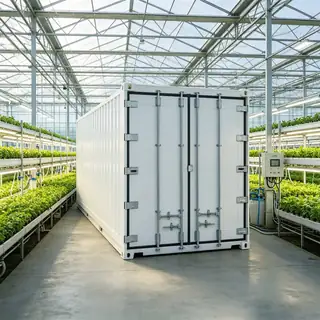
The core of the design is two turnkey containerized plant factories, each built in a 40 ft high-cube shell with extra insulation and a reflective roof coating. Inside, multi-tier hydroponic racks run under LED grow lights, and a closed-loop nutrient system recirculates water so the only losses are plant uptake and a small amount of condensate.
How the system works
- Climate: each container uses the IoT sensor and control package to log temperature, humidity, CO₂, EC and pH and adjust air conditioning, dehumidification and lighting automatically. Staff can check alarms and trends from a phone.
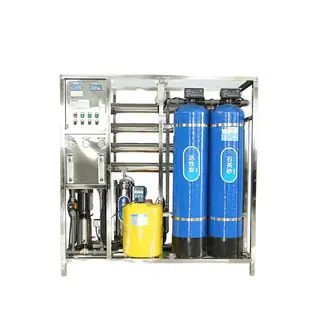
- Water: an industrial RO unit treats incoming water to a low-salinity base before nutrients are dosed. One unit serves both containers with capacity to spare.
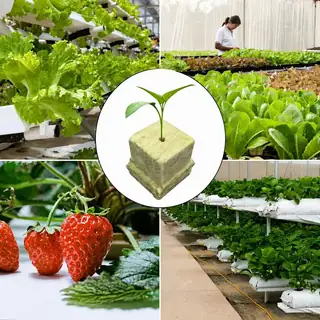
- Propagation: seeds start in sponge plug cubes in a nursery zone, then move to the main racks at the 2–3 leaf stage. Staggered sowing keeps a harvest available every week.
- Cooling margin: the air conditioning is sized for the local design ambient, not a temperate default, and the lighting schedule can shift into night hours to reduce peak heat load and use off-peak tariffs.
Because the growing space is sealed, insects and dust stay outside and the crop grows without pesticides. Two containers also give the buyer redundancy: if one unit needs maintenance, the other keeps supplying.
We size the final rack count, lighting density and cooling capacity after we review your water analysis, power supply and target crop list. Send us your site details to start that review.
Example configuration
| Item | Specification | Qty |
|---|---|---|
| 40 ft containerized plant factory | Insulated high-cube shell, multi-tier hydroponic racks, LED grow lights, closed-loop nutrient tank | 2 units |
| IoT sensor and control package | Temperature, humidity, CO₂, EC, pH sensors; PLC control; remote app and alarms | 2 sets (1 per container) |
| Industrial RO water treatment unit | Approx. 0.5 t/h, 380 V, PLC control, pre-filtration | 1 unit |
| Treated-water storage tank | 1–2 m³, food-grade, shaded | 1 |
| Sponge plug cubes | Square nursery plugs for leafy-green seeding | Starter stock for 3–6 months |
| Air conditioning and dehumidification | Sized for 50 °C design ambient, integrated with container controls | Per container, as calculated |
| Spare parts and consumables kit | Pumps, sensors, fittings, nutrient starter, pH buffers | 1 kit |
Design targets
- Designed to keep producing through Gulf summers at outdoor temperatures up to 50 °C
- Built for weekly harvests from staggered sowing
- Closed-loop water use, typically far below open-field irrigation for the same crop
- Pesticide-free growing in a sealed environment
Timeline
How the project runs
A project of this size usually runs 3–5 months from first contact to first harvest. Durations below are typical ranges and depend on site readiness and shipping route.
- Inquiry & consultation: We review your crop list, volumes, site plan, power supply and water analysis.
- Proposal & quotation: We send a layout, equipment list and quotation with options for rack density and cooling.
- R&D confirmation: Our engineers confirm cooling loads, electrical drawings and the RO sizing against your water report.
- Contract: We agree on scope, payment terms, Incoterms and the acceptance checklist.
- Production & QC: Our team builds the containers on one of our three production lines and runs each unit through functional QC.
- Third-party lab testing: Key components and electrical safety are checked by an independent lab where your market requires it.
- Shipping & logistics: Containers ship to a Gulf port such as Jebel Ali, Dammam or Hamad; we coordinate documents with your forwarder.
- After-sales support: We support installation remotely or on site, train your team, and stay available for parts and troubleshooting.
Equipment
Products in this solution
Plant factories
IoT Sensor-Controlled Container Plant Factory
Irrigation & fertigation
PLC Groundwater Desalination RO Machine
Hydroponic systems
Square Sponge Nursery Cubes for Hydroponics
FAQ
Frequently asked questions
Can't find your answer? Our engineers reply within one business day.
Ask a questionHow much can two containers produce?
Output depends on crop, plant spacing and cycle length. For head lettuce and mixed leafy greens, a 40 ft container is typically designed for several hundred plants harvested per week. We give a crop-specific estimate in the proposal, based on your chosen varieties and the final rack layout, rather than a single headline figure.
Will the air conditioning cope with peak summer?
We size the cooling for your local design ambient, not a temperate default. The container shell gets extra insulation and a reflective roof finish, and lighting can run at night to cut the peak heat load. We still recommend shade over the containers where possible, because it lowers both cooling demand and running cost.
Do we need the RO unit if we have municipal water?
In most Gulf locations, yes. Municipal and well water often carries enough sodium and other salts to build up in a recirculating system and harm sensitive crops. Send us a recent water analysis and we will confirm whether full RO treatment is needed or whether a smaller pre-treatment setup is enough for your site.
Get a quotation
Plan a project like this
Share your site, crop and target output, and we'll adapt this design to it.
- Itemized quotation in USD with lead time
- Layout drawings for custom systems
- Factory inspection or video call on request
- Export packing and shipping documents
Prefer email? inquiry@marsverticalfarm.com