Irrigation & fertigation
In short
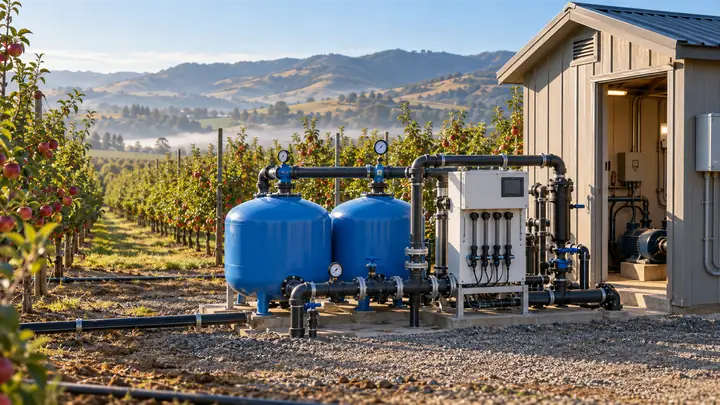
This is a head-station upgrade for drip-irrigated orchards: sand media and disc filters to clean the water, a smart fertigation machine to dose nutrients by EC and pH, and IoT control to run irrigation zones on schedule. It fits an orchard operator with 20–80 hectares of drip lines who wants even feeding across blocks and fewer clogged emitters.
Typical buyer: Orchard operator
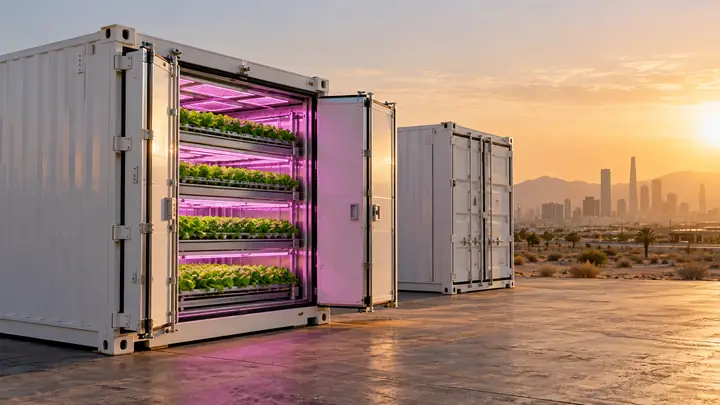
Cover image is illustrative.
System at a glance
- Orchard area
- Example 40 ha, drip irrigated
- Irrigation zones
- Example 12 zones of roughly 3–4 ha
- Crops
- Apple, cherry, citrus, peach, apricot, olive
- Water source
- Canal, reservoir or well
- Filtration
- Sand media primary, disc secondary, automatic backwash
- Fertigation control
- EC/pH-based dosing from 3–4 stock tanks
- Power supply
- 380 V 3-phase at pump house; solar option for field nodes
- Head-station footprint
- Approx. 25–40 m² under a roof or shelter
Challenge
What the buyer needs to solve
Many orchards in Türkiye, Spain, Greece and North Africa installed drip irrigation years ago, but still mix fertilizer by hand in open tanks. Water often comes from canals or reservoirs carrying algae, silt and organic matter. The result is uneven feeding, clogged emitters and blocks at the end of the line that get less water than blocks near the pump.
Typical problems we design for
- Clogging: sand, silt and algae block emitters, so trees in some rows receive much less water than planned.
- Manual dosing: hand-mixed fertilizer gives inconsistent concentrations and depends on one experienced worker.
- No records: the farm cannot see how much water and fertilizer each block received during the season.
- Labor: opening and closing valves across a large orchard takes hours each irrigation day.
Solution
How the system is designed
The upgrade focuses on the head station, where water enters the drip network, and keeps the existing laterals where they are in good condition.
Head-station components
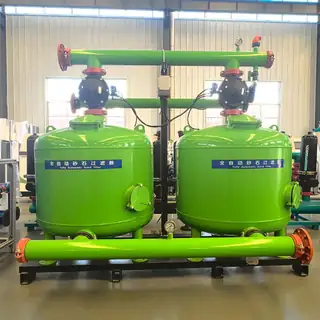
- Primary filtration: a sand and quartz media filtration system with backwash removes organic matter and fine silt from canal or pond water. It backwashes automatically when pressure loss rises.
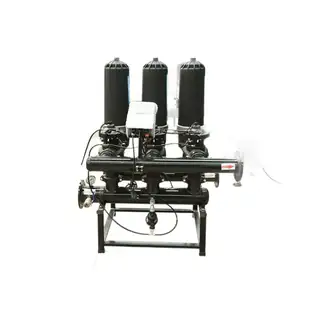
- Secondary filtration: a fully automatic disc filter downstream of the fertigation injection point catches particles that pass the sand media and protects the emitters.
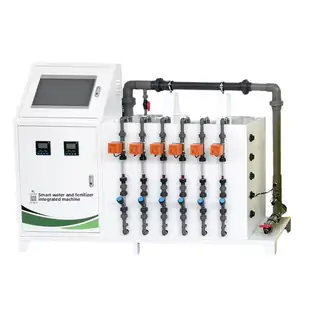
- Fertigation: a smart fertigation machine injects nutrients from separate stock tanks, adjusting dose by EC and pH, so each block gets the planned concentration.
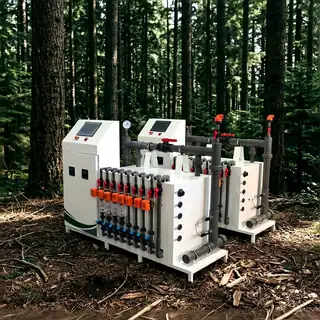
- Zone control: an IoT irrigation control system opens and closes field valves by schedule or soil moisture reading and records water and fertilizer per zone.
We split the orchard into irrigation zones sized to the pump's flow, so each zone runs at the right pressure. Managers can review run times and alarms from a phone and adjust programs by crop stage, from bloom to post-harvest.
Before quoting, we need your pump curve, water source, block map and current emitter spacing. Send us those details and we will size the head station.
Example configuration
| Item | Specification | Qty |
|---|---|---|
| Sand and quartz media filtration system | Twin tanks, automatic backwash, sized to pump flow | 1 set |
| Automatic disc filter | Self-cleaning, 120-mesh class, after injection point | 1 battery |
| Smart fertigation machine | 3–4 injection channels, EC/pH control, PLC | 1 unit |
| Fertilizer stock tanks | 1–2 m³ each, with agitators | 3–4 |
| IoT irrigation controller and field valves | Wireless valve nodes, soil moisture probes, app access | Example 12 zones |
| Pressure gauges and flow meter | Before and after each filter stage | 1 set |
Design targets
- Designed to deliver the planned nutrient concentration to every zone
- Two-stage filtration built to reduce emitter clogging
- Per-zone records of water and fertilizer use
- Remote valve control to cut hours spent opening valves by hand
Timeline
How the project runs
Head-station upgrades typically take 2.5–4 months, and we recommend installing before the irrigation season starts.
- Inquiry & consultation: We review your pump, water source, orchard map and fertilizer program.
- Proposal & quotation: We propose filter sizing, fertigation channels, zone layout and a quotation.
- R&D confirmation: Engineers confirm hydraulic calculations and pressure losses for each zone.
- Contract: We agree on scope, delivery and installation support.
- Production & QC: Filters, fertigation units and controllers are built and pressure-tested.
- Third-party lab testing: Controllers and electrical parts are checked by a third-party lab where required.
- Shipping & logistics: Sea freight to Mersin, Izmir or another Mediterranean port, then delivery to the farm.
- After-sales support: We guide installation and commissioning, train staff on backwash and dosing, and support programming through the season.
Equipment
Products in this solution
Irrigation & fertigation
Backwash Sand Filtration System for Fertigation
Irrigation & fertigation
Automatic Gear Disc Filter for Greenhouse Irrigation
Irrigation & fertigation
IoT Farmland Irrigation and Fertilization System
FAQ
Frequently asked questions
Can't find your answer? Our engineers reply within one business day.
Ask a questionDo we need both sand and disc filters?
For canal, pond or reservoir water, yes in most cases. Sand media handles algae and organic matter well, while disc filters catch fine particles and give a final safety stage before the emitters. For clean well water with mostly sand, a disc filter alone may be enough. Your water analysis decides the final setup.
Can we keep our existing drip lines?
Usually, yes. If laterals and emitters are in reasonable condition, the upgrade focuses on the head station and valves. We recommend flushing lines and checking emitter flow in a few rows first. Badly clogged or damaged lines should be replaced, because new filtration cannot fix emitters that are already blocked.
What fertilizers can the machine dose?
The machine doses water-soluble fertilizers and acids from separate stock tanks, so you can keep incompatible products apart, such as calcium nitrate and sulfates. Your agronomist sets the nutrient program by crop stage. We configure the channels and EC and pH targets to match that program during commissioning.
Get a quotation
Plan a project like this
Share your site, crop and target output, and we'll adapt this design to it.
- Itemized quotation in USD with lead time
- Layout drawings for custom systems
- Factory inspection or video call on request
- Export packing and shipping documents
Prefer email? inquiry@marsverticalfarm.com