Solar pest control
In short
This is an off-grid pest monitoring network: solar IoT reporting stations that photograph and count trapped insects, plus solar light-trap lamps that reduce flying pest numbers. It fits a cooperative, estate or extension service managing several hundred hectares of orchards and rice paddies that wants to time spraying on field data instead of a fixed calendar.
Typical buyer: Agricultural cooperative
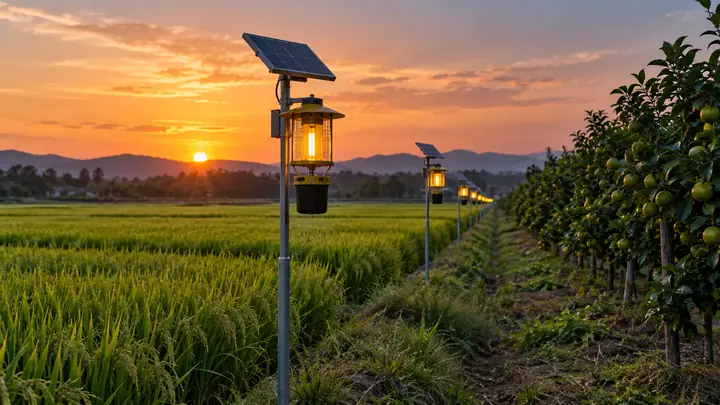
Cover image is illustrative.
System at a glance
- Coverage area
- Example 400 ha mixed orchard and rice paddy
- Monitoring density
- Approx. 1 station per 30–60 ha
- Lamp spacing
- Typically 1 lamp per 1.5–3 ha, set by terrain and crop
- Power
- Solar panel with battery; no grid connection
- Lamp power
- 21 W LED black-light (standard lamps)
- Connectivity
- 4G mobile network for stations and IoT lamps
- Crops
- Rice, longan, mango, dragon fruit, citrus
- Operation
- Automatic dusk start, timed shut-off
Challenge
What the buyer needs to solve
Rice and fruit growers in the Mekong Delta, the Red River Delta and similar regions face planthoppers, stem borers, leaf folders and fruit moths. Many farms spray on a fixed calendar because they cannot see pest pressure building in time. This raises chemical costs and residue risk, and still misses outbreaks.
What the cooperative needs
- Early warning: counts of key flying pests by area and week, so members know when pressure rises.
- No grid power: fields have no cables, so every device must run on solar power.
- Remote access: technical staff should check data from an office or phone, not walk every field.
- Durability: equipment must survive monsoon rain, heat and humidity.
Solution
How the system is designed
The network has two layers: a small number of monitoring stations that collect data, and a larger number of lamps that reduce pest numbers.
Monitoring layer
Solar IoT insect monitoring and reporting stations attract flying insects at night, kill and dry them, spread them on a tray and photograph them automatically. Images and counts upload over the mobile network to a web platform, where staff review trends by station and species group. We place one station per block of roughly 30–60 ha, at representative points for each crop.
Control layer
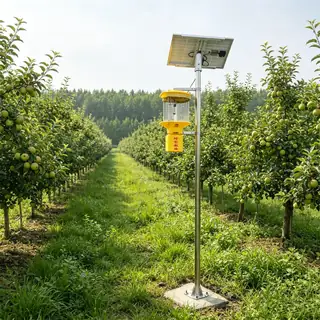
- IoT lamps: solar insecticidal lamps with IoT report status, battery level and operating hours, so staff see which units need service.
- Standard lamps: solar 21 W LED black-light lamps fill in coverage at lower cost on the block edges, typically one per 1.5–3 ha.
- Timed operation: lamps run during peak pest flight hours after dusk and switch off later at night, which lowers the catch of beneficial insects.
The network supports integrated pest management. It does not replace field scouting or crop protection, but it helps agronomists decide when and where action is needed. Contact us with a map of your area and main pests.
Example configuration
| Item | Specification | Qty |
|---|---|---|
| Solar IoT insect monitoring and reporting station | Auto kill, dry and photograph; 4G upload; solar panel and battery | 8 stations |
| Solar insecticidal lamp with IoT | Status and battery reporting, timed operation | 60 units |
| Solar 21 W LED black-light lamp | Light sensor on/off, high-voltage grid, waterproof | 120 units |
| Mounting poles and foundations | Galvanized poles, concrete or ground-screw bases | 1 per device |
| Data platform access | Web and mobile dashboard for counts, images and device status | 1 account set |
| Spare parts kit | Lamp tubes, batteries, controllers, trays | 1 kit |
Design targets
- Designed to give weekly pest counts by area without grid power
- Built to help time crop protection on field data instead of a fixed calendar
- Remote status checks for every IoT device
- Timed lamp operation to limit catch of beneficial insects
Timeline
How the project runs
A network of this size typically takes 2–4 months from first contact to full field operation.
- Inquiry & consultation: We discuss your area, crops, main pests and mobile coverage.
- Proposal & quotation: We propose station and lamp positions on your map with a quotation.
- R&D confirmation: Our team confirms battery sizing for your sunshine hours and the data platform setup.
- Contract: We sign the contract with delivery terms and acceptance tests.
- Production & QC: Stations and lamps are assembled, burned in and tested before packing.
- Third-party lab testing: Electrical safety checks are completed by a third-party lab where required.
- Shipping & logistics: Sea freight to Ho Chi Minh City or Hai Phong, then delivery to the cooperative.
- After-sales support: We guide installation, set up platform accounts and train staff to read the data, then support device service.
Equipment
Products in this solution
Solar pest control
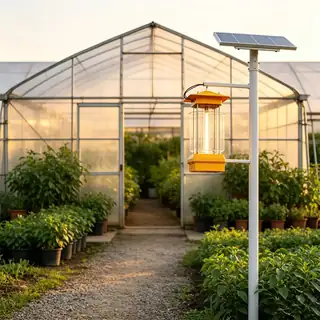
IoT Solar Insecticidal Lamp for Farmland
Solar pest control
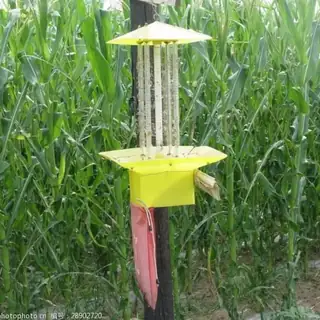
21W Solar LED Orchard Pest Control Lamp
FAQ
Frequently asked questions
Can't find your answer? Our engineers reply within one business day.
Ask a questionDo light traps harm beneficial insects?
Light traps catch a mix of insects, including some beneficial species. To reduce this, the design runs lamps during the main pest flight period after dusk and switches them off later at night. We also recommend avoiding placement right next to pollinator habitats and reviewing catch images to adjust timing.
What happens during long cloudy periods?
We size panels and batteries for your local sunshine data, with reserve capacity for several cloudy days. If the battery runs low, the controller shortens lamp hours first to protect the monitoring stations. IoT units report battery level, so staff can see which devices are affected.
Can the system identify pest species?
The stations photograph each night's catch and the platform counts insects and groups them. Staff should still review images to confirm key species, especially early in the season. Treat the data as a trend tool that shows when and where pressure is rising, alongside regular field scouting.
Get a quotation
Plan a project like this
Share your site, crop and target output, and we'll adapt this design to it.
- Itemized quotation in USD with lead time
- Layout drawings for custom systems
- Factory inspection or video call on request
- Export packing and shipping documents
Prefer email? inquiry@marsverticalfarm.com