



Short answer
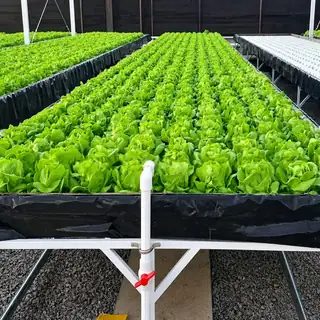
Butterhead lettuce is a soft, loose-heading lettuce, including Bibb, Boston and Buttercrunch, and it is the easiest head lettuce for hydroponics, typically ready about 35 to 50 days from seed at 18 to 22 cm spacing. Romaine lettuce is a tall, crisp Cos type that usually needs 50 to 70 days, wider spacing and more tipburn control, but yields heavier heads and romaine hearts.
What is butterhead lettuce?
Butterhead lettuce is a loose-heading lettuce type (Lactuca sativa var. capitata) with soft, tender, cup-shaped leaves and a pale, buttery inner heart. That soft lettuce texture is why it is also called butter leaf lettuce. Butterhead lettuce, sold as butter lettuce, Bibb or Boston lettuce, is the most widely grown head lettuce in hydroponic and vertical farms because it heads quickly, ships in a living-root clamshell and tolerates dense spacing.
This guide compares butterhead and romaine lettuce from a grower's point of view: which varieties to choose, how long each takes, how much space each needs and which problems to expect indoors. For system design, lighting and yield per square meter, see our main hydroponic lettuce guide.
Bibb vs Boston vs Buttercrunch: are they the same?
Bibb, Boston and Buttercrunch are all butterhead lettuce, but they are not identical. Bibb lettuce is a small, compact, dark-green butterhead originally selected in Kentucky in the 1800s. Boston types form a slightly larger, looser head with lighter leaves. Buttercrunch lettuce is a Bibb-type variety bred at Cornell University and released in 1963, when it won an All-America Selections award; it keeps the soft butter leaf but adds a thicker, crunchier midrib and better heat tolerance. So calling Buttercrunch either a Bibb or a butterhead is correct.
What is romaine lettuce, and is it a leafy green?
Romaine lettuce, also called Cos lettuce (Lactuca sativa var. longifolia), is a tall, upright lettuce with long, stiff leaves and a thick, crunchy midrib. Yes, romaine is a leafy green, and it is a true lettuce: romaine is one of the main types of lettuce, alongside butterhead, crisphead (iceberg), loose-leaf and Batavia.
A whole head of romaine is cut at the base. Romaine hearts come from the same plant with the darker outer leaves stripped away, leaving the pale, crisp inner leaves (the lettuce hearts) packed three to a bag. Growers who supply romaine hearts usually grow a larger, full-size head and accept more trimming loss, while growers who sell whole heads with roots often choose mini romaine types that fit standard clamshells.
Butterhead vs romaine lettuce in hydroponics: side-by-side
Butterhead lettuce is faster and more forgiving in hydroponics, while romaine lettuce takes longer, needs more space and is more prone to tipburn, but sells at a larger head weight. The figures below are typical ranges for recirculating systems under good light; they vary with variety, light level, temperature and harvest weight.
| Factor | Butterhead (Bibb, Boston, Buttercrunch) | Romaine (full-size) | Mini romaine (Little Gem type) |
|---|---|---|---|
| Leaf texture | Soft, smooth, cupped | Crisp, upright, thick midrib | Crisp, compact, dense heart |
| Seed to harvest indoors | About 35–50 days | About 50–70 days | About 40–55 days |
| Typical NFT spacing | 18–22 cm (7–9 in) | 20–25 cm (8–10 in) | 15–20 cm (6–8 in) |
| Common harvest weight | About 150–250 g | About 300–600 g | About 120–250 g |
| Plant height at harvest | 10–20 cm | 25–35 cm or more | 15–20 cm |
| Tipburn risk | Moderate | Higher (enclosed heart) | Moderate to high |
| Best fit | NFT, DWC rafts, vertical racks, towers | DWC rafts, wide NFT channels, greenhouses | NFT, vertical racks with 30 cm+ tier spacing |
Best butterhead lettuce varieties for hydroponics
The best butterhead lettuce varieties for hydroponics are those with fast, uniform heading, slow bolting and good tipburn tolerance. Most commercial growers trial three to five varieties in their own system before standardizing, because performance changes with light intensity and nutrient temperature. Common types of butterhead lettuce include:
- Buttercrunch: the classic home and market variety. Dark-green, compact rosette, crunchy heart, good heat tolerance and very easy to source as organic or conventional seed. It is a good benchmark for new growers, and its heads are easy to judge for uniformity.
- Bibb (Limestone Bibb): a small plant with loose, very tender heads. Excellent eating quality but lower head weight, so it suits premium or mixed-pack programs rather than volume.
- Tom Thumb: a miniature butterhead the size of a fist, useful for single-serve heads and towers with tight pocket spacing.
- Greenhouse butterhead types: modern varieties bred for hydroponics, such as Rex, are selected for uniform heads, upright growth that keeps leaves off the channel and resistance to downy mildew races and tipburn. Check the seed catalog for disease resistance codes.
- Red butterhead types: varieties such as Skyphos add a red or bronze butter leaf for mixed living lettuce packs. Red color develops best under higher light and cooler nights.
Green butterhead dominates retail sales, but a small share of red heads lifts the value of a mixed display. When buying butterhead seed in bulk, ask for pelleted seed: it is far easier to place one seed per plug by hand or with a seeder.
How far apart should Buttercrunch lettuce be spaced?
Buttercrunch lettuce spacing in hydroponic channels is typically 18–22 cm (7–9 in) between plant sites for a full head, or 15 cm (6 in) for a baby head harvested early. In soil beds and containers, garden guides recommend about 20–30 cm (8–12 in) between plants. A mature buttercrunch lettuce plant forms a rosette roughly 15–25 cm (6–10 in) across, so closer spacing gives smaller, softer heads and more risk of rot where leaves touch.
Best romaine lettuce varieties for hydroponics
Romaine lettuce varieties for hydroponics should combine upright growth, a closed but not over-tight heart and tolerance to tipburn and bolting. Because a full head of romaine lettuce stays in the system longer, a weak variety costs more channel-days than a weak butterhead. Common types of romaine lettuce include:
- Parris Island Cos: a long-established, widely available full-size romaine with good uniformity. A useful baseline for trials and for growers selling romaine hearts.
- Jericho: a romaine selected for heat tolerance and slow bolting, useful in greenhouses with warm summers.
- Little Gem and similar mini romaine: small, dense heads that fit clamshells and vertical tiers; often the best romaine choice for plant factories.
- Red romaine types: such as Outredgeous, which add color to mixes and grow well under LED lighting.
- Modern hydroponic romaine: seed companies offer romaine lettuce seeds for hydroponics with resistance to downy mildew, lettuce aphid and tipburn; ask suppliers for trial data under indoor light.
Romaine lettuce leaves on full-size types can exceed 30 cm, so check the clear height between vertical rack tiers and lights before choosing them. On racks with 30–40 cm (12–16 in) tier spacing, mini romaine is usually the safer choice.
How do you grow butterhead and romaine lettuce from seed?
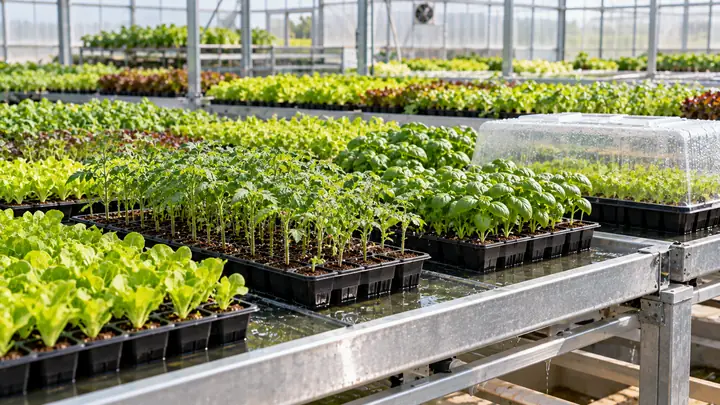
Butterhead and romaine follow the same propagation steps; only spacing and crop time differ. Lettuce seed is small, often light-sensitive and goes dormant when it is too warm, so control temperature during germination.
- Prepare plugs. Pre-soak sponge cubes, rockwool or coir plugs in water adjusted to about pH 5.8. Our guide to seed starting trays and germination covers tray formats.
- Sow one pelleted seed per plug. Press it onto the surface or cover very lightly; many lettuce varieties germinate better with some light.
- Germinate cool. Keep the medium around 15–20 °C (59–68 °F). Above roughly 25–28 °C (77–82 °F) many varieties stop germinating. Expect lettuce sprouts in 2–5 days.
- Grow seedlings under light. Give 14–16 hours of light and a weak nutrient solution (EC about 0.5–0.8 mS/cm) once the first true leaf appears. Seedlings of both types are ready to transplant at 2–4 true leaves, usually 10–18 days after sowing.
- Transplant into the system. Move plugs into NFT channels, DWC rafts or tower pockets at final spacing, or use a nursery spacing stage first in high-volume farms.
- Run the grow-out solution. Most lettuce does well at about EC 0.8–1.6 mS/cm and pH 5.5–6.5, with solution temperature around 18–22 °C (64–72 °F). The hydroponic nutrients, EC and pH guide gives targets by crop.
- Harvest on weight, not date. Cut or pull whole heads when they reach target weight, before the center starts to elongate. For living lettuce, harvest with the plug and roots intact.
Small growers and beginners can also start lettuce in static systems; see the Kratky method for a no-pump option that suits butterhead well.
Which problems hit butterhead and romaine indoors?
Tipburn and bolting are the two variety-linked problems that cause the most losses with indoor lettuce, and romaine is generally more sensitive to both. Choosing tolerant varieties and controlling the environment together prevents most of them.
- Tipburn is browning of young inner leaf edges caused by local calcium shortage, not by lack of calcium in the solution. It appears when growth is very fast and the enclosed heart transpires little. Cornell University's controlled-environment lettuce research is widely cited for keeping daily light integral (DLI) at or below about 17 mol/m²/day for lettuce, and adding horizontal airflow over the canopy helps calcium reach inner leaves. See PAR, PPFD and light spectrum for light planning.
- Bolting (stem elongation and bitterness) is triggered mainly by heat and long days. Keep air temperature around 18–24 °C (64–75 °F) by day and choose slow-bolting varieties for summer greenhouse production.
- Soft, loose heads in butterhead usually mean low light or excessive spacing density, not a variety fault.
- Root browning in warm reservoirs signals low oxygen or Pythium; chill the solution and keep it aerated.
Which lettuce type fits which hydroponic system?
Butterhead lettuce fits almost every hydroponic system, while full-size romaine works best where there is vertical room and generous spacing. Use these decision criteria when you plan a crop and request equipment:
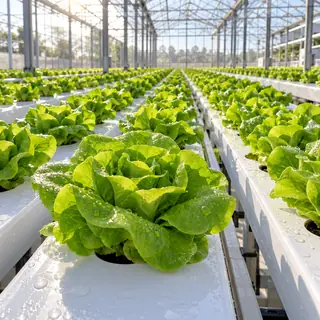
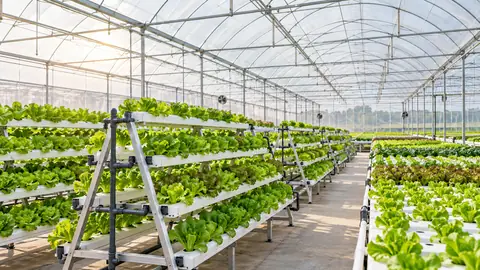
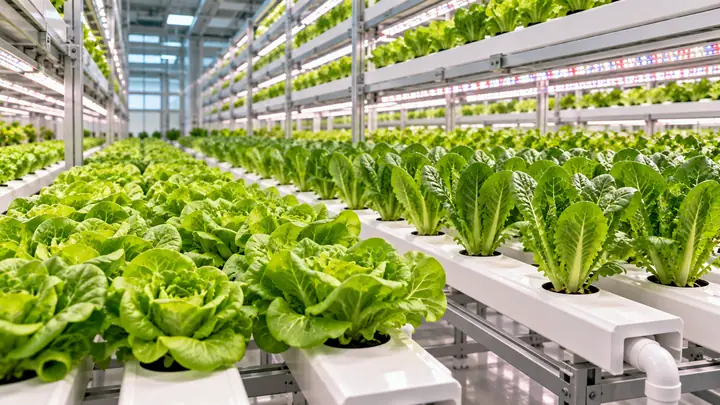
- NFT channels: ideal for butterhead and mini romaine. Choose channel width, hole spacing (typically 18–22 cm) and channel length to suit your head size. See the NFT hydroponic system guide and our high-rigidity NFT hydroponic system.
- Deep water culture rafts: forgiving for both types and good for full-size romaine because rafts can be re-spaced. See the deep water culture guide.
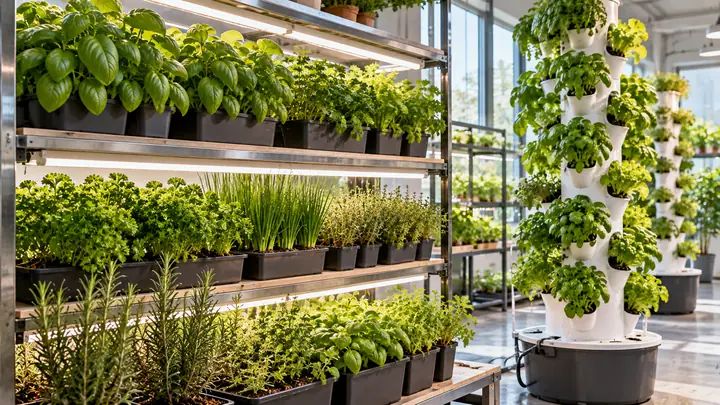
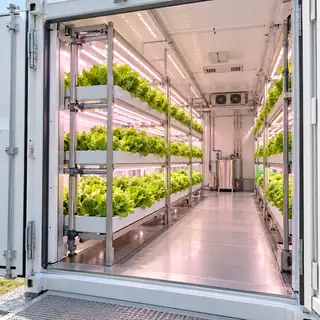
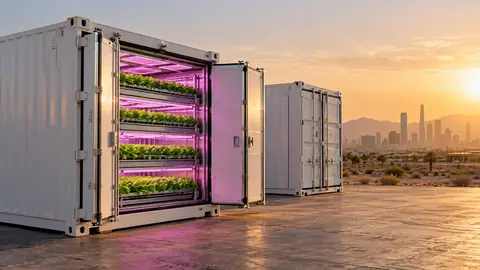
- Vertical racks and plant factories: check tier clearance first. Butterhead and mini romaine suit 30–40 cm tiers; full-size romaine needs more. Our indoor plant factory for leafy greens is configured around these crops.
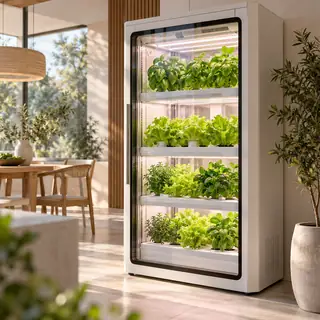
- Towers and A-frames: compact butterhead such as Tom Thumb or Buttercrunch is easiest; heavy romaine heads can pull out of pockets.
- Market: living butterhead in clamshells and mixed packs, or romaine hearts and whole romaine for food service. Your buyer's pack format should drive the variety choice as much as the system does.
Next steps
For most new indoor growers, butterhead lettuce is the best first crop, with mini romaine added once the system runs reliably. Trial a few butterhead and romaine varieties side by side under your own light and nutrient conditions, then standardize. When you are ready to scale, Mars Vertical Farm supplies NFT channels, DWC systems and complete plant factories factory-direct from Shanghai, with channel length, hole spacing and rack height sized to the varieties you grow. Tell us your crop plan and floor area and our engineers will suggest a layout and quotation.