Short answer
A typical irrigation system cost for a farm is roughly $800 to $2,500 per acre installed for drip, subsurface drip or center pivot systems, with drip tape on vegetables adding about $150 to $500 per acre each season. A residential lawn sprinkler system usually costs about $2,000 to $6,000. The biggest cost drivers are the water source, pump and power, filtration, pipe distance and emitter density.
How much does an irrigation system cost?
A typical irrigation system cost for a farm runs from roughly $800 to $2,500 per acre (about $2,000–$6,200 per hectare) for drip or center pivot systems, including the head unit, pipe and emitters, and more if a new well, power line or automation is needed. A residential yard sprinkler system usually costs about $2,000–$6,000 installed. Prices vary widely with water source, field size, crop spacing, labor rates and how much equipment you already own.
This guide breaks down how much it costs to install an irrigation system on farms and in greenhouses, what drives the price, what you pay each year to run it, and how to compare quotes. All figures are typical ranges in US dollars for planning, not quotes; local suppliers, installers and university extension budgets give the best regional numbers.
Irrigation system cost by type
System type is the biggest single driver of cost, because it sets how much pipe, how many emitters and what pressure the pump must deliver. The table summarizes typical installed cost ranges reported by extension budgets and industry sources; your quote may fall outside them.
| System | Typical installed cost | Main cost drivers | Typical life |
|---|---|---|---|
| Surface drip tape on vegetables | About $800–$2,000 per acre for head unit, mains and manifolds, plus about $150–$500 per acre per season for tape | Bed spacing, tape wall thickness, filtration | Tape 1–3 seasons; head unit 10+ years |
| Drip line for orchards and vineyards | About $1,000–$2,500 per acre | Row spacing, number of lines per row, PC emitters | Many years with good maintenance |
| Subsurface drip (SDI) | About $1,200–$2,500 per acre | Lateral spacing, depth, installation equipment | 15–20+ years when well managed |
| Center pivot (including water supply) | About $1,000–$1,500 per acre on roughly 80–130 acre fields | Length, number of towers, well, pump and power | 20–25+ years |
| Solid-set sprinklers | About $1,500–$3,500 per acre | Sprinkler spacing, buried vs portable pipe | 15+ years for buried pipe |
| Greenhouse drip and fertigation | Roughly $3–$15 per m² (about $0.30–$1.40 per ft²) | Automation level, dripper count, fertigation unit | 10+ years for head unit |
| Residential lawn sprinklers | About $2,000–$6,000 for a typical lot | Number of zones, lawn area, trenching | 15–20 years |
For a full breakdown of how these systems work, see our guide to the types of irrigation systems.
What drives irrigation installation cost?
Irrigation installation cost is shaped by six main drivers, and the water source is often the largest. Understanding them helps you see why two farms of the same size can receive very different quotes.
- Water source: using an existing well, pond or municipal supply is far cheaper than drilling a new well, which can add tens of thousands of dollars depending on depth and geology. Storage tanks or reservoirs add cost too.
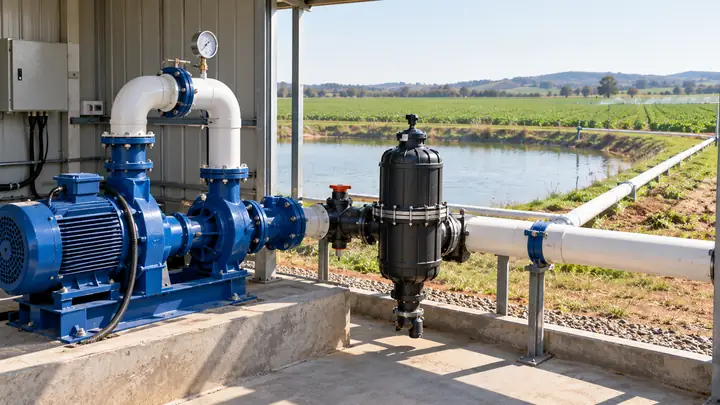
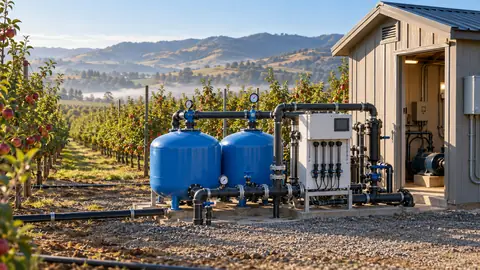
- Pump and power: pump size depends on flow and pressure; bringing three-phase power to a remote field can cost as much as the pump. Diesel or solar pumping changes the economics; see solar-powered irrigation systems.
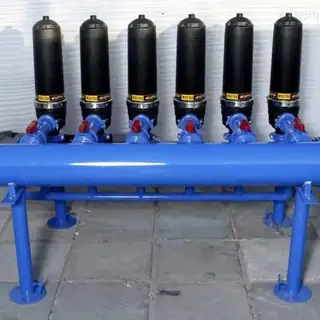
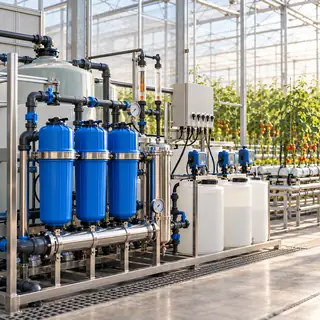
- Filtration and fertigation: surface water needs sand media plus disc or screen filters; a fertigation unit adds cost but replaces separate fertilizer passes.
- Pipe network: distance from source to field, main line diameter and trenching labor.
- Emitter density: close-spaced vegetables need far more drip tape per acre than widely spaced orchards.
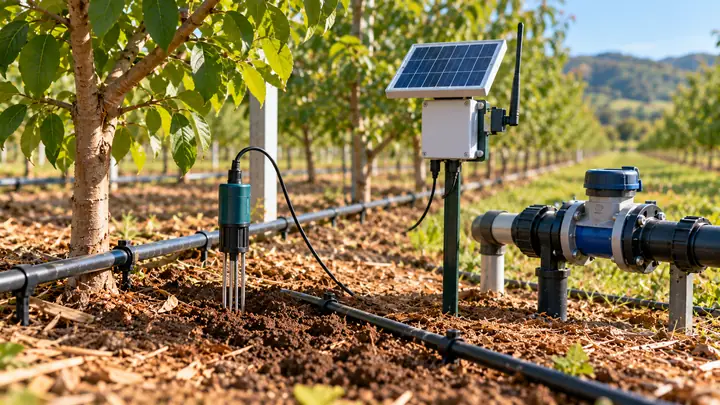
- Automation and labor: controllers, solenoid valves, sensors and local installation rates.
What is a typical drip irrigation system price?
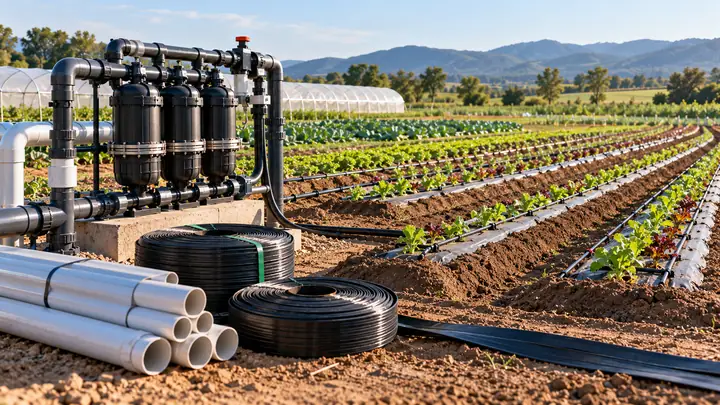
A drip irrigation system price depends mainly on how many meters of drip tape or drip line the crop needs and how sophisticated the head unit is. A drip head unit with filter, backflow prevention, fertilizer injector, pressure regulation and controller is largely a fixed cost, so cost per acre falls as the system gets bigger.
Cost to install a drip irrigation system on a small farm
On vegetable farms, the cost to install a drip irrigation system typically includes:
- Drip tape or drip line: beds on 1.5 m (5 ft) centers need roughly 2,700 m of lateral per acre (8,850 ft) for one line per bed, double for two lines.
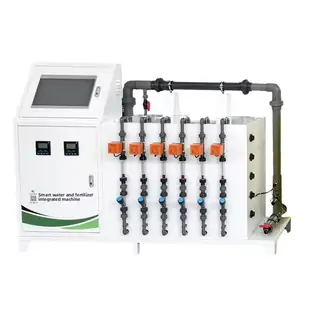
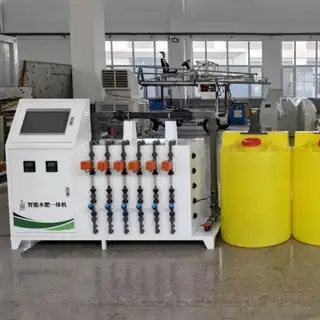
- Head unit: a small farm unit with a disc filter and injector often costs a few thousand dollars; automated fertigation machines cost more.
- Mains, sub-mains and lay-flat: often a significant share of the total on scattered fields.
- Fittings, valves and regulators: modest per item but numerous.
- Labor: drip installation cost for tape laid by machine with plastic mulch is low per acre; hand installation in orchards or greenhouses takes longer.
Our drip irrigation system guide explains each component. Drip system installation cost for a home garden is much lower: DIY kits cost tens to a few hundred dollars, and professionally installed landscape drip usually runs from several hundred to a few thousand dollars.
Worked example: budgeting drip for a 2 ha (5 acre) vegetable farm
- Measure the crop layout: 5 acres of beds on 1.5 m centers with one tape per bed needs roughly 13,500 m (44,000 ft) of tape.
- Split into zones: at about 2.5 L/h per meter of tape and a well supplying 12 m³/h, each zone can run about 4,800 m of tape, so plan three zones.
- Price the head unit: disc filter, venturi or dosing pump injector, backflow device, gauges and a three-zone controller.
- Price the distribution: 2 in (63 mm) main, lay-flat sub-mains, start connectors, regulators and flush ends.
- Add annual tape cost: thin tape is usually replaced each season, so treat it as an operating cost.
- Add contingency: 10–15% for fittings, freight and unexpected trenching.
Done this way, most growers find the head unit and mains are a one-time investment, while tape is a recurring cost similar to seed or mulch.
Farm irrigation systems cost: pivots, sprinklers and greenhouses
Farm irrigation systems cost differs most between broadacre machines and intensive greenhouse systems. Each has its own cost logic.
Center pivot cost
A center pivot machine is priced mainly by length and number of towers, with the well, pump, power and buried pipe on top. Published university budgets for pivots on fields of roughly 80–130 acres put total investment, including the well and pump, at around $1,000–$1,500 per acre, with the machine itself often about half of that. Longer pivots cost less per acre because the center structure is shared.
Greenhouse irrigation cost
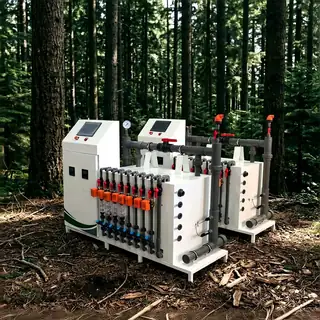
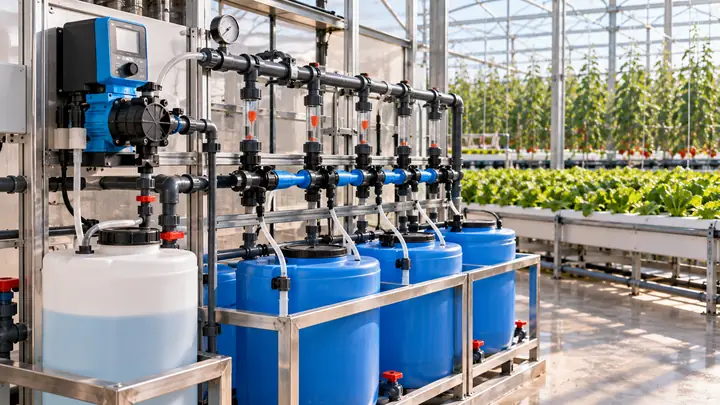
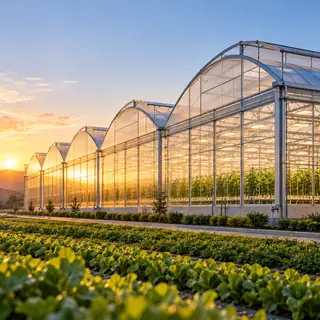
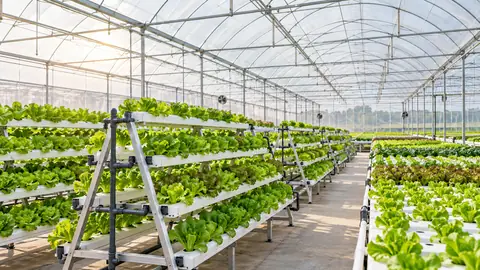
Greenhouse irrigation is priced per square meter and by automation level. Drip to substrate slabs or Dutch buckets, an automatic disc filter, a fertigation machine with EC and pH control, and drain water handling make up most of the budget. See our greenhouse irrigation system guide for design choices, and smart fertigation equipment for an example of an automated head unit.
Yard irrigation system cost
For homeowners asking how much an irrigation system costs for a lawn, yard irrigation system cost typically falls around $2,000–$6,000 for an average suburban lot, often priced per zone, with pop-up sprinklers, a controller and trenching. Large lots, rocky soil and smart controllers push prices higher. The same principles of zoning, pressure and filtration apply at farm scale, just with bigger pipes and pumps.
How much does irrigation cost to run each year?
Annual operating cost includes energy, water, consumables, maintenance and labor, and over a system's life it can exceed the purchase price. Typical items are:
- Energy: pumping cost rises with flow, pressure and hours; low-pressure drip and pivots with low-pressure nozzles reduce it. Our irrigation pumps guide shows how pump efficiency affects power use.
- Water: district charges or well pumping; drip often reduces water use compared with sprinklers or furrows.
- Consumables: drip tape replacement, filter elements, chlorine or acid for line cleaning.
- Maintenance and repairs: a common planning figure is a few percent of capital cost per year, higher for older or heavily used systems.
- Labor: automation and sensors reduce labor and over-watering.
How to reduce irrigation system cost without cutting quality
The best savings come from good design and smart sourcing rather than cheaper components. Practical ways to lower the total cost to install an irrigation system include:
- Design zones so the pump runs near its best efficiency point and pipe sizes stay modest.
- Match filtration to water quality; under-filtering ruins emitters, over-filtering wastes money.
- Buy head units, filters and fertigation equipment factory-direct where you can handle import logistics; our guide on importing agricultural equipment from China explains Incoterms, duties and lead times.
- Check cost-share programs. USDA NRCS EQIP (Environmental Quality Incentives Program) has supported micro irrigation and related practices; see our NRCS EQIP high tunnel guide for how the program works, and confirm current rules with your local NRCS office.
- Phase the project: install mains and head unit sized for full build-out, then add zones as fields come into production.
Irrigation quote checklist
A detailed request gets comparable quotes and avoids hidden extras. Include or ask for:
- Field area, crop, row or bed spacing and a sketch or map with elevations.
- Water source, available flow in m³/h or gpm, static water level and a water quality test.
- Power available (single-phase, three-phase, diesel or solar) and distance to the field.
- Required zones, controller type and whether fertigation is needed.
- Itemized prices for head unit, pipe, emitters, fittings, freight, installation and commissioning.
- Warranty terms, spare parts list and after-sales support.
Comparing quotes line by line is the most reliable way to judge irrigation system cost, because a low total can hide undersized filtration or missing items.
Getting a quote
Mars Vertical Farm manufactures fertigation machines, automatic filters, water treatment and complete irrigation head units, and quotes EXW, FOB Shanghai or CIF. Browse the irrigation and fertigation range, or share your field size, crop and water source for an itemized, factory-direct quotation sized to your project.