
Short answer
The main types of irrigation are surface irrigation (furrow, basin and border flooding), sprinkler irrigation (impact sprinklers, solid set, center pivots and big guns), micro irrigation (drip, micro sprinklers, micro spray and bubblers) and subsurface drip. Typical application efficiency rises from about 40–70% for surface systems to 65–90% for sprinklers and pivots and 85–95% for drip, which is why drip dominates greenhouses, vegetables and orchards.
What are the main types of irrigation?
The main types of irrigation are surface irrigation (furrow, basin and border flooding), sprinkler irrigation (from impact sprinklers to center pivots and big guns), micro irrigation (drip, micro sprinklers, micro spray and bubblers) and subsurface systems such as buried drip and greenhouse sub-irrigation. Each type of irrigation trades installation cost against water efficiency, labor and how precisely water reaches the root zone.
This guide explains each type from a grower's point of view: how each system works, typical pressures and flows, the parts involved, the pros and cons, and which crops and farm sizes each one fits. Homeowner options such as soaker hoses are covered briefly at the end so you can see how they relate to farm systems.
Different types of irrigation compared at a glance
The fastest way to choose between different types of irrigation is to compare application efficiency, operating pressure and cost per hectare side by side. Efficiency figures below are typical ranges reported by university extension services and USDA NRCS guidance; real results depend heavily on design and management.
| Type | Typical pressure | Typical application efficiency | Relative capital cost | Best fit |
|---|---|---|---|---|
| Surface (furrow, basin, border) | Gravity, very low | About 40–70% (higher with land leveling and surge flow) | Low equipment, high land preparation | Rice, cereals, cotton, pasture on level ground |
| Hand-move and solid-set sprinklers | About 2–4 bar (30–60 psi) | About 65–80% | Medium | Vegetables, nurseries, pasture, frost protection |
| Center pivot and linear move | About 0.7–3 bar (10–45 psi) with low-pressure nozzles | About 75–90% | Medium per hectare on large fields | Corn, soybeans, alfalfa, potatoes on large fields |
| Traveling big gun | About 4–7 bar (60–100 psi) | About 55–75% | Low to medium, high energy | Pasture, forage, irregular fields |
| Micro sprinklers and micro spray | About 1–2.5 bar (15–35 psi) | About 80–90% | Medium to high | Orchards, citrus, nurseries, greenhouses |
| Surface drip | About 0.5–2 bar (8–30 psi) | About 85–95% | Medium to high | Vegetables, berries, vines, greenhouses |
| Subsurface drip (SDI) | About 0.7–2 bar (10–30 psi) | About 90–95% | High, long life | Row crops, alfalfa, high-value perennials |
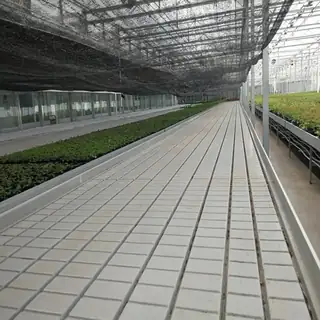
| Greenhouse sub-irrigation (ebb and flow) | Low, pump-filled benches | Very high, water recirculated | High | Potted plants, seedlings, nursery |
What is surface irrigation?
Surface irrigation moves water across the field by gravity, either down furrows between rows, into level basins, or across sloped border strips. It is the oldest and still the most widespread type of irrigation worldwide because it needs little equipment and little energy when water arrives by canal or ditch.
- Furrow irrigation runs water down small channels beside crop rows, often fed by siphon tubes or gated pipe.
- Basin irrigation floods level, diked areas and is standard for paddy rice and some orchards.
- Border irrigation sends a sheet of water down long, gently sloped strips, common for pasture and alfalfa.
The weaknesses are uneven wetting from the top to the bottom of the field, runoff, deep percolation and heavy labor. Laser land leveling, surge valves and tailwater recovery can raise efficiency considerably, but on sandy soils or rolling land, pressurized systems usually perform better.
What is sprinkler irrigation and how does it work?
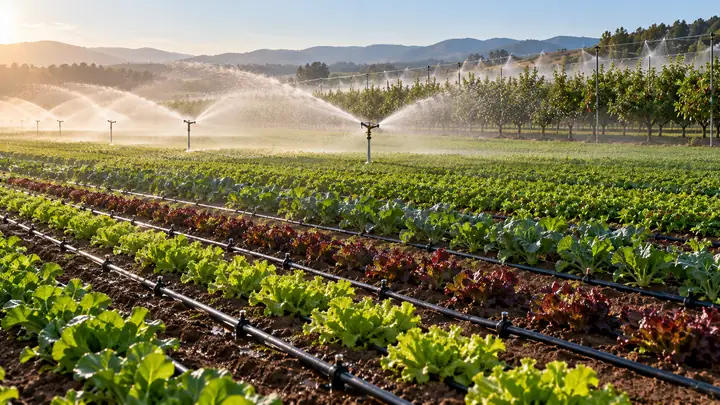
Sprinkler irrigation, also called overhead irrigation or spray irrigation, pumps water through pipes and throws it into the air through nozzles so it falls on the crop like rain. It works on uneven ground and most soils, and it can also be used for frost protection, cooling and fertilizer or chemical application where labels allow.
What are the parts of a sprinkler irrigation system?
The parts of a sprinkler irrigation system are similar on a small farm and a large one. A typical layout includes:
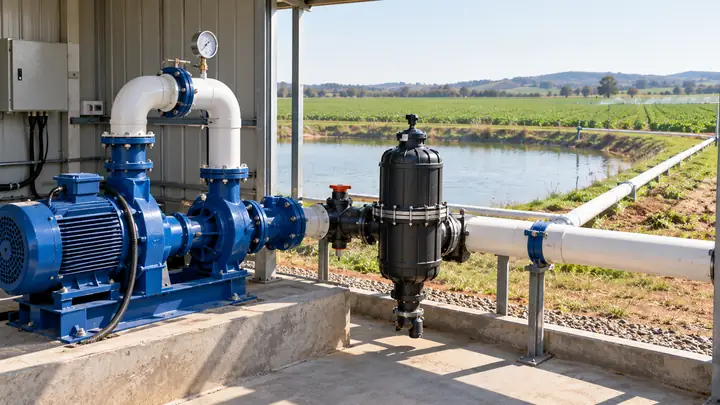
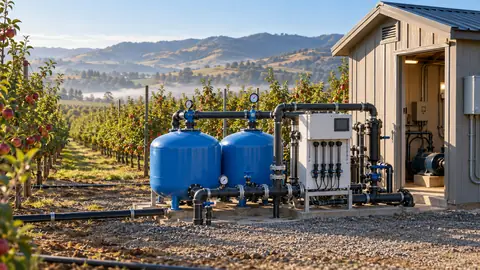
- Water source and sprinkler irrigation pump, sized for the flow of one zone and the pressure needed at the farthest sprinkler. See our irrigation pumps guide for sizing.
- Filter, usually a screen filter for sprinklers; finer filtration is needed if the same pump also feeds drip.
- Main line and sub-mains in PVC or PE pipe, with valves or hydrants for each zone.
- Laterals and risers that lift the sprinkler above the crop canopy.
- Sprinkler heads and irrigation nozzles, chosen for flow, radius and droplet size.
- Controls: valves, pressure regulators, gauges and a timer or controller.
Sprinkler irrigation parts such as risers, couplers, nozzles and pressure regulators wear over time and are stocked as spares on most farms.
Impact sprinklers, brass sprinklers and big guns
Impact sprinklers rotate when a spring-loaded arm strikes the water stream, giving the familiar ticking sound and a wide, even circle. Farm sprinklers of this type commonly run at about 2–4 bar (30–60 psi) with a wetted radius of roughly 10–20 m (35–65 ft). A brass impact sprinkler resists wear and UV better than plastic and is popular for field and pasture irrigation on hand-move pipe.
Big gun sprinklers are large single nozzles that throw water roughly 30–60 m (100–200 ft) at high pressure. A big gun irrigation sprinkler on a traveling hose reel suits pasture, forage and irregular fields, but it uses more energy and is more affected by wind than low pressure sprinkler options.
Center pivot and linear move systems
A center pivot is a line of spans on wheeled towers that rotates around a fixed point, carrying drop hoses and low-pressure nozzles close to the crop. Linear move machines travel in a straight line across rectangular fields. They are the most common large farm irrigation sprinklers in North America because one machine can irrigate tens of hectares with little labor. Center pivot irrigation system cost depends on length, number of towers and the water supply; we explain typical ranges in our guide to irrigation system cost.
Spray irrigation pros and cons
- Pros: works on slopes and light soils, covers the full surface, suits dense crops such as grass, alfalfa and leafy vegetables, and can provide frost protection and crop cooling.
- Cons: evaporation and wind drift losses, wet foliage that can raise disease pressure, higher pumping pressure than drip, and uneven coverage if pressure or spacing is wrong.
What is micro irrigation?
Micro irrigation is any low-pressure, low-flow system that delivers water close to individual plants through emitters, micro sprinklers, micro sprayers or bubblers. USDA NRCS groups these methods together because they share filtration, pressure regulation and frequent, small applications.
Drip irrigation
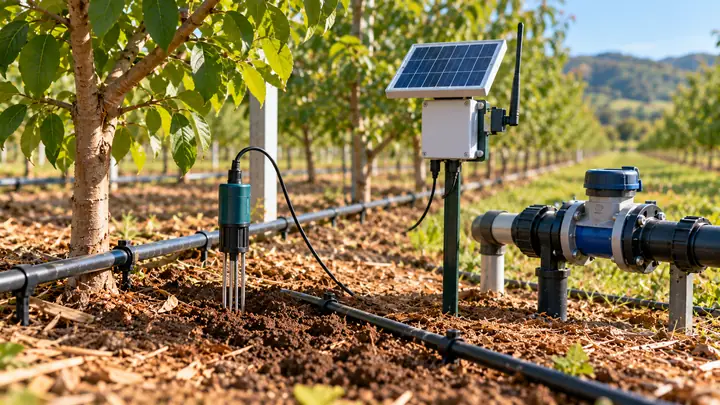
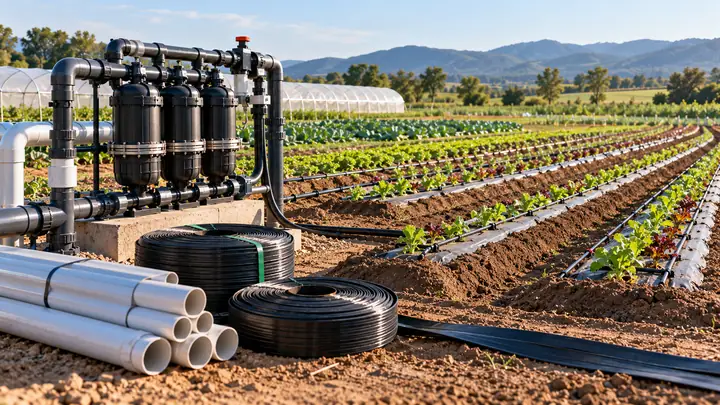
Drip irrigation releases water drop by drop at the root zone through drip tape, drip line or individual emitters, usually at about 0.5–8 L/h (0.13–2 gph) per emitter. It is the most water-efficient type for row crops, greenhouses and orchards and it pairs naturally with fertigation. Our drip irrigation system guide covers components and layouts, and drip tape vs drip line explains which lateral to buy.
Micro sprinkler and micro spray irrigation
A micro sprinkler has a small spinning or rotating deflector, while a micro spray sprinkler has a fixed deflector that sprays a set pattern. Typical flows are about 20–200 L/h (5–50 gph) with a wetted diameter of roughly 2–10 m. Micro sprinkler irrigation wets a larger soil area than drip, which suits citrus and other tree crops with wide root zones, sandy soils and orchards that need frost protection. Irrigation micro sprinklers are also used in nurseries and greenhouses.
A mist sprinkler or fogger produces very fine droplets for propagation houses and cooling. Misting is a humidity and cooling tool more than a way to supply crop water.
Bubbler irrigation
Bubbler irrigation floods a small basin around a tree or shrub at a higher flow than drip, often about 50–250 L/h (roughly 0.2–1 gpm). A bubbler sprinkler is useful for young trees, landscape plantings and soils where water needs to pond briefly to soak in. Bubblers need less filtration than drip but must be paired with a basin or the water runs off.
Subsurface drip and greenhouse irrigation types
Subsurface drip irrigation (SDI) buries drip tape or drip line about 20–45 cm (8–18 in) deep so the surface stays dry, weeds germinate less and machinery can run over the field. It has a high first cost but a long life when filtration, flushing and root-intrusion protection are managed well. See drip irrigation for orchards and fields for SDI layouts.
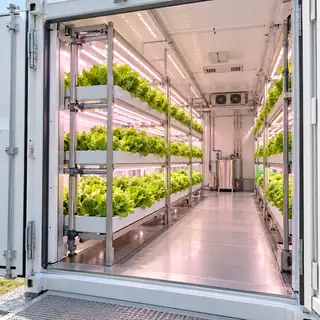
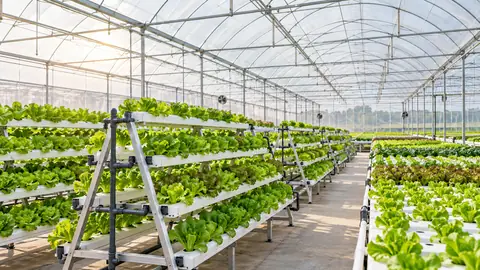
Greenhouses use several specialized types of irrigation:
- Drip and dripper stakes for substrate, pots, slabs and Dutch buckets.
- Overhead booms that travel over benches for seedlings and plugs.
- Overhead sprinkler and mist lines for propagation and cooling.
- Ebb and flow (sub-irrigation), where benches or floors flood and drain, recycling the nutrient solution. Our ebb and flow flood tables guide covers bench design, and tidal rolling benches are one example of this approach.
For a full greenhouse design walkthrough, read the greenhouse irrigation system guide.
Drip vs sprinkler: when does a sprinkler drip system conversion make sense?
A sprinkler-to-drip conversion makes sense when water is limited or costly, foliage disease is a problem, or the crop is planted in rows or as individual plants. The process is usually straightforward because drip runs at lower pressure than sprinklers.
- Map zones and measure available flow and pressure at the source.
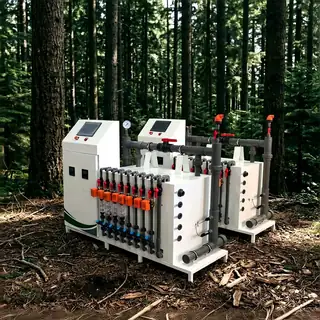
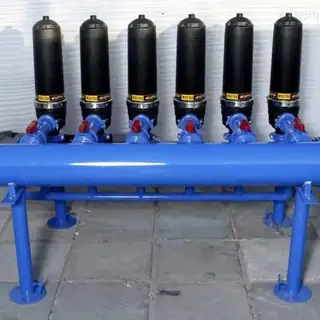
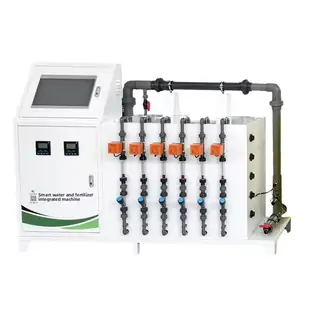
- Install a filter and pressure regulator at each converted zone, or a central head unit with a disc filter and fertigation.
- Replace sprinkler laterals with drip line or drip tape, or fit a sprinkler drip manifold that converts a riser into several drip outlets for small areas.
- Re-split zones if needed so each zone's drip flow matches the pump's efficient operating range.
- Re-program run times: drip typically runs longer, more frequent cycles at much lower flow per hectare.
Many farms keep both systems: drip for daily crop water and fertigation, and sprinklers or micro sprinklers for germination, cooling or frost protection.
Soaker hoses for gardens vs drip irrigation
A soaker hose is a porous hose that seeps water along its whole length; a drip system uses emitters with a defined flow rate. Soaker hoses for gardens are cheap and easy to lay in a vegetable bed, but output is uneven along long runs, varies with pressure, and the hose degrades in sun within a few seasons.
In the drip irrigation system vs soaker hose comparison, drip wins on uniformity, run length, pressure compensation and the ability to inject fertilizer. Products sold as drip soaker hose are usually just porous hose, and for anything larger than a home garden, drip line with a filter and regulator is the professional choice.
How to choose the right type of irrigation for your farm
Choose an irrigation type by matching crop, field shape, soil, water supply and labor, then compare lifetime cost rather than purchase price. Use these decision criteria when you request quotes for agricultural irrigation equipment:
- Crop and spacing: rows and individual plants favor drip; dense crops such as pasture and alfalfa favor sprinklers or pivots.
- Field size and shape: pivots suit large square fields; drip and solid-set suit small or irregular blocks.
- Water source: flow in m³/h (gpm), pressure, and quality, which sets the filtration needed.
- Soil: sandy soils need frequent light applications; heavy clays limit sprinkler application rates to avoid runoff.
- Energy: low pressure sprinkler and drip systems cut pumping cost; consider solar-powered pumping off-grid.
- Automation and fertigation: drip and micro systems integrate easily with controllers and fertilizer injection.
For most greenhouses, high-value vegetables, berries and orchards, micro irrigation is the efficient default, and sprinklers remain a strong tool for broadacre crops and pasture.
Next steps
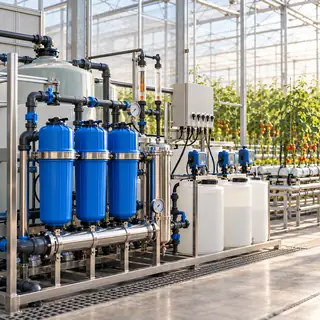
Mars Vertical Farm manufactures irrigation head units, automatic disc filters and fertigation machines that work with drip, micro sprinkler and greenhouse systems. Browse the irrigation and fertigation range, or send us your crop, area and water source and our engineers will suggest a suitable system with factory-direct pricing and custom sizing.