Short answer
The high tunnel grant is USDA NRCS financial assistance through the Environmental Quality Incentives Program (EQIP) for a seasonal high tunnel built to Conservation Practice Standard 325. Producers sign a contract, then buy and install a commercial kit at least 6 ft tall, with crops grown in the soil and a cover rated for 4+ years. NRCS pays a state-set rate after verifying the installation; rates change yearly.
What is the high tunnel grant?
The "high tunnel grant" is the common name for financial assistance from the USDA Natural Resources Conservation Service (NRCS) that helps farmers pay for a seasonal high tunnel through the Environmental Quality Incentives Program (EQIP). It is not a cash grant up front: eligible producers sign an EQIP contract, buy and build a tunnel that meets NRCS Conservation Practice Standard (CPS) 325, High Tunnel System, and are paid a set rate after NRCS confirms the work.
You will also see it called a high tunnel greenhouse grant or hoop house grant, since NRCS itself notes that a high tunnel is commonly called a hoop house. NRCS promotes the practice through its High Tunnel Initiative because high tunnels extend the growing season, protect crops and soil from heavy rain and wind, and support soil health and efficient drip irrigation. This guide explains who is eligible, what the standard requires, how payment works and how to apply. Rules, payment rates and ranking dates are set by each NRCS state office and change every fiscal year, so always confirm current details with your local USDA Service Center. If you are new to the structures themselves, start with our hoop house vs. high tunnel guide.
Who is eligible for an NRCS high tunnel grant?
Agricultural producers who control eligible land and meet USDA program requirements can apply. Requirements commonly include:
- Agricultural production: you are farming now or, in many states, can show a genuine interest in starting. Depending on state rules, individuals, farm businesses, Tribes and some nonprofits and community growing groups can apply.
- Farm records with the Farm Service Agency (FSA): a farm and tract number for the land and records for you as the applicant.
- Land control: you own the land or hold a lease covering the contract period.
- Compliance: adjusted gross income (AGI) limits, and highly erodible land and wetland conservation compliance (form AD-1026).
- A tax ID: Social Security number or employer identification number.
Benefits for historically underserved producers
Beginning farmers, socially disadvantaged producers, veteran farmers and limited resource farmers are classed as historically underserved. They typically receive a higher payment rate and can choose an advance payment option of at least 50% of the practice payment before installation. NRCS states that advance funds must be spent within 90 days of receipt, and any unspent amount returned.
What does NRCS Conservation Practice Standard 325 require?
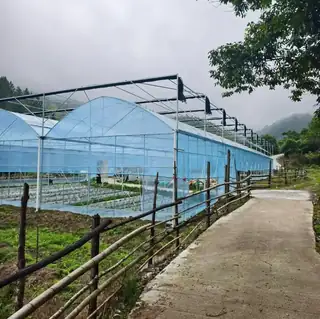
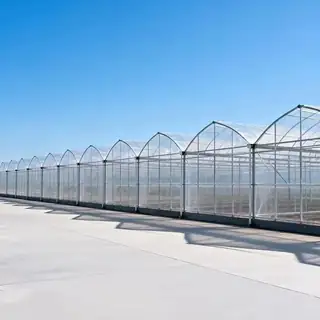
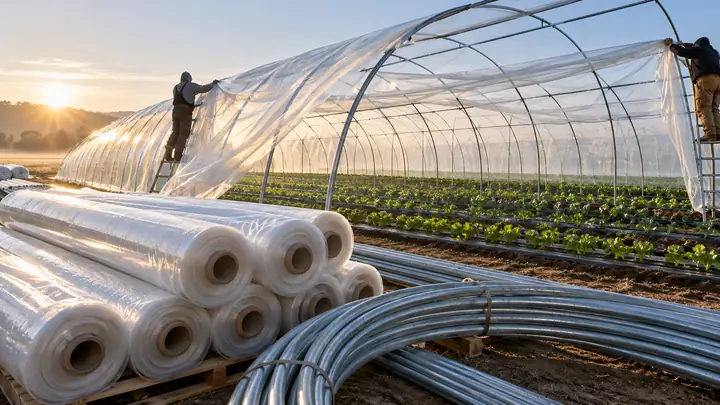
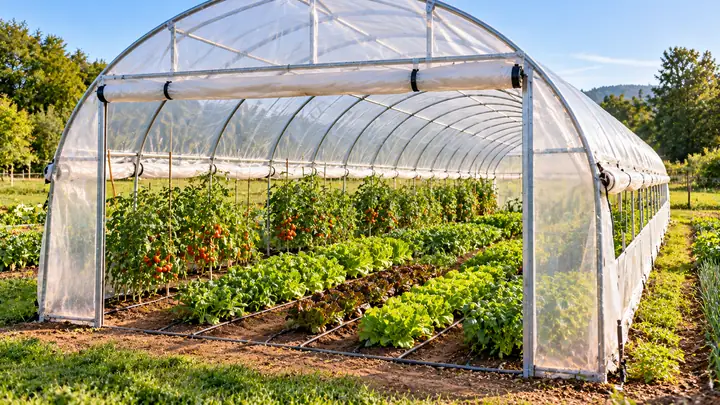
NRCS CPS 325 defines a high tunnel system as a plastic- or fabric-covered structure that protects crops from sun, wind, excessive rain or cold, used to extend the growing season. The national standard sets the minimum criteria, and each state adds implementation requirements. Key national requirements are summarized below.
| Requirement | What it means in practice |
|---|---|
| Crops in the natural soil profile | Plants grow in the ground; raised beds up to about 12 in (30 cm) are allowed. Benches, tables, portable pots and hydroponics are not covered. |
| Not a greenhouse or low tunnel | The practice covers high tunnels only; low tunnels and permanently heated greenhouses are outside it. |
| Manufactured kit | Frame of metal, wood or durable plastic from a commercial kit, built according to the manufacturer's instructions. |
| Height | At least 6 ft (1.8 m) at the peak. |
| Covering | Minimum 4-year lifespan; polyethylene must be at least 6 mil, greenhouse grade and UV-resistant. |
| Snow and wind | Structure designed by the manufacturer for expected loads, or the cover removed or rolled up when severe weather is expected. |
| Site | Level ground or natural slope of less than 5%, near a dependable irrigation water source, with runoff directed away to prevent erosion. |
| Use | Not for livestock housing or storing equipment and supplies. |
| Operation and maintenance | You maintain and repair the tunnel for the practice lifespan set in your contract, which the national standard sets at five years for EQIP-funded tunnels. |
State requirements vary. For example, some states set a maximum width or a payment cap, some have no size limit, some allow polycarbonate end walls, and some prohibit used materials or certain structure shapes. Your state's implementation requirements sheet is the document to follow.
Optional extras such as electricity, heating or powered ventilation may be allowed by some states, but they are generally not paid for under the practice. Related practices, such as Microirrigation (441), Mulching (484) and Cover Crop (340), may be planned alongside the tunnel.
How does EQIP high tunnel payment work?
EQIP high tunnel payments are flat rates from a state payment schedule, not a percentage of your invoice, and they are paid after the tunnel is installed and certified. Points to understand:
- Payment schedules are published by each state for each fiscal year, with high tunnel scenarios usually paid per square foot.
- Rates cover part of typical costs. They are calculated from estimated average costs, with higher rates for historically underserved producers. Your actual kit, freight and labor costs may be higher or lower.
- Caps and limits on size, payment per tunnel or number of tunnels per year differ by state and program.
- Timing: unless you use the advance payment option, you pay for the kit and installation first and are reimbursed after NRCS verifies the work against the standard.
Because rates change every year, this guide does not quote payment amounts; ask your local NRCS office for the current schedule. There is no "free greenhouse program" in EQIP: the high tunnel practice offsets part of the cost, and you remain responsible for the rest and for maintenance. To estimate your total budget, see our greenhouse cost and sizes guide.
How do you apply for the EQIP high tunnel program?
You apply for EQIP high tunnel assistance through your local USDA Service Center, and applications are accepted year-round but ranked at state-set cutoff dates. The typical sequence:
- Contact your local NRCS office to discuss your farm and whether a high tunnel addresses a resource concern on your land.
- Register with FSA if you are new to USDA, to set up farm records, and complete eligibility forms such as AD-1026.
- Submit an application (form CPA-1200) before your state's ranking cutoff.
- Plan with a conservationist, who visits the site and helps choose tunnel size, location and supporting practices.
- Ranking: applications are scored on conservation benefits and state priorities; funding is competitive.
- Sign the contract if selected. As a rule, do not buy materials or start construction before the contract is approved, because EQIP generally does not pay for work started earlier unless a waiver is granted.
- Buy a qualifying kit and build it to the manufacturer's instructions and your state's requirements within the contract deadline.
- Certify and get paid: submit receipts or certification as instructed; NRCS checks the installation and releases payment.
Are there NRCS approved high tunnel kits?
NRCS does not endorse any brand or publish a single national list of "NRCS approved high tunnels." Instead, the kit you choose must meet CPS 325 and your state's implementation requirements, and NRCS state offices note that vendor claims of compliance should be verified by the buyer. When a supplier advertises an NRCS high tunnel kit, check:
- It is a complete commercial kit with the manufacturer's written installation instructions and drawings.
- Peak height is at least 6 ft, and the width and length match your contract.
- The cover is 6 mil or heavier, greenhouse grade and UV-stabilized, with at least a 4-year rating.
- The manufacturer states snow and wind load ratings appropriate to your site, or provides cover-removal guidance.
- End walls, doors, ventilation (roll-up sides or vents) and anchoring are included or clearly specified.
- The invoice and documents show what was supplied, for your certification.
Show the kit specification to your NRCS planner before ordering. If you import a kit, add production and ocean freight time, often several weeks, to the schedule so you can finish within the contract deadline; our guide to importing farm equipment from China covers lead times and customs. Film specification is explained in the greenhouse plastic film guide.
How do you get the most from an EQIP high tunnel?
An EQIP high tunnel pays off when it is managed for soil health, water and long-season crops. Practical tips:
- Install drip irrigation before planting; rain does not reach tunnel beds. See drip irrigation for vegetables and small farms.
- Test soil and water regularly, because salts can build up without rainfall; some growers remove the cover for a season to flush the soil.
- Rotate crops and use cover crops to break pest and disease cycles.
- Manage heat with roll-up sides and shade cloth in summer; see shade cloth and cooling.
- Keep records of maintenance and repairs during the contract's practice lifespan.
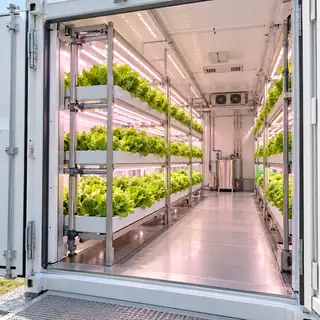
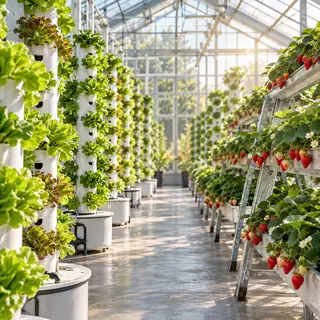
If you want hydroponics, benches or potted production, plan that in a separate structure, because those systems are outside the high tunnel practice. Smaller, cheaper season extension such as low and caterpillar tunnels is covered in our poly tunnel comparison.
Next steps
A high tunnel grant through NRCS EQIP can make a load-rated tunnel far more affordable, provided the structure meets CPS 325 and your state's rules and you follow the contract steps in order. Mars Vertical Farm manufactures galvanized steel tunnel and multi-span greenhouses, such as the customized multi-span steel frame film greenhouse, and can supply drawings, installation instructions, load data and cover specifications for your NRCS planner to review. Browse our greenhouses or send us your contracted size and location for a factory-direct, custom-sized quote.