Short answer
To import agricultural equipment from China smoothly, confirm the specification, voltage and certification needs in writing, agree on MOQ, lead time and payment terms, and pick an Incoterm that matches how much of the logistics you want to manage. Then line up HS codes, documents and inspection before the goods leave the factory. Most delays come from incomplete paperwork or unclear specifications, not from ocean transit.
What does MOQ mean for agricultural equipment?
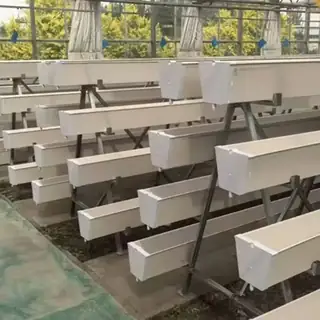
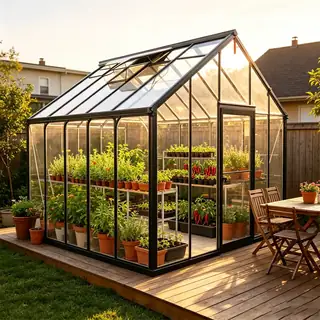
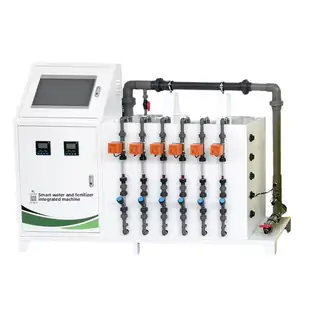
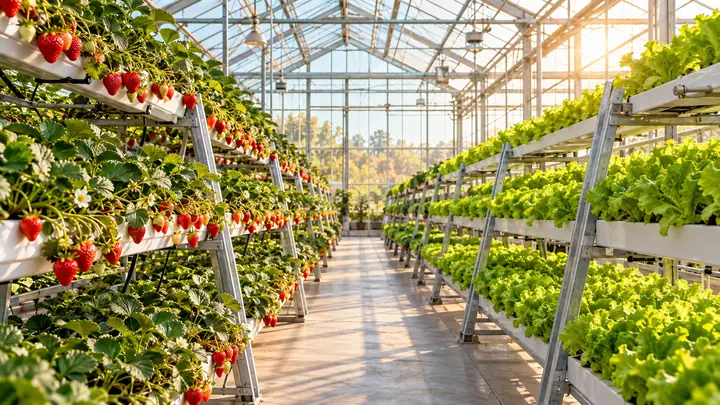
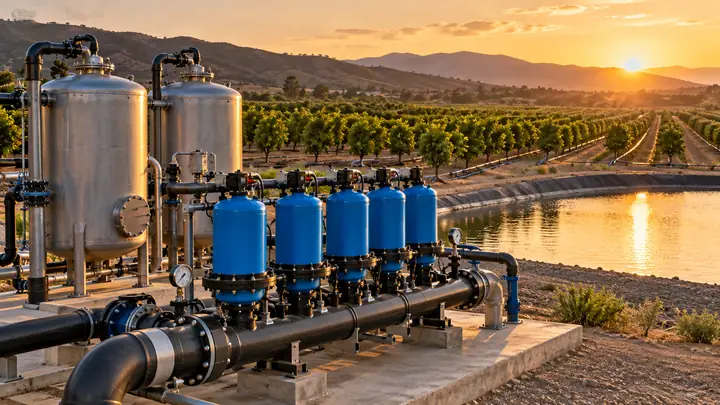
MOQ (minimum order quantity) is the smallest order a factory will accept for a product. For engineered agricultural equipment it is often low, because systems are built to order. In our own catalog, for example, most plant factories, fertigation units and filters list an MOQ of one piece, NFT systems and tidal benches are sold by the meter, A-frame troughs such as the multi-layer hydroponic A-frame by the square meter, and aluminum sunrooms such as the double-glazed aluminum sunroom from 50 pieces.
Low MOQ does not mean low shipping cost per unit. A single small item often costs more to ship and clear per kilogram than a full container, so it can pay to consolidate several products into one shipment. Custom colors, sizes or branding may carry their own minimums; confirm them in the quotation.
What should I confirm before approving a quotation?
- Electrical supply: voltage, frequency (50 or 60 Hz), phase and plug type. North America, Brazil and Saudi Arabia use 60 Hz, while most of Europe, China and Australia use 50 Hz. Motors, pumps and compressors must match.
- Certifications: CE marking for the EU; check whether UKCA or CE applies for Great Britain; market schemes such as SABER in Saudi Arabia; and whether local electrical inspectors require certified components (for example, UL or CSA listing in North America).
- Climate design: outdoor temperature range, snow and wind loads for greenhouses, and insulation for container farms.
- Scope of supply: what is included (spare parts, consumables, installation drawings, manuals, remote commissioning) and what is not.
- Language: manuals, control panel labels and software language.
- Warranty: period, what it covers and how spare parts are supplied.
Which Incoterm should I choose?
Incoterms 2020 define who pays for each leg of the journey and where risk passes from seller to buyer. They do not decide who owns the goods or when you pay.
| Term | Seller arranges | Risk passes to buyer | Good fit |
|---|---|---|---|
| EXW | Goods ready at factory | At the factory | Buyers with an agent in China who handles export clearance |
| FCA | Export clearance; delivery to the buyer's carrier | When handed to the carrier | Container and air shipments with the buyer's own forwarder |
| FOB | Export clearance; loading on the vessel at the Chinese port | Once goods are on board | Buyers with their own forwarder and ocean rates |
| CFR | FOB plus ocean freight to destination port | Once goods are on board in China | First-time importers who want a simple freight quote |
| CIF | CFR plus minimum cargo insurance | Once goods are on board in China | As CFR; consider extra insurance cover |
| DAP | Transport to a named place in your country | On arrival, before unloading | Buyers who want door delivery but will clear customs and pay duties |
| DDP | Everything, including import duties and taxes | On arrival at the named place | Buyers who want a landed price; not workable in every country |
Strictly, FOB, CFR and CIF were written for sea cargo loaded directly onto a vessel. For containerized goods, FCA is technically the better match, although FOB remains common in practice. Under CIF, the seller only has to buy minimum insurance, so many buyers add their own all-risk cover.
How will the equipment ship?
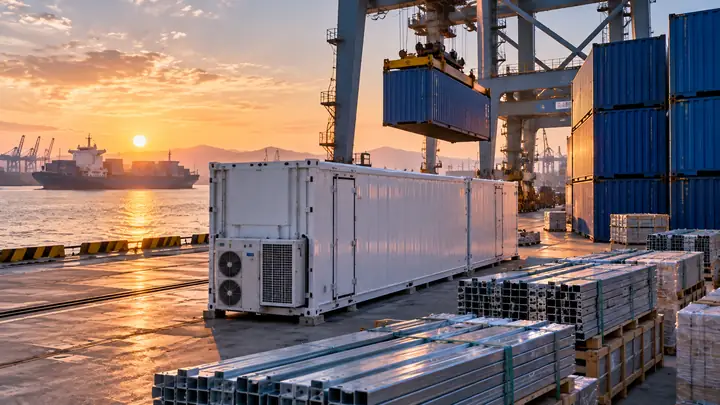
- FCL (full container load): 20GP (roughly 33 m³), 40GP (roughly 67 m³) or 40HQ (roughly 76 m³). Best for complete projects such as greenhouses, racks and channels.
- LCL (less than container load): your cargo shares a container. Good for small orders, but expect extra handling and destination fees.
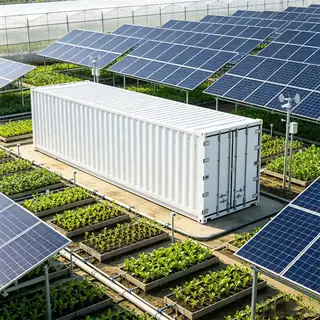
- Container farms shipped as the container: a container farm built in an ISO container can travel as a shipper-owned container if it stays seaworthy and carries a valid CSC safety approval plate. Confirm with your forwarder early.
- Flat rack or open top: for oversized items that do not fit through container doors.
- Rail: China–Europe rail is an option for parts of Europe, Russia and Central Asia, usually faster than sea and cheaper than air.
- Air: spare parts, sensors and urgent small items.
Port-to-port ocean transit from Shanghai is roughly 2–3 weeks to the US West Coast and roughly 4–6 weeks to Northern Europe, but schedules change, so add time for port congestion, customs and inland delivery.
Which documents will I need?
- Commercial invoice and packing list (weights, dimensions and contents per package)
- Bill of lading or air waybill
- Certificate of origin, including preferential forms where a trade agreement applies
- Declarations of conformity and test reports for certified products
- Fumigation or heat-treatment marking for wooden packaging under ISPM 15
- Phytosanitary certificates or import permits for plant-based materials such as coco coir, seeds or growing media where your country requires them
- Insurance certificate if insurance is part of the deal
How are HS codes and duties handled?
Duty rates depend on the HS code, the country of origin and any trade agreements. Classification is decided by your customs authority, so ask your broker to confirm codes from the product description and drawings before you sign. Headings commonly considered for this type of equipment include 8421 (filtering or purifying machinery for liquids), 8424 (irrigation and spraying equipment), 8436 (other agricultural or horticultural machinery), 9406 (prefabricated buildings) and 7308 (steel structures). Electrical lamps and controls may fall under other chapters. Also budget for import VAT or GST, port charges and broker fees.
How do I protect quality and payment?
- Payment terms: a deposit with the balance before shipment by bank transfer is common; letters of credit add bank checks on documents at a higher cost.
- Inspection before balance payment: ask for production photos, machinery test reports, a video outgoing inspection, or a third-party inspection agency.
- Clear acceptance criteria: list dimensions, materials, functions to test and tolerances in the contract.
Our process runs one-to-one from inquiry, proposal and quotation through R&D confirmation, contract, production and QC, third-party lab testing, shipping and logistics, and after-sales. We have more than 20 years of production experience, ISO 9001 quality management and CE-marked products, and have shipped to Canada, the USA, Brazil, the UK, Sweden, Germany, Russia, Türkiye, Saudi Arabia, Vietnam, South Africa and Australia.
What is the step-by-step import checklist?
- Send crop, site, power and water details; receive a proposal.
- Confirm specification, certifications and scope of supply in writing.
- Ask your broker for HS codes, duty rates and any import permits.
- Choose an Incoterm and get a freight quote for the same term.
- Sign the contract with acceptance criteria and payment terms.
- Track production; review test reports and inspection results.
- Receive draft documents and check names, HS codes and values match.
- Pay the balance and release goods for shipping.
- Prepare the site: foundations, power, water and unloading equipment.
- Clear customs, deliver, install and commission with remote or on-site support.
Choosing the right format first saves freight; see container farm vs. indoor plant factory. Explore our plant factories, greenhouses and irrigation equipment, or request a quotation with your destination port and preferred Incoterm.