Short answer
A grow box or grow cabinet is an enclosed growing unit that combines shelves, LED grow lights, ventilation fans and a hydroponic watering system in one cabinet. Because the environment is sealed, light, temperature, humidity and feeding can be controlled independently of the room. Grow cabinets are widely used for seedlings, leafy greens, herbs and microgreens.
What is a grow cabinet or grow box?
A grow cabinet, or grow box, is an enclosed, self-contained growing unit that combines shelves, LED grow lights, ventilation and usually a hydroponic watering system inside one insulated cabinet. Because the environment is closed, light, temperature, humidity and feeding can be controlled independently of the room, which makes a grow box useful for seedlings, leafy greens, herbs and research work.
The terms overlap. "Grow box" often means a smaller, all-in-one unit for a home or office, while "grow cabinet" is used for larger, wardrobe-size units with doors, several tiers and more serious climate control. Beyond that sits the grow room: a whole room or prefabricated chamber fitted out for growing. This guide explains how each works, what to look for in a hydroponic grow cabinet, and when a business should step up to a grow room or plant factory.
How does a hydroponic grow box work?
An indoor grow box recreates a small, controlled climate. The core systems are:
- Enclosure: an insulated steel or composite cabinet with reflective inner walls that bounce light back onto the plants and keep outside light and dust out.
- Lighting: full-spectrum LED panels on each tier, usually on a programmable timer.
- Air handling: intake and exhaust fans, sometimes with filters, to replace warm, humid air and supply carbon dioxide to the leaves.
- Watering: a reservoir and pump feeding NFT pipes, ebb and flow trays or drip lines. Some smaller units use a wick or a static tray.
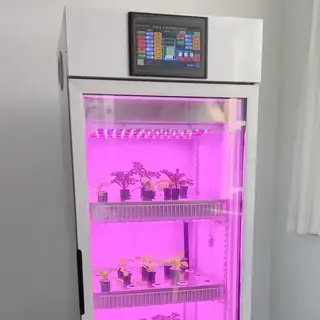
- Controls: in an automated grow box, sensors and a controller manage light hours, pump cycles, temperature and humidity; some units add heaters, humidifiers or small air conditioners.
A fully automated grow box runs on a schedule and alerts the user when the reservoir is low or conditions drift, so daily work is reduced to checking plants and harvesting. If you want to understand the watering methods inside these cabinets, see our overview of types of hydroponic systems.
What types of grow cabinets and grow boxes are there?
Mini and small grow boxes
Countertop or desk-size units with one tier and a single LED panel. A mini grow box is suited to herbs, a few lettuces or starting seedlings for a balcony. They are an easy entry point, but their small air volume heats up quickly, so ventilation matters.
Single-door hydroponic grow cabinets
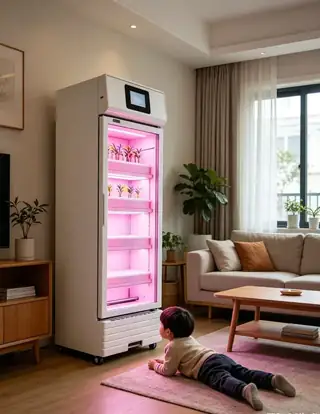
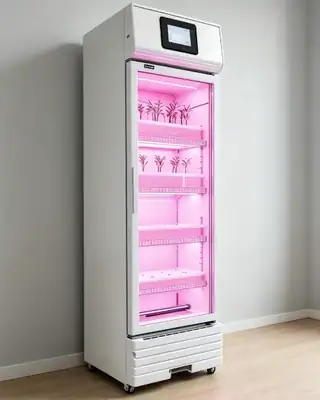
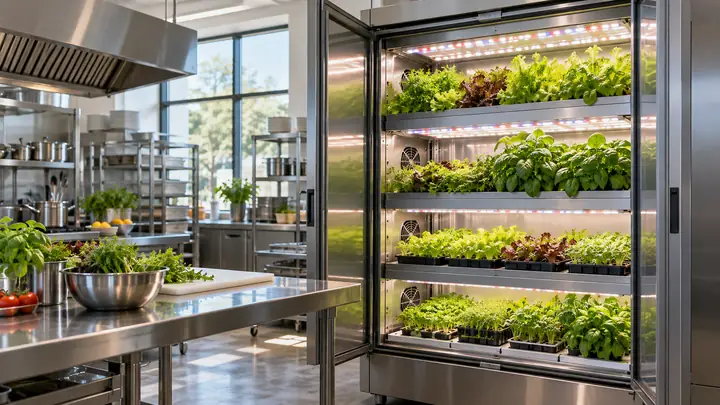
Wardrobe-size cabinets with three to five shelves, an LED panel per shelf and a shared reservoir. They suit households, cafes, schools and restaurants growing salad greens and herbs. The single-door hydroponic grow cabinet with full-spectrum LED is a typical example.
Seedling and propagation cabinets
Seedling grow chambers maintain higher humidity and stable warmth for germination, cuttings and young plants. Nurseries, greenhouse operators and research labs use them to produce uniform hydroponic seedlings before transplanting. An environment-controlled hydroponic seedling cabinet adds temperature and humidity control to multi-tier trays.
Double-door and mobile multi-tier cabinets
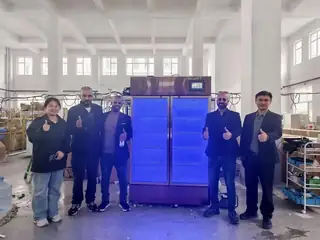
Larger cabinets with two doors, more tiers and sometimes casters or motorized movement, used in offices, showrooms, schools and small commercial kitchens. A mobile multi-tier hydroponic cabinet with LED can be moved for cleaning or display.
Grow rooms, prefab and portable grow rooms
When the cabinet is no longer big enough, growers move to a commercial grow room: an insulated room or prefab chamber fitted with racks, lights, HVAC and irrigation. Portable grow rooms and mobile grow rooms built inside shipping containers are a form of this. At that scale the project becomes a container farm or plant factory; see our container farm guide and our range of container and indoor plant factories.
Grow box vs grow cabinet vs grow room: how do they compare?
| Feature | Mini grow box | Grow cabinet | Grow room / container |
|---|---|---|---|
| Typical size | Countertop | Wardrobe, 1–2 m tall | Room or 20–40 ft container |
| Tiers | 1 | 3–6 | Many racks, multiple tiers |
| Climate control | Fan and light timer | Fans, sensors, optional heating and humidity | Full HVAC, dehumidification, CO2 options |
| Watering | Tray, wick or small pump | NFT, ebb and flow or drip with reservoir | Central nutrient and dosing system |
| Typical users | Households, hobbyists | Restaurants, schools, nurseries, labs | Commercial growers, farm investors |
| Installation | Plug in | Plug in, place near drain | Site work, electrical supply, water and drainage |
What should you look for in a hydroponic grow cabinet?
The best grow box is the one sized and equipped for your crops and space. Use this checklist when comparing grow cabinets for sale:
- Crops and plant height. Leafy greens, herbs and seedlings need 25–40 cm between tiers; taller crops need fewer, taller tiers.
- Light per tier. Each shelf should have its own LED panel with even coverage and an adjustable photoperiod.
- Ventilation capacity. Fans should exchange the cabinet air several times an hour to remove heat and humidity; check noise levels for indoor rooms.
- Watering method. NFT pipes suit greens; ebb and flow trays suit seedlings and pots; drip suits larger plants.
- Reservoir size and access. A reservoir you can lift out or drain easily makes changing the nutrient solution much simpler.
- Automation and sensors. Timers are essential; temperature, humidity and water-level sensors add peace of mind.
- Build quality. Look for corrosion-resistant frames, food-grade plastic trays, sealed electrics and reflective interiors.
- Power and certification. Confirm voltage, plug type and that the unit carries the marks your market requires, such as CE in Europe.
Why are grow cabinets so useful for hydroponic seedlings?
Seedlings are where controlled environments pay off most. Germination needs steady warmth, high humidity and gentle light; small changes cause uneven stands. A seedling grow chamber delivers the same conditions every batch, so plants reach transplant size together. Commercial growers often raise hydroponic seedlings in a cabinet or chamber, then move them to NFT channels or a greenhouse.
A typical hydroponic seedling starter workflow is:
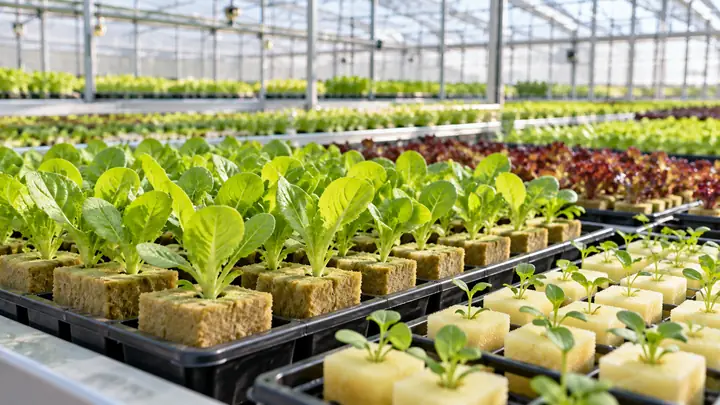
- Sow seeds into sponge plugs or rockwool cubes set in a seedling tray or propagation insert.
- Keep plugs moist with plain water or a weak nutrient solution and cover for humidity if needed.
- Run light at low intensity for roughly 14–18 hours a day once seedlings emerge.
- Raise nutrient strength gradually as true leaves form.
- Transplant when roots grow out of the bottom of the plug.
Our hydroponic growing media guide compares sponge, rockwool and coir plugs for propagation.
Should you build a grow box or buy one?
Many people ask how to build a grow box or how to build a grow cabinet from a wardrobe or storage cabinet. A DIY grow box can work for a hobbyist, but the hard parts are not the shelves. They are even light coverage, enough ventilation to remove heat, safe wiring near water, and a watering system that does not leak. A ready-made grow box kit solves those problems once, with tested components and a single warranty. For a business, the reliability and repeatability of a factory-built unit usually outweigh any savings from building one.
If you are planning a commercial grow room rather than a cabinet, the same principles apply on a larger scale: insulated walls, cleanable surfaces, enough cooling and dehumidification for the lighting load, and a central nutrient system. Grow room construction contractors and grow room builders typically handle the shell, while specialist suppliers provide the racks, lights and irrigation.
Who uses grow cabinets and grow boxes commercially?
- Restaurants and hotels growing herbs and microgreens on site for freshness and display. See our microgreens business guide.
- Nurseries and greenhouses producing uniform seedlings for transplant.
- Schools and universities teaching plant science and running small trials.
- Retailers and distributors selling vegetable grow boxes and all-in-one grow box kits to consumers.
- Offices and showrooms using cabinets as living displays.
How do you maintain a hydroponic grow cabinet?
A grow cabinet is low-maintenance, but a short routine keeps it productive and hygienic:
- Daily: check plants, water level and that lights and fans are running. Remove any yellowing or damaged leaves.
- Weekly: measure EC and pH of the nutrient solution and correct them; most greens and seedlings do well at a pH of roughly 5.5–6.5. Our hydroponic nutrients, EC and pH guide explains targets by crop.
- Every two to three weeks: drain, rinse and refill the reservoir with fresh solution.
- Between crops: remove trays and pipes, clean them with a mild detergent or a horticultural disinfectant, wipe down reflective walls and clean or replace fan filters.
Keep the cabinet in a room with moderate temperature. If the room is hot, the cabinet fans have to work harder and the nutrient solution warms up, which lowers dissolved oxygen and raises the risk of root problems. In cold rooms, a small heater or an insulated cabinet keeps growth steady. For households comparing cabinets with countertop units and towers, our home hydroponic systems buyer's guide covers the wider range of indoor gardens.
What does it cost to run a grow cabinet?
Running cost is driven mainly by lighting hours and wattage, then by fans and any heating or cooling. Leafy greens need modest light, so a well-designed cabinet with efficient LEDs is inexpensive to run compared with a full grow room. Water and nutrient use are low because the system recirculates. When comparing units, ask for the rated power of the lights and fans and multiply by your planned hours and local electricity tariff.
Mars Vertical Farm manufactures grow cabinets, seedling cabinets and multi-tier home systems in its Shanghai factory, with OEM/ODM options for distributors. Browse the full range of smart grow cabinets and home systems, or ask our team for a quotation with your target crops, cabinet size and market voltage.