Short answer
A hydroponic indoor herb garden grows herbs in a recirculating nutrient solution under LED light. Basil, mint, parsley, oregano, thyme and chives grow well; cilantro bolts in heat. Give herbs roughly 14 to 16 hours of light a day, keep pH around 5.5 to 6.5 and EC near 1.0 to 1.6 mS/cm, and harvest regularly to keep plants bushy.
What is a hydroponic indoor herb garden?
A hydroponic indoor herb garden grows culinary herbs such as basil, mint and parsley without soil, with roots in a recirculating nutrient solution and light from LEDs or a bright window. Because water, nutrients and light are controlled, hydroponic herbs typically grow faster and more evenly than herbs in pots of soil, and they can be harvested year-round.
Indoor herb gardening covers a wide range of scales. At one end are countertop smart garden units with a few pods, a small pump and a built-in light. At the other are restaurant and retail displays, grow cabinets, wall systems and commercial racks producing fresh-cut herbs every week. The principles are the same at every size: the right herb, a suitable system, enough light, a balanced nutrient solution and regular harvesting.
This guide covers the best herbs for hydroponics, system and design options, lighting, nutrients, and what buyers and distributors should look for in an indoor herb garden system.
What are the best herbs for hydroponics?
Most leafy culinary herbs grow well hydroponically. A University of Florida greenhouse trial in vertical hydroponic towers found that basil, oregano, parsley, sweet marjoram and thyme combined good quality with strong market value, with first harvests roughly 15 to 28 days after transplanting. Some herbs, including cilantro and chives in that trial, struggled with bolting or pests under warm greenhouse conditions.
| Herb | Ease | Preferred temperature | Typical EC (mS/cm) | Notes |
|---|---|---|---|---|
| Basil (sweet, Genovese, Thai) | Easy | Warm, about 20 to 27 °C | About 1.0 to 1.6 | The top-selling hydroponic herb; pinch tips to keep it bushy |
| Mint | Easy | Moderate | About 1.2 to 1.6 | Vigorous roots; give it its own channel or pot |
| Parsley (flat and curly) | Medium | Cool to moderate | About 0.8 to 1.8 | Slow to germinate; long harvest period |
| Chives | Medium | Cool to moderate | About 1.2 to 1.8 | Cut-and-come-again; prone to pests in warm greenhouses |
| Cilantro (coriander) | Medium | Cool, below about 24 °C | About 1.2 to 1.8 | Bolts quickly in heat and long days; sow in succession |
| Oregano, thyme, marjoram | Medium | Moderate | About 1.0 to 1.6 | Slower; prefer slightly drier root conditions |
| Dill | Medium | Moderate | About 1.0 to 1.6 | Tall; can bolt early |
EC ranges are typical starting points, not fixed rules. For a mixed indoor herb garden on one shared reservoir, run a moderate EC that suits the main crop, usually basil, and group herbs with similar needs.
Which hydroponic system suits an indoor herb garden?
- Countertop smart garden kits: a small tank, a pump or wick, a light arm and a few seed pods. An indoor herb garden starter kit like this is ideal for homes and teaching, but has limited capacity.
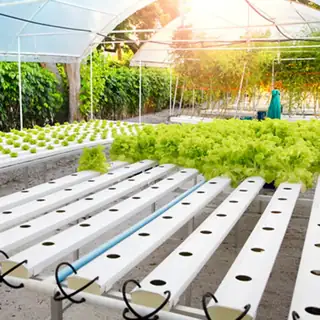
- NFT channels: efficient for basil and other leafy herbs, easy to stack in racks or mount on walls. Our vertical NFT pipe system is one example.
- Growing herbs in a tray hydroponics: ebb and flow or shallow flood trays hold plugs or small pots and suit mixed herbs, microgreens and propagation. They are flooded on a timer and drained back to the tank.
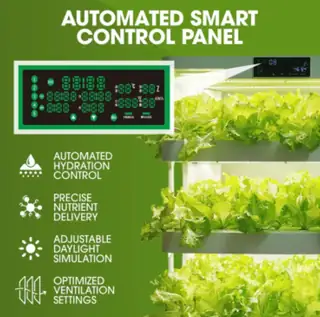
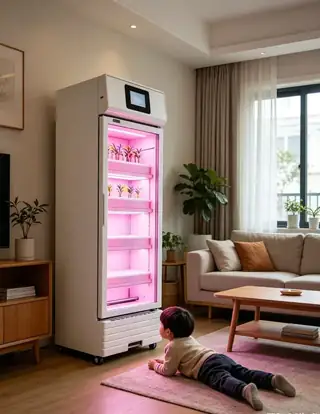
- Grow cabinets: enclosed cabinets with lights, fans and a hydroponic system, giving control over climate and pests. See our single-door hydroponic grow cabinet with full-spectrum LED and our guide to grow cabinets and grow boxes.
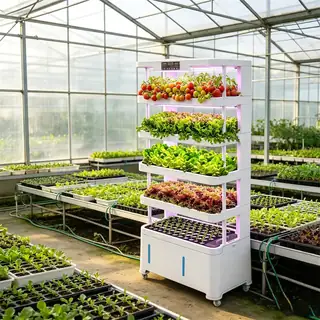
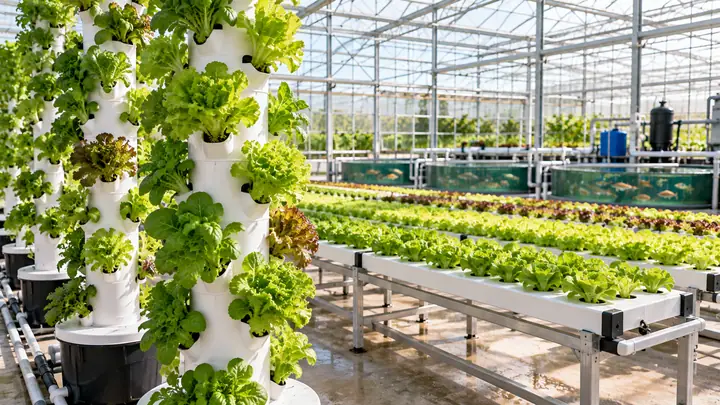
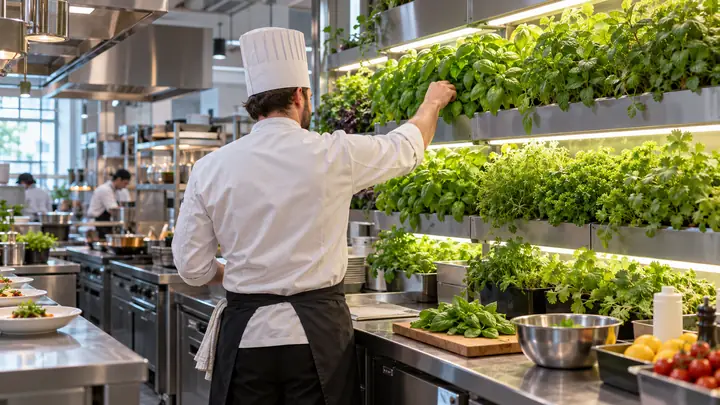
- Vertical towers and wall systems: an indoor herb garden vertical system or wall herb garden indoor setup saves floor space and makes an attractive display in restaurants, offices and shops.
For a broader look at small-scale options, read our home hydroponic systems guide.
Is growing herbs hydroponically better than using soil containers?
Herb garden containers indoors filled with potting mix are cheap and simple, and they suit woody herbs such as rosemary and bay that dislike constantly wet roots. Growing herbs hydroponically suits fast leafy herbs better. Roots get water, oxygen and nutrients on demand, so basil, mint and parsley grow faster and more uniformly, there is no soil to spill, and soil pests such as fungus gnats are far less common.
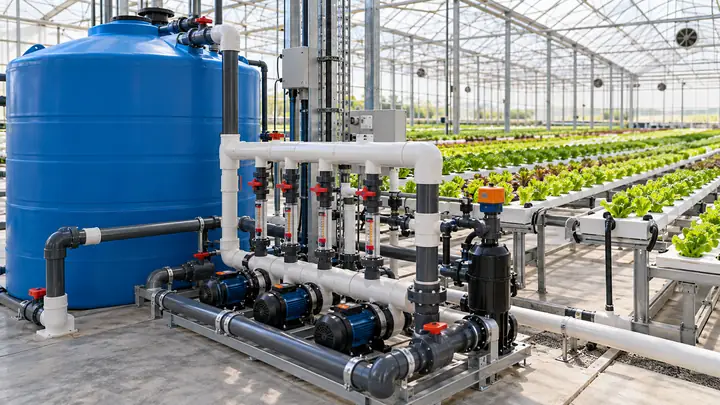
The trade-off is that a hydroponic herb kit depends on a pump, a light and a little routine: checking the water level, topping up nutrients and cleaning between crops. For a basic herb garden set up, the indoor herb garden supplies you need are a system with a tank and pump (or a passive wick unit), an LED light, plugs or pods, a hydroponic nutrient, and ideally a simple pH and EC meter. A hydroponic smart garden bundles most of these in one box, while larger setups let you choose each part separately.
How do you plan an indoor herb garden design?
Good herb garden plans start with the herbs you actually use or sell, then work back to the space and system. Follow these steps:
- List the herbs and weekly quantities. A home kitchen may want a few basil and parsley plants; a restaurant may want several bunches of basil, mint and chives a day.
- Measure the space and light. Note the floor or wall area, power sockets and whether there is a bright window. Most indoor locations need artificial light.
- Choose a format. Countertop unit, herb garden box, shelf with trays, wall mounted herb garden indoor panel, tower or cabinet.
- Group herbs by need. Put warm, heavy-feeding basil together, keep mint in its own section, and give cilantro and parsley a cooler, separate zone if possible.
- Plan propagation. Sow new plugs every 2 to 4 weeks so that there is always a fresh batch coming on as older plants decline.
- Plan access and water. Leave room to refill and clean the tank, to reach every plant for harvesting, and to check pumps and lights.
How much light does an indoor herb garden need?
Light is the single biggest factor in indoor herb gardening. Leafy herbs grow well with roughly the same daily light as lettuce, around 12 to 17 mol/m²/day, and basil often benefits from the upper end of that range. A windowsill rarely provides this, especially in winter, so herbs grown only by a window tend to become leggy and pale.
An indoor herb garden with light built in solves this. As a guide:
- Run LEDs for about 14 to 16 hours a day.
- Aim for roughly 200 to 300 µmol/m²/s at the canopy for mature plants, and less for seedlings.
- Keep the indoor herb garden light at the distance the manufacturer recommends, raising it as plants grow.
- Use full-spectrum white LEDs for display gardens; they render herb colors naturally, unlike pink-purple lights.
How do you care for hydroponic herbs?
- Nutrients: use a complete hydroponic fertilizer, not a soil feed. Keep pH around 5.5 to 6.5 and EC in the range in the table above. Our hydroponic nutrients, EC and pH guide explains how to measure and adjust both.
- Water: top up as plants drink, and change the solution every few weeks. Keep the water cool and the tank covered.
- Harvesting: cut regularly, taking no more than about a third of the plant at once. For basil, cut just above a pair of leaves so that two new shoots form. Remove flower buds to keep leaves tender.
- Airflow: a small fan reduces mildew and strengthens stems.
- Pests: check under leaves for aphids, whitefly and spider mites, especially on basil and mint.
Growing herb seedlings
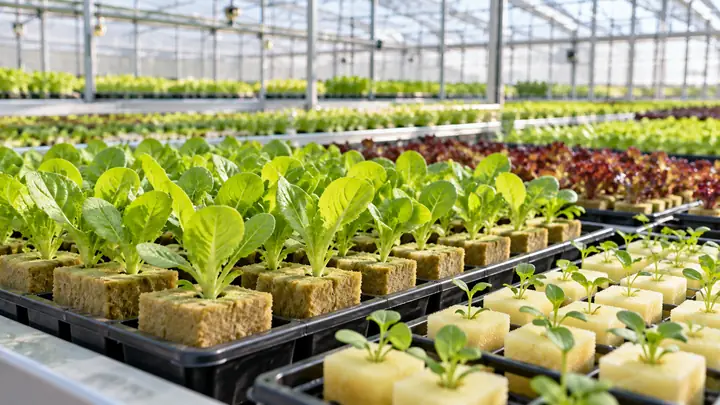
Most growers sow hydroponic herb seeds into rockwool cubes, sponge plugs or pre-filled pods. Basil and dill germinate in a few days; parsley can take two to three weeks, so soak seed overnight first. Sow several seeds per plug for thin-stemmed herbs such as chives and thyme to get a fuller clump. Our growing media guide compares plug options. When choosing indoor herb garden seeds, pick compact, slow-bolting varieties sold for container or greenhouse growing.
How do you choose the best indoor herb garden system?
For buyers, retailers and distributors comparing indoor herb gardening kits or larger smart gardening systems, look past the photos and check the details:
| What to check | Why it matters |
|---|---|
| Light output and spectrum | Too little light is the most common reason indoor herbs fail |
| Tank volume | Larger tanks mean fewer refills and steadier EC and pH |
| Pod or plug format | Proprietary pods lock users into one supplier; standard plugs keep running costs down |
| Pump noise and reliability | Matters in kitchens, offices and showrooms |
| Food-safe, light-proof materials | Prevents algae and contamination of the solution |
| Ease of cleaning | Herb roots, especially mint, can clog small channels |
| Certification and plugs | CE marking and the right mains plug for your market |
The best indoor smart garden for a home kitchen is a compact unit with a strong light and a big enough tank. The best indoor herb garden system for a restaurant or retail display is usually a multi-tier unit or cabinet, such as our home multi-tier vertical hydroponic system or small household hydroponic planter, with standard plugs and room to grow lettuce and other leafy greens as well. If you plan to grow microgreens alongside herbs, see our microgreens business guide.
Sourcing herb garden systems for your market?
Mars Vertical Farm makes countertop planters, multi-tier home systems and grow cabinets with OEM/ODM options, CE-marked products and quotes on EXW, FOB Shanghai or CIF terms. Browse our home grow systems, or contact us for a quotation on herb garden systems for your range.