Short answer
Sticky traps are cards, strips or rolls coated with non-drying glue that catch flying insects attracted to their color. Yellow sticky traps catch whiteflies, winged aphids, fungus gnats, shore flies, leafminers and some thrips; blue traps are more sensitive for thrips. Greenhouse growers typically hang three to four cards per 1,000 sq ft (93 m²), 10 to 15 cm above the canopy, and check them weekly.
What are sticky traps, and what do they catch?
Sticky traps are cards, strips or rolls coated with a non-drying glue that catch flying insects attracted to their color, most often bright yellow or blue. In greenhouses, nurseries and indoor farms, sticky traps are mainly a monitoring tool: they show which pests are flying, where and how many, so growers can act early. They catch winged aphids, whiteflies, fungus gnats, shore flies, leafminers and thrips, but not wingless pests such as spider mites.
This guide explains how yellow sticky traps work, when to use blue sticky traps, how many cards to hang and where, how to read them, and where fly paper and sticky fly strips fit for barns and buildings. It is written for commercial growers first, with notes for houseplant growers.
How do yellow sticky traps work?
Yellow sticky traps work because many plant-feeding insects are strongly attracted to yellow, which resembles bright young foliage. Insects land on the card and stick to the glue. Because the trap relies on color rather than a chemical, it catches a broad mix of species, including some you would rather not catch, such as beneficial parasitic wasps.
The table shows which pests sticky traps catch well and which they miss.
| Pest | Best trap color | What the trap tells you | Notes |
|---|---|---|---|
| Whiteflies | Yellow | Early arrival and hot spots | Pair with leaf inspection for nymphs |
| Winged aphids | Yellow | Migration into the crop | Wingless colonies on plants are not caught |
| Fungus gnats | Yellow | Adult activity near wet media | Hang cards low or lay them flat just above the media |
| Shore flies | Yellow or blue | Algae and wet-floor problems | Often confused with fungus gnats |
| Leafminer adults | Yellow | Adult flights before mines appear | Useful in vegetables and ornamentals |
| Thrips | Blue (yellow also works) | Low populations before damage shows | Blue traps are more sensitive for thrips |
| Spider mites | Not effective | Nothing reliable | Wingless; scout leaves with a hand lens |
| Mealybugs and scale | Not effective for main stages | Occasional winged males or crawlers | Scout plants directly |
Yellow vs blue sticky traps: which should you use?
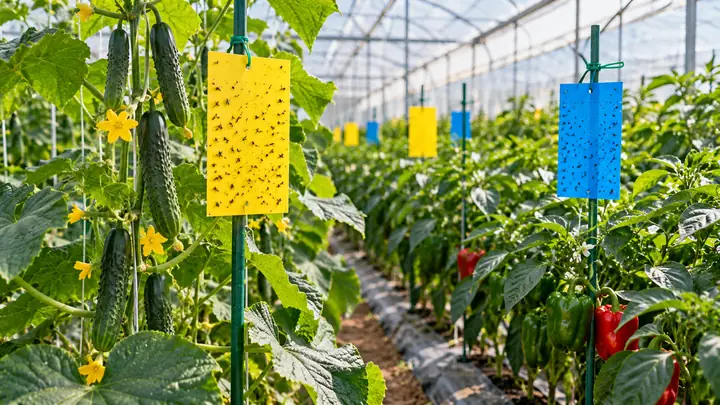
Use yellow sticky traps for general monitoring and blue sticky traps when western flower thrips or other thrips are the main concern. University extension integrated pest management (IPM) programs describe yellow cards as catching the widest range of greenhouse pests, while blue sticky traps for thrips attract thrips more strongly and help detect low populations on susceptible crops such as cucumbers, peppers and many ornamentals.
- Yellow: whiteflies, aphids, fungus gnats, shore flies, leafminers, and thrips to a lesser degree.
- Blue: thrips and shore flies; fewer of the other pests.
- Combination: many growers run mostly yellow cards with some blue cards near thrips-prone crops and entry points.
One important exception: bumblebees are attracted to blue, so reduce or avoid blue cards in tomato greenhouses that use bumblebees for pollination.
How do you use sticky traps in a greenhouse?
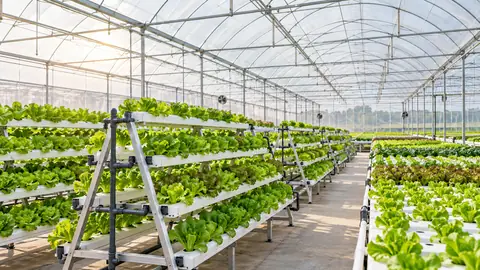
Sticky traps only work as a monitoring system if they are placed consistently and checked on a schedule. Extension guidelines for greenhouse scouting follow this general procedure:
- Set the density: use at least one card per 93 m² (1,000 sq ft), and preferably three to four cards per 93 m², about one card every 25–30 m² (270–330 sq ft).
- Cover entry points: add cards near doors, roof and side vents and pad-and-fan walls, where pests arrive from outside.
- Target susceptible crops: place extra cards near varieties that attract whiteflies or thrips.
- Set the height: hang cards about 10–15 cm (4–6 in) above the canopy and raise them as the crop grows. For fungus gnats, lay cards horizontally just above the growing media.
- Label each card: write the date, house and bay or bench number so counts can be mapped.
- Check weekly: count each target pest with a 10x to 15x hand lens. In hot weather, when insects develop faster, check twice a week.
- Replace on schedule: change cards weekly, since dust and catches reduce stickiness; in cool winter conditions cards can stay longer.
- Record and graph: log counts per card per week in a spreadsheet and watch the trend, not single numbers.
Printed grids on the card make counting faster, and a standard card size such as 7.5 x 12.5 cm (3 x 5 in) or 10 x 25 cm (4 x 10 in) keeps counts comparable over time. For a wider look at greenhouse design and climate, see our commercial greenhouse guide.
How do you read and act on sticky trap counts?
Sticky trap counts show trends and locations, not absolute pest numbers on the plants. A rising count on cards near one vent points to an entry problem; a hot spot in the middle of a house points to an infested bench. Use the counts to decide where to scout plants closely, when to release biological controls or apply a treatment, and whether last week's action worked. Many growers set their own action thresholds per crop based on past records.
Can sticky traps control pests, or only monitor them?
Sticky traps are mainly a monitoring tool, but mass trapping with many cards or sticky rolls can reduce flying pests in enclosed spaces. Large yellow sticky rolls, often 15–30 cm (6–12 in) wide, are stretched above crop rows to catch whiteflies, thrips, fungus gnats and leafminer adults.
- Where it helps: closed greenhouses and indoor farms with good insect screening, and as one layer alongside biological control.
- Where it does not: established infestations, wingless pests, and open fields where pests keep arriving.
- The trade-off: sticky traps also catch beneficial insects such as parasitic wasps (for example, whitefly parasitoids) and predatory flies. After releasing winged beneficials, wait a day or two before replacing cards, and reduce mass-trapping rolls in those areas.
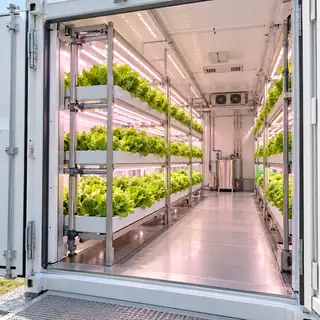
In indoor farms and container farms, where the environment is sealed, a small number of yellow cards near the entrance and air intakes is an easy early-warning system. Combined with sensors and cameras, trap data can feed into wider IoT smart agriculture systems.
Sticky traps for indoor plants, thrips, aphids and leaf miners
Small yellow sticky traps for plants, usually staked into the pot, are a simple way to monitor houseplants and small indoor gardens. They are most useful for fungus gnats, which breed in moist potting mix.
Do yellow sticky traps get rid of fungus gnats?
Yellow sticky traps catch adult fungus gnats and help break the cycle, but they do not kill the larvae living in the growing media. To fix the cause, let the surface dry between waterings, improve drainage and treat the media with a biological product such as Bti if needed. Our guide to fungus gnats and powdery mildew control explains the full approach.
Thrips, aphids and leaf miners
Thrips sticky traps, especially blue ones, detect thrips earlier than plant inspection alone. Sticky traps for aphids only catch the winged forms, so they warn you of new arrivals but not of colonies already on the plants. Sticky traps for leaf miners catch the small adult flies, often before mines appear on leaves. Sticky traps for mites are not effective, because spider mites have no wings.
Fly paper, sticky fly strips and fly ribbon traps
Fly paper, sticky fly strips and fly ribbon traps are the same idea as sticky cards, scaled for houseflies and stable flies in barns, packing sheds, kitchens and storage buildings. Common formats include:
- Hanging fly strips and fly ribbons: coiled ribbons that unroll to hang from ceilings, often with a scent attractant.
- Fly paper rolls and fly tape traps: long sticky rolls strung along barn aisles or above livestock, where fly pressure is high.
- Window fly tape: clear or decorative strips that stick to glass, where flies gather.
- Insect glue traps and glue boards: flat boards for crawling insects such as cockroaches, placed along walls.
Place fly paper strips where flies rest, typically near windows, light sources and warm walls, but away from food preparation surfaces and out of reach of people and animals. Outdoors, avoid placing glue traps where small birds, bats or lizards can be caught. Sticky traps for mosquitoes usually take the form of a dark, water-baited ovitrap aimed at egg-laying container mosquitoes; see our mosquito control traps guide for how these fit into a wider plan.
Sticky traps vs light traps: how do they fit together?
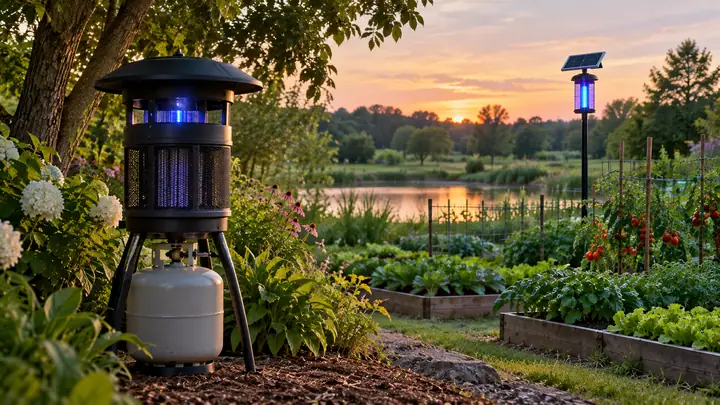
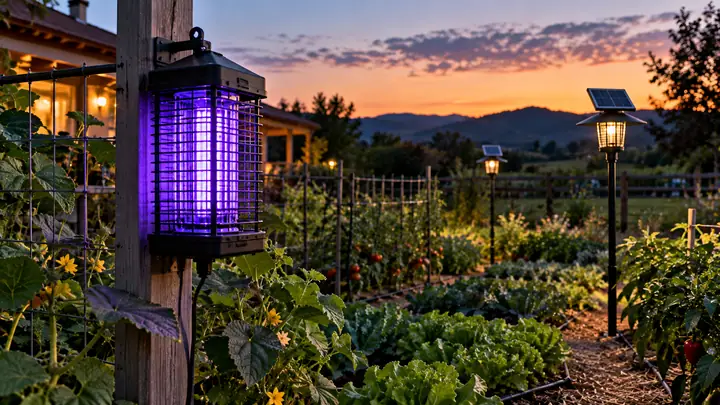
Sticky traps and light traps complement each other because they target different insects at different times. Sticky cards catch small day-flying pests that respond to color; light traps catch night-flying insects such as moths and many beetles that respond to ultraviolet light.
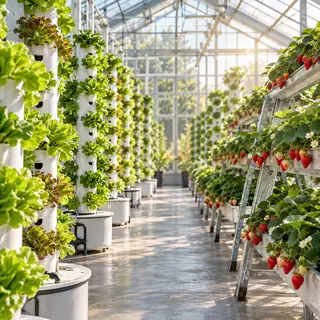
- Greenhouses and indoor farms: sticky cards for monitoring, plus insect screening on vents.
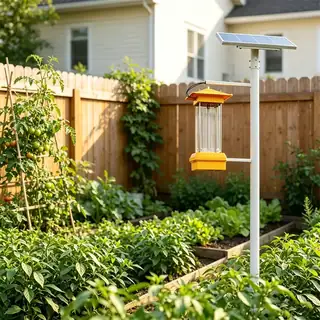
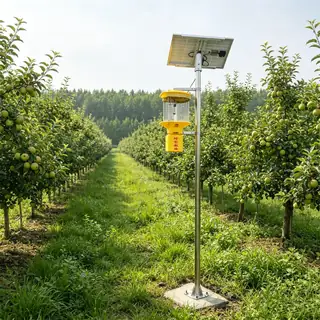
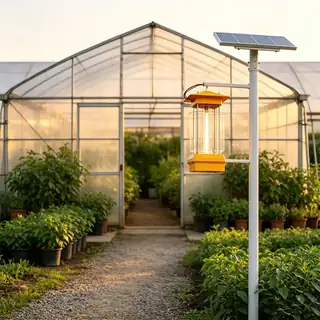
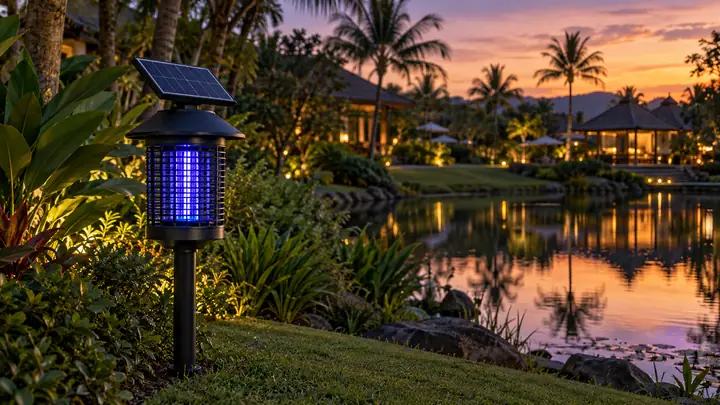
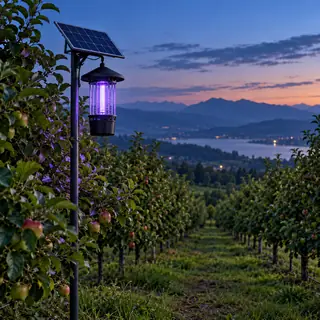
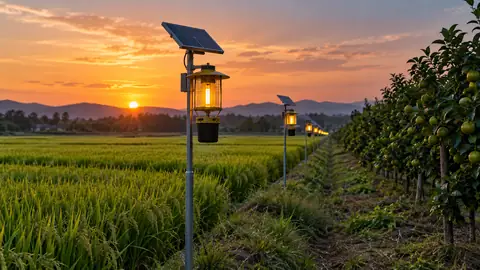
- Orchards and open fields: solar insect lamps for night-flying moths and beetles, with sticky or pheromone traps for specific pests. See insect light traps for farms and solar insect-killing lamps.
- Large sites: automatic insect monitoring lamps photograph and count catches and report them remotely, reducing manual scouting.
What to look for when buying sticky traps
The best sticky bug traps for professional use share a few specifications:
- A consistent, bright color (yellow or blue) that does not fade quickly in sunlight.
- Double-sided, non-drying glue that stays tacky in heat and high humidity.
- A printed grid for counting, and a standard card size for comparable data.
- Pre-punched holes or stakes for hanging, and a protective release liner.
- Rolls in widths suited to your row spacing for mass trapping.
Next steps
Sticky traps are the cheapest early-warning system a grower can run, and they work best as part of an IPM program with scouting, screening, biological control and, outdoors, light traps. For farms and orchards that want automatic pest data, we manufacture solar-powered pest-control and monitoring lamps factory-direct, such as the solar automatic insect monitoring and reporting lamp. Explore the pest-control range or tell us your crop and site size for a recommendation.