












Short answer
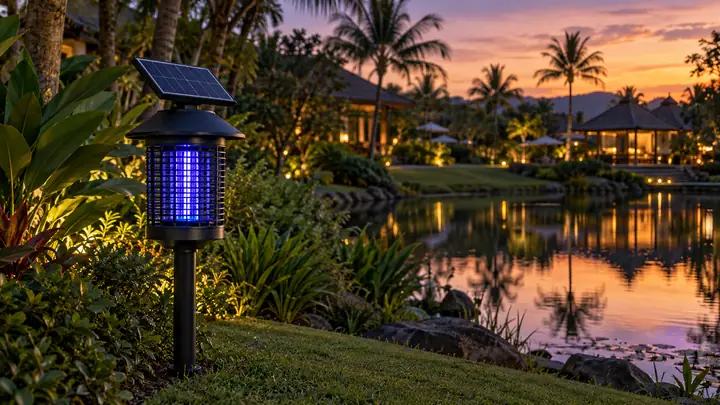
A plug in bug zapper is a wall-powered insect killer that uses a UV-A lamp or UV LED to attract flying insects onto a high-voltage, low-current grid. Indoor units typically draw about 3 to 20 watts, and outdoor units 15 to 40 watts or more, so running costs are usually under a few dollars a month. Use listed units, keep them away from food and replace UV bulbs about yearly.
What is a plug in bug zapper?
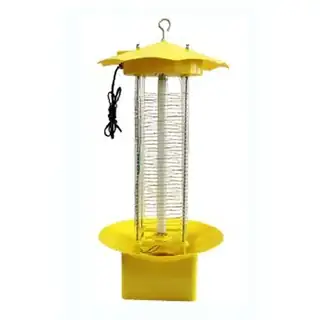
A plug in bug zapper is a small electric insect killer that runs from a wall outlet, using an ultraviolet (UV-A) lamp or UV LED to attract flying insects onto a high-voltage, low-current wire grid that electrocutes them. Most plug in bug zappers for indoor use draw roughly 3 to 20 watts, and larger outdoor units typically 15 to 40 watts or more.
Zappers are simple devices, but buyers ask the same practical questions again and again: are they safe around children and pets, where should they go, how much electricity do they use, can they get wet, and when should the bulb be replaced? This guide answers those questions, then covers plug-in insect deterrents, ultrasonic devices and LED lighting. For the evidence on which insects zappers actually kill, see our companion article do bug zappers work.
Are bug zappers safe to use?
Bug zappers are safe for normal household and farm use when they carry a recognized safety listing, are installed as the manufacturer directs and are kept clean. The grid runs at high voltage, commonly in the low thousands of volts, but listed consumer units limit current and enclose the grid behind a protective cage so fingers cannot reach it. Follow these safety rules:
- Buy listed products: look for a mark from a recognized testing laboratory, such as UL or ETL in North America or CE in Europe.
- Keep the guard intact: never use a unit with a damaged cage, and keep it out of reach of small children and pets.
- Unplug before cleaning: brush dead insects off the grid with a dry brush only after unplugging and waiting a moment. Built-up debris reduces performance and can smolder.
- Keep away from food: zapped insects can scatter fragments, so food safety guidance discourages placing electrocution devices above food preparation or serving areas. Glue-board light traps are the usual alternative in kitchens.
- Avoid flammable atmospheres: do not use zappers near fuel, gas, solvents or in dusty feed and grain areas where sparks could ignite dust.
- Use the right outlet: outdoors, plug into a ground-fault protected (GFCI) outlet, and use only outdoor-rated extension cords.
Where is the best place to put a bug zapper?
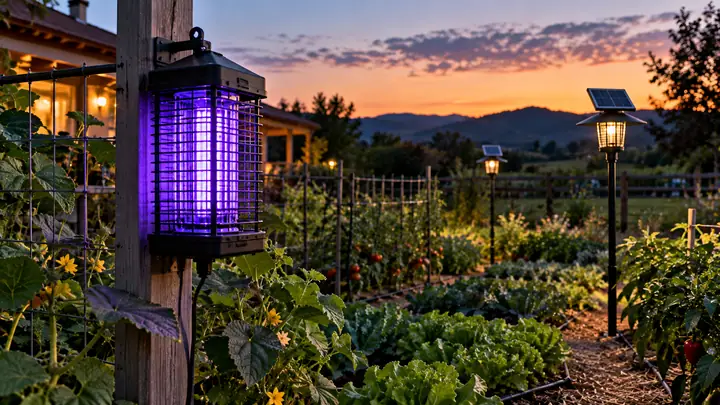
The best place to put a bug zapper is between where insects come from and where people are, away from competing lights and not directly beside the people you want to protect. Placement matters more than wattage.
Outdoor bug zapper placement
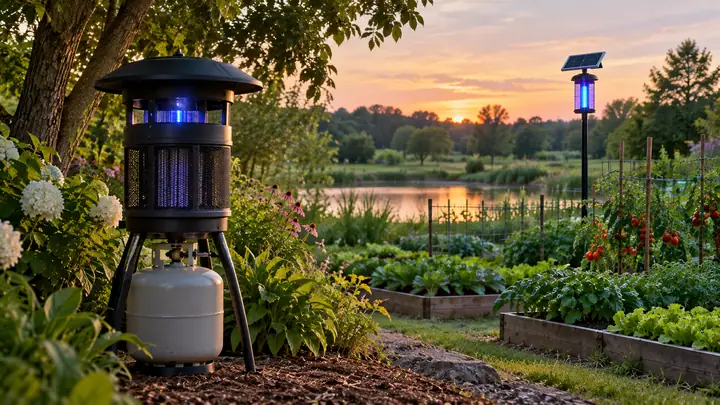
- Choose a spot about 6–8 m (20–25 ft) from patios, doors and seating, so insects are drawn away from people rather than toward them.
- Place it between the insect source, such as a tree line, pond or field edge, and the living area.
- Hang or mount it about 1.5–2 m (5–7 ft) above the ground, the height recommended by many manufacturers.
- Keep it away from porch lights and other bright lights that compete for attention.
- Shelter it from direct driving rain if it is not fully weatherproof, and make sure the cord is protected.
Indoor plug in bug zapper placement
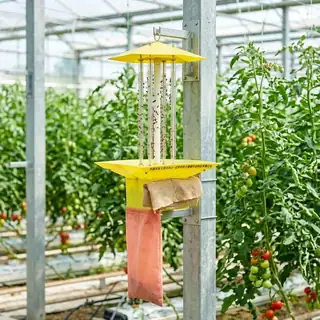
Indoors, place a plug in bug zapper in a darker area of the room, away from food, and where it cannot be seen from outside through a window, so it does not lure insects in from outdoors. Low outlets work well for fruit flies and gnats; slightly higher positions suit house flies. In barns, packing sheds and greenhouse service areas, larger wall-mounted units are usually placed near entrances, but never above product, feed or workbenches. Our commercial bug zapper guide covers larger buildings.
How much electricity does a bug zapper use?
A bug zapper does not use much electricity: most units draw between a few watts and about 40 watts, so a typical unit costs well under a few dollars a month to run. The table estimates monthly use at a residential rate of about $0.17 per kilowatt-hour (kWh); check your own tariff.
| Unit type | Typical power | Run time | Energy per 30 days | Approximate cost |
|---|---|---|---|---|
| Small LED plug-in zapper | 3–5 W | 24 h per day | About 2.2–3.6 kWh | About $0.40–$0.60 |
| Standard indoor plug-in zapper | 15–20 W | 8 h per night | About 3.6–4.8 kWh | About $0.60–$0.80 |
| Indoor zapper left on 24/7 | 20 W | 24 h per day | About 14.4 kWh | About $2.45 |
| Outdoor lantern or grid zapper | 40 W | 12 h per night | About 14.4 kWh | About $2.45 |
| Large outdoor or commercial unit | 100 W | 12 h per night | About 36 kWh | About $6.10 |
To calculate your own figure, multiply the wattage on the label by hours of use per day and by 30, then divide by 1,000 to get kWh. Off-grid sites such as orchards and fields often avoid wiring entirely by using solar models; see our solar bug zapper buying guide.
Can bug zappers get wet, work in daylight or run 24/7?
Outdoor bug zappers are built to tolerate rain, most zappers work best from dusk onward, and most can run continuously, although running at night only is usually more efficient.
Can bug zappers get wet?
Outdoor-rated zappers are designed to handle rain and dew, but they are not made to be submerged or hosed down. Check the ingress protection (IP) rating; a rating such as IPX4 means protection against splashing water from any direction. In heavy rain, water bridging the grid can cause crackling or brief shorting, which is normal for many units. Indoor plug-in zappers are not weatherproof and should never be used outdoors or in wet rooms. Always use a GFCI-protected outlet outside.
Do bug zappers work during the day?
Bug zappers work during the day only weakly outdoors, because sunlight overwhelms the lamp's UV and most insects attracted to UV fly at dusk and at night. Indoors, especially in dim rooms, garages and barns, plug in zappers do catch house flies and other insects in daytime. Many outdoor units use a light sensor or timer to switch on at dusk.
Can you leave a bug zapper on 24/7?
Yes, a listed zapper can usually be left on 24/7 if the manufacturer allows it, and the electricity cost is small. However, continuous running shortens bulb life and adds little benefit outdoors during daylight. A timer or dusk-to-dawn sensor is a good compromise. Clean the grid more often when the unit runs constantly.
Bug zapper replacement bulbs: when and how to change them
Bug zapper replacement bulbs should be changed about once a year or each season of regular use, as many manufacturers advise, because UV output fades long before the tube stops glowing. A bulb that still looks bright may attract far fewer insects.
- Match the type: most zappers use "BL" blacklight fluorescent tubes that emit UV-A around 350–370 nanometers; newer models use UV LEDs. Do not substitute ordinary white or "BLB" party bulbs unless the manufacturer lists them.
- Match the size: check length, diameter (for example T5 or T8), wattage and pin base. Common tube sizes include 15 W and 20 W lengths; your manual lists the exact code.
- Replace safely: unplug, let the unit discharge, and wear gloves. Never touch the grid.
- Dispose properly: fluorescent tubes contain a small amount of mercury, so recycle them through a lamp collection point rather than household trash.
When replacing a bug zapper light bulb, also check the grid for bent wires and the cage for damage.
Plug-in insect deterrents, ultrasonic devices and other electronic pest control
Plug-in insect deterrents and electronic pest control devices cover several very different technologies, and their effectiveness varies widely.
- Ultrasonic bug killers and repellers: claim to drive away insects with high-frequency sound. University studies have generally found little or no effect on insects such as mosquitoes and cockroaches, and the US Federal Trade Commission has warned sellers about unsupported claims for these devices.
- Plug-in insecticide vaporizers: heat a mat or liquid containing an insecticide. They are pesticides, so use only registered products and follow the label, especially around children, pets and food.
- Plug-in insect traps without a grid: a UV LED and a small fan draw insects onto a replaceable sticky card. They are quiet, produce no fragments and suit bedrooms and kitchens. For more on sticky monitoring, see our sticky traps guide.
Do LED bulbs attract bugs?
LED bulbs attract fewer bugs than incandescent, halogen or fluorescent lamps because they emit very little UV and little heat. Warm white or amber LEDs, around 3,000 K or lower, attract fewer insects than cool white or blue-rich light. Switching porch lights to warm LEDs is a simple way to reduce insects around doors.
Do bug zappers kill mosquitoes, bees or moths?
Bug zappers kill many moths, beetles and flies, few mosquitoes and relatively few bees. Mosquitoes rely mainly on carbon dioxide and body odor rather than light to find people, so studies of zapper catches have found that biting insects make up only a small share. For mosquitoes, CO2 traps and breeding-site removal work much better; see our guides to mosquito control and outdoor mosquito zappers.
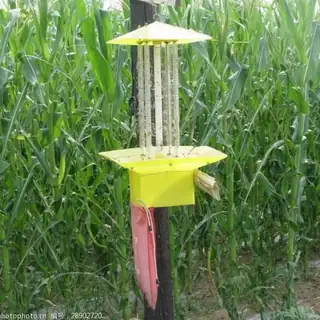
Honeybees forage in daylight and return to the hive at night, so they are rarely caught by zappers that run after dusk, but other beneficial insects are. A bug zapper for moths is effective against many night-flying species, which is why agricultural solar insect lamps are used in orchards and fields against moth pests. For pantry moths indoors, pheromone traps are more targeted.
Next steps
A plug in bug zapper is a useful, low-cost tool for flies and moths indoors and around buildings when it is listed, well placed and maintained. For farms, orchards and plantations that need insect control without wiring, we manufacture solar insect-killing lamps factory-direct, including a solar electric-shock insect killer lamp with IoT. Browse the pest-control range and read our solar insect-killing lamp guide, or send us your site size and target pests for a recommendation.