












Short answer
Mosquito control is the combination of methods that reduce mosquito numbers and bites: removing standing water where larvae develop, treating undrainable water with a Bti larvicide, trapping adults with CO2 or propane traps, targeted barrier sprays, and screens and EPA-registered repellents. Larvae can become adults in about 7 to 10 days in warm weather, so weekly water checks matter most. No single trap or lamp works alone.
What is mosquito control, and what actually works?
Mosquito control is the combination of methods used to reduce mosquito numbers and bites: removing standing water where larvae develop, treating water that cannot be drained, reducing adult mosquitoes with traps or targeted sprays, and protecting people with screens and repellents. No single trap, lamp or spray works on its own; the best mosquito control for a yard or farm combines several of these steps, an approach known as integrated pest management (IPM).
This guide explains how mosquitoes find people, the backyard mosquito control steps that matter most, how mosquito yard treatment works, and how CO2, propane, light and indoor mosquito traps compare. It finishes with farm-scale advice. For a focused comparison of zappers and traps, see our outdoor mosquito zapper guide.
How do mosquitoes find people, and why does it matter for control?
Female mosquitoes find hosts mainly by following carbon dioxide (CO2) from breath, then homing in on body heat, moisture and skin odors such as lactic acid and octenol. Only females bite, because they need blood to develop eggs. These cues explain why CO2-baited traps outperform light-only devices for mosquitoes.
The life cycle explains why water management is so effective. Eggs are laid on or near water; larvae and pupae live in the water and can become flying adults in roughly 7 to 10 days in warm weather. Two groups matter in most yards and farms:
- Container breeders such as the Asian tiger mosquito (Aedes albopictus) breed in small containers, bite aggressively during the day and usually stay within a short distance of where they hatched, often a couple of hundred meters or less.
- Culex mosquitoes breed in standing and polluted water such as ponds, ditches and catch basins, bite mainly at dusk and night, and are the main carriers of West Nile virus in North America. They can travel considerably farther.
Because container breeders stay close to home, most of the mosquitoes biting you in the backyard often hatched on or very near your property, which is good news: your own effort makes a real difference.
Backyard mosquito control: the steps that matter most
Effective backyard mosquito control starts with water, not gadgets. Public health agencies and university extension services consistently recommend this order of priorities:
- Dump and drain weekly: empty buckets, plant saucers, toys, tarps, tires and anything that holds water. A bottle cap of water can produce mosquitoes.
- Fix the hidden sources: clear clogged gutters, level puddling areas, cover rain barrels with fine mesh and keep pool water circulating and treated.
- Treat water you cannot drain: use a larvicide based on Bacillus thuringiensis israelensis (Bti) in ponds, troughs and ornamental water. Bti dunks typically last about a month and target mosquito, black fly and fungus gnat larvae.
- Reduce resting sites: trim dense shrubs and tall grass where adults shelter during the day.
- Protect people: use window and patio screens, a fan on the deck (mosquitoes are weak fliers) and repellents registered by the US Environmental Protection Agency (EPA), such as DEET, picaridin, IR3535 or oil of lemon eucalyptus.
- Add traps: run CO2 traps from early in the season to pull down the local population.
- Treat adults only if needed: use targeted barrier sprays when the steps above are not enough.
Screened outdoor rooms are one of the most reliable forms of mosquito protection in the backyard; our guide to aluminum patio enclosures and screen rooms covers mesh choices.
How does mosquito yard treatment work?
Mosquito yard treatment usually means a residual insecticide, most often a pyrethroid, sprayed onto the shady foliage where adult mosquitoes rest. It knocks down adults for a period that varies by product and weather, typically a few weeks according to product labels, which is why services return on a regular schedule.
- Barrier sprays: applied to the undersides of leaves, hedges and shaded structures. Effective, but pyrethroids are toxic to bees, other beneficial insects and aquatic life, so avoid flowering plants and water, and never spray in wind or before rain.
- Larvicides: Bti or insect growth regulators placed in water. These stop the next generation and have much lower impact on non-target organisms.
- Fogging and misting systems: kill flying adults on contact but have little lasting effect and can harm other insects.
- Natural or botanical sprays: products based on plant oils usually have shorter residual activity.
Always follow the label, which is the legal instruction for any pesticide, and check state rules if you hire a service. For orchards, vegetable plots and pollinator-dependent crops, larval control and trapping are usually preferable to broad adult sprays.
How do mosquito traps work, and which type is best?
Mosquito traps lure females with CO2, heat, light or odor, then capture them with a fan, net, sticky surface or electric grid. The attractant matters most: traps that release CO2 catch far more mosquitoes than traps relying on light alone. The table compares the main mosquito control traps.
| Trap type | Attractant | Capture method | Mosquito performance | Best use |
|---|---|---|---|---|
| Propane mosquito trap | CO2, heat and moisture from burning propane, often plus octenol or lure | Fan into net | Strong when run continuously and placed well | Yards, farms and larger properties with power-free sites |
| CO2 cylinder trap | Bottled CO2 plus lure | Fan into net | Strong; the standard approach in mosquito surveillance | Monitoring, smaller yards |
| UV light suction trap | UV light, sometimes with a lure | Fan into net or box | Moderate; better with CO2 or lure added | Patios, indoor rooms, mixed flying insects |
| Electric grid zapper | UV light | High-voltage grid | Weak for mosquitoes; catches mostly other insects | Flies and moths, not primary mosquito control |
| Gravid or sticky ovitrap | Water or infusion that attracts egg-laying females | Sticky surface or larvicide | Targets container breeders such as Aedes | Monitoring and reducing Aedes around homes |
| Indoor mosquito trap | Low-power light, warmth or CO2-like lure | Fan into tray or sticky board | Modest; helps in a closed bedroom | Bedrooms, offices, small rooms |
How does a CO2 mosquito trap work?
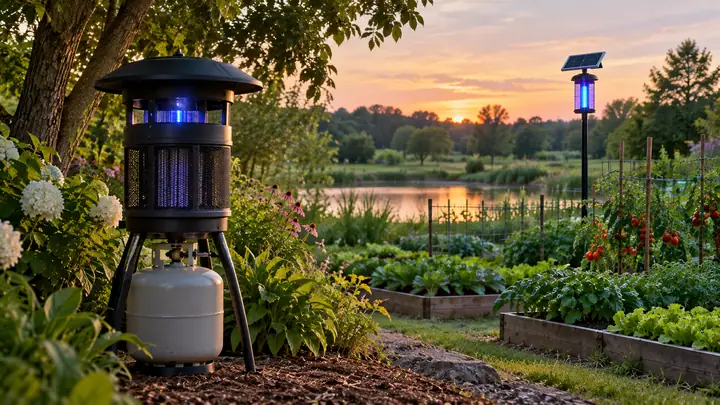
A CO2 mosquito trap imitates a breathing animal. Propane models burn propane over a catalyst to produce a warm, moist CO2 plume; cylinder models meter bottled CO2. Many add a lure such as octenol. Mosquitoes follow the plume upwind, and a fan sucks them into a net, where they dehydrate. Many manufacturers rate a standard 20 lb (9 kg) propane tank for around three weeks of continuous operation.
Do propane mosquito traps work?
Yes, propane mosquito traps can catch large numbers of mosquitoes and reduce local populations, but they do not stop every bite. In a Consumer Reports closed-room test summarized by University of Arizona Extension, CO2-generating traps recaptured about 75% of released mosquitoes, compared with about 25% for a trap without CO2. Results in real yards vary with placement, species, wind and how early in the season the trap starts. To get the most from one:
- Start it in early spring, before populations build, and run it continuously.
- Place it 10–12 m (30–40 ft) away from where people sit, so it does not pull mosquitoes toward them.
- Site it in shade near breeding or resting areas, with the breeze carrying the plume into vegetation.
- Change lures and propane on schedule, and empty and clean the net regularly.
- Keep combining the trap with water management and screens.
What is the best indoor mosquito control?
The best indoor mosquito control is keeping mosquitoes out: intact window and door screens, closed doors at dusk, and air conditioning or a fan in bedrooms. An indoor mosquito trap or indoor mosquito killer is a useful backup for the few that slip in, especially in a closed bedroom overnight.
- Fan-and-light indoor mosquito trappers are quiet and chemical-free but catch modest numbers; place them low, away from windows and in a dark area.
- Plug-in zappers kill flies and moths well, but mosquitoes are not strongly drawn to UV light. Read our guide to bug zapper safety and plug-in zappers before using one indoors.
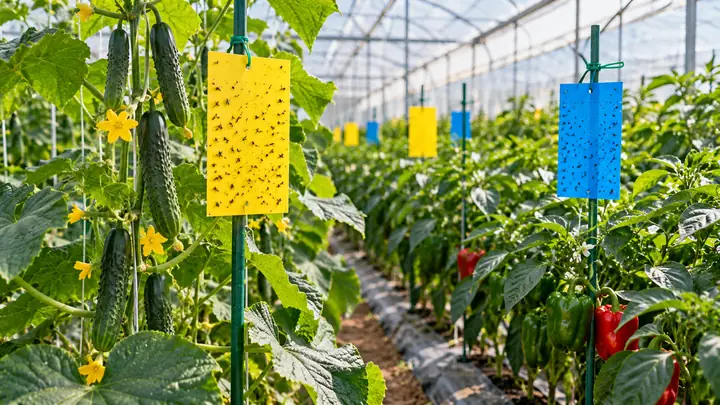
- Sticky traps catch small flies and gnats and help you see what is flying; see our yellow sticky traps guide.
DIY indoor and outdoor traps using sugar and yeast to make CO2 work weakly and briefly. They can help show that mosquitoes are present but are not a reliable control method.
Mosquito control on farms, greenhouses and large properties
On farms, mosquito pest control is mostly a water-management job at a bigger scale. Livestock troughs, irrigation ponds, ditches, tire piles, manure lagoons, greenhouse drains and blocked culverts can all produce mosquitoes, and horses are at risk from mosquito-borne diseases such as West Nile virus and eastern equine encephalitis.
- Scrub and refill water troughs at least weekly, or treat them with Bti.
- Keep irrigation pond edges clear of vegetation and avoid leaking drip lines that leave persistent puddles.
- Store tires, buckets and pots so they cannot hold water.
- Use CO2 traps around barns and housing to monitor and reduce numbers.
- Coordinate with your local mosquito abatement district or county extension office, which may monitor populations and offer guidance.
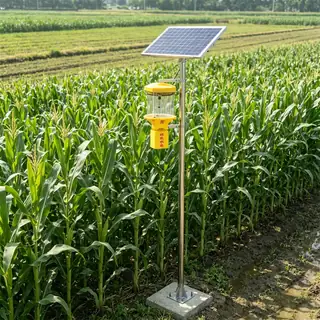
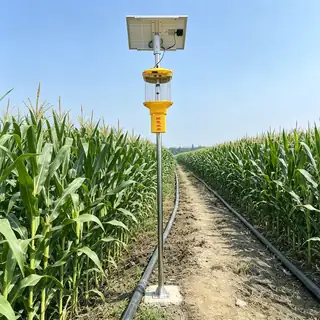
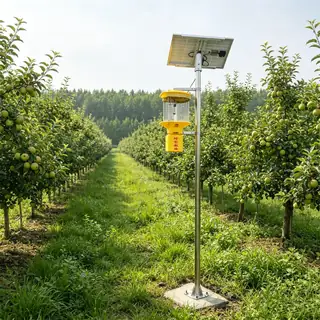
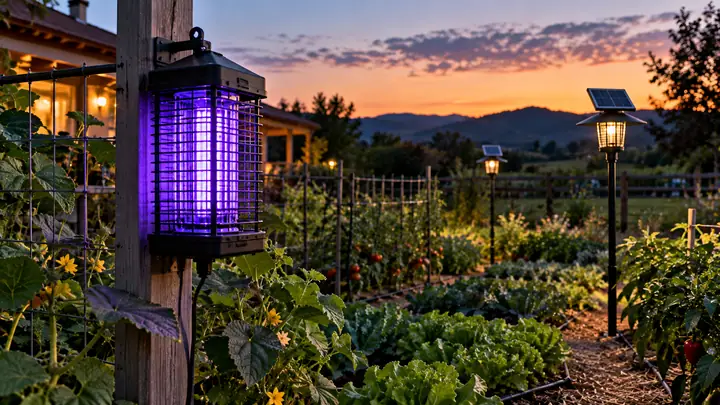
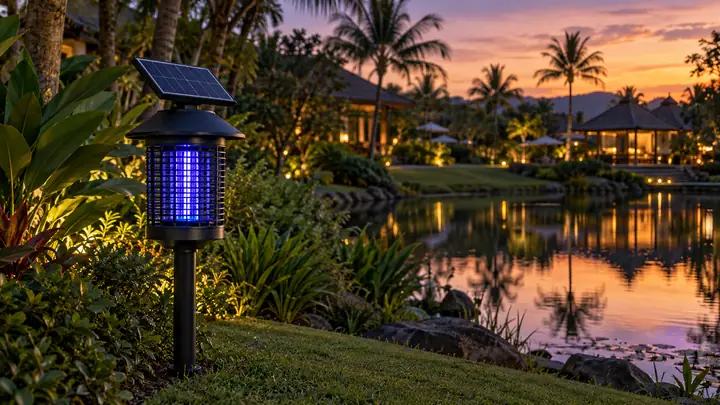
Solar insect-killing lamps are widely used in orchards, rice and vegetable fields to reduce night-flying crop pests such as moths and beetles. Mosquitoes respond less to light than these pests, so for mosquitoes a lamp works best as a supplement in a wider program, and models with suction fans catch small insects more effectively than grid-only designs. Our guides to solar insect-killing lamps and insect light traps for farms explain coverage and placement. For the evidence on zappers specifically, read do bug zappers work.
How to choose mosquito control products
Choose mosquito control products by the problem you are solving, not by marketing claims. A simple decision guide:
- Small yard, daytime biters: weekly dump-and-drain, Bti dunks, screens, a deck fan and repellents; add a CO2 trap if bites continue.
- Large yard or rural property: one or more propane traps run all season, plus water management and selective barrier treatment away from flowering plants.
- Bedrooms and indoor spaces: screens first, then an indoor mosquito trap.
- Farms and orchards: water management, Bti, CO2 traps around animals, and solar lamps for night-flying crop pests.
Treat any claim of total elimination with caution. Good mosquito control reduces numbers and bites; it does not make a property mosquito-free.
Next steps
Effective mosquito control comes from removing breeding water, protecting people and trapping adults, with lamps and sprays as targeted supplements. For farm and orchard projects, we manufacture solar pest-control lamps factory-direct, including a solar suction-type insect lamp and a solar mosquito killer lamp with IoT monitoring. Browse the pest-control range or tell us your site size and target pests for a recommendation and quotation.