Short answer
An outdoor mosquito zapper uses UV light and an electric grid to kill flying insects, but light attracts relatively few biting mosquitoes, which find people by carbon dioxide, heat and odour. For real mosquito control, remove standing water first, add carbon dioxide or attractant traps near breeding areas, and use zappers mainly for general night-flying insects.
What is an outdoor mosquito zapper?
An outdoor mosquito zapper is a weatherproof electric insect killer that uses ultraviolet or blue light to attract flying insects onto a high-voltage grid. It kills many night-flying insects, but used alone it catches relatively few biting mosquitoes, so it works best as one part of a broader mosquito control plan that also includes traps designed for mosquitoes and removal of breeding sites.
The market mixes several different devices under names like bug zapper, mosquito trap, mosquito killer lamp and mosquito trapper. They work in different ways and suit different sites. This guide compares them for outdoor use on farms, resort and hotel grounds, campsites, parks and large properties, and explains how to place a mosquito zapper outdoor so it helps rather than draws insects towards people.
What types of outdoor mosquito zappers and traps are there?
There are four main families. The key difference is the lure: light alone, or cues that mosquitoes actually use to find hosts.
| Device | Lure | Kill or capture | Mosquito specificity | Best use |
|---|---|---|---|---|
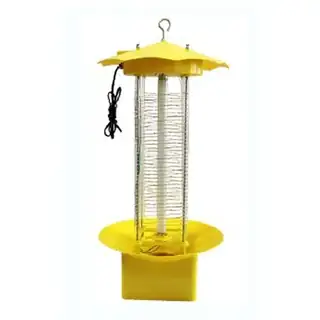
| UV bug zapper (mosquito zapper lights) | UV or blue light | Electric grid | Low; catches mainly moths, beetles and midges | General night-flying insect reduction at a site perimeter |
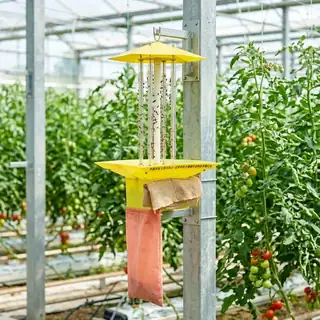
| UV fan trap (LED mosquito lamp) | UV LED light, sometimes with a chemical lure | Fan pulls insects into a net or tray | Low to moderate | Quiet operation near seating; small insects that avoid grids |
| Carbon dioxide mosquito trap | CO2 from a gas cylinder or propane combustion, often with attractant and heat | Fan into a net | High for many biting species | Properties with persistent mosquito pressure |
| Attractant (odour-bait) trap | Synthetic skin-odour lure, sometimes with CO2 | Fan into a catch bag | High, especially for some day-biting species | Gardens and grounds with day-biting mosquitoes |
A magnet mosquito trap that burns propane to generate CO2, heat and moisture belongs to the third family. These are generally the most effective outdoor mosquito traps per unit, but they cost more to buy and run because they consume gas and attractant cartridges.
Do mosquito zappers work outdoors?
Partly. Female mosquitoes, the only ones that bite, locate people mainly through exhaled carbon dioxide, body heat, moisture and skin odour. Light is a minor cue for most species. A widely cited University of Delaware study found that biting flies made up only about 0.2% of nearly 14,000 insects killed by a backyard electric light trap over a summer, while nearly half were harmless aquatic insects.
So do mosquito zappers work? They kill some mosquitoes and many other insects, and they can reduce general nuisance insects around a lit area. They do not, on their own, reliably reduce bites. Our article do bug zappers work? covers results for flies, moths and bees as well.
That is also why mosquito trap reviews and mosquito zapper reviews vary so widely: a full tray looks impressive, but the catch may contain few mosquitoes. To judge mosquito traps that work, look at what is in the net, not how much.
What is the best way to control mosquitoes outdoors?
The most effective approach is integrated mosquito management, the same strategy used by public mosquito control districts. University extension services consistently put eliminating standing water first, because mosquitoes breed in any container that holds water for about a week. Devices come after that.
- Remove breeding sites. Empty, cover or discard containers, plant saucers, tarps, tyres and clogged gutters every week; this "tip and toss" routine is the foundation.
- Treat water you cannot remove. Use approved larvicides in ponds, drains and water tanks where local rules allow; fish ponds with active fish rarely breed mosquitoes.
- Cut resting habitat. Trim dense, shaded vegetation near seating areas, where adult mosquitoes rest during the day.
- Add mosquito-specific traps. Place carbon dioxide or attractant traps between breeding or resting areas and the spaces people use.
- Use zappers for general insects. A UV outdoor bug zapper at the perimeter reduces moths and midges attracted to lights.
- Protect people. Repellents, screens and fans for seated areas still matter during peak biting times.
- Monitor and adjust. Check trap catches weekly and move traps to where mosquitoes are most numerous.
Where should you place an outdoor bug zapper or mosquito trap?
Placement is the most common mistake. A bug zapper outdoor next to the dining table pulls insects towards the people it is meant to protect. General rules:
- Distance: put UV zappers roughly 8–15 m away from where people sit, and closer to the insect source than to people.
- Height: for mosquitoes, most traps work best low, around 1–2 m, because many species fly close to the ground. For moths and beetles, higher placement around 2–3 m is common.
- Wind: place CO2 and attractant traps upwind of breeding areas so the plume drifts across where mosquitoes are.
- Shade and shelter: mosquitoes rest in shaded, humid vegetation; traps near those edges catch more.
- Competing lights: keep zappers away from floodlights and porch lights.
- Safety: mount electrified units out of reach of children and animals.
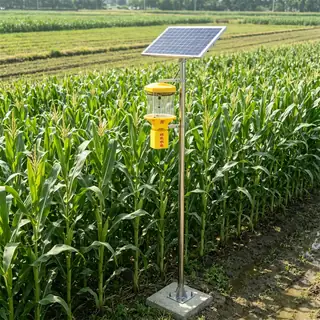
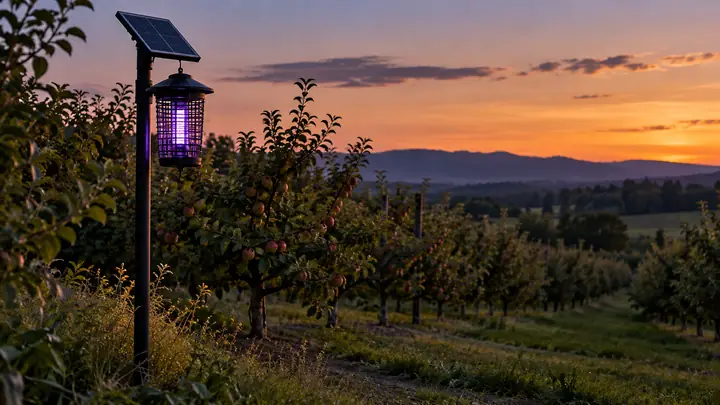
For how to hang a bug zapper, use a sturdy hook, bracket or dedicated bug zapper stand rated for the weight, keep the grid clear of foliage, and allow access for cleaning. Pole-mounted solar units need a foundation sized for wind load.
Which features matter in the best outdoor mosquito zapper?
If you do choose a zapper as part of your plan, look for these features:
- Light source: UV LED mosquito zapper lamps use less power and last longer than fluorescent tubes; blue light bug zapper models add visible blue, which attracts some species.
- Grid voltage and guard: outdoor grids typically run at a few thousand volts with very low current, behind a protective mesh.
- Power source: mains, 12 volt bug zapper models for vehicles and remote sites, cordless rechargeable units, or solar. For sites without power, see our solar bug zapper buying guide.
- Weatherproofing: IP65 or better electronics and a rain hood.
- Controls: dusk sensor and timer, so the lamp runs only during peak evening activity and spares day-active pollinators.
- Noise: a quiet bug zapper or fan-type unit suits areas close to guests.
Portable, cordless and mini units can help at a campsite table but cover only a few metres. For grounds, farms and hospitality sites, larger units such as our waterproof IoT high-voltage mosquito zapper run unattended and report status remotely. Compare larger classes in our commercial bug zapper guide.
When should you run outdoor mosquito traps and zappers?
Timing affects both results and running costs.
- Start early in the season. Mosquito traps work by gradually reducing the local population, so they perform best when switched on as soon as adults appear in spring, not at the peak of summer. Expect several weeks before the difference is noticeable.
- Run traps continuously. Carbon dioxide and attractant traps are usually left running day and night through the season, because different species bite at different times.
- Run UV zappers for limited hours. A UV mosquito killer or zapper is most useful from dusk for a few hours, when many night fliers are active. Running it all night mainly adds non-target catch and, on solar models, drains the battery.
- Follow the weather. Mosquito activity rises after rain and in warm, humid, still evenings, and falls in wind and cool weather.
Empty nets and trays at least weekly, replace lures and gas on the supplier's schedule, and record catches so you can see whether the plan is working.
Is an outdoor mosquito zapper safe?
What happens if you touch a bug zapper grid? On a properly designed unit, the outer guard stops fingers reaching the grid. If contact does happen, the grid's very low current usually produces a painful shock rather than a dangerous one for a healthy adult, but it can still cause injury, and children and pets should never have access. Always switch off and let the grid discharge before cleaning. Choose products tested to recognised appliance safety standards for insect killers.
Zappers do not release chemicals, which is an advantage over sprays near water and crops. Their main environmental cost is killing non-target insects, which timers and careful placement reduce.
Outdoor mosquito control for farms, resorts and campsites
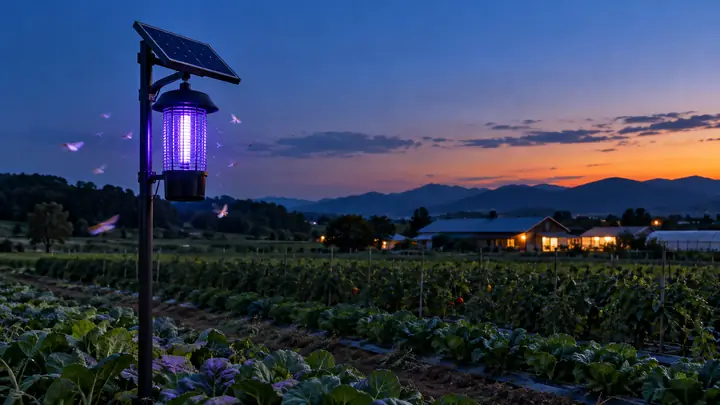
On farms, irrigation ponds, drainage ditches, water troughs and stored tyres are common breeding sites. Keeping troughs clean, preventing standing water around drip lines, and managing pond edges does more than any device; see our drip irrigation system guide for layouts that avoid puddling. Solar UV lamps around farm buildings mainly control moths and beetles, while CO2 traps target mosquitoes near worker housing.
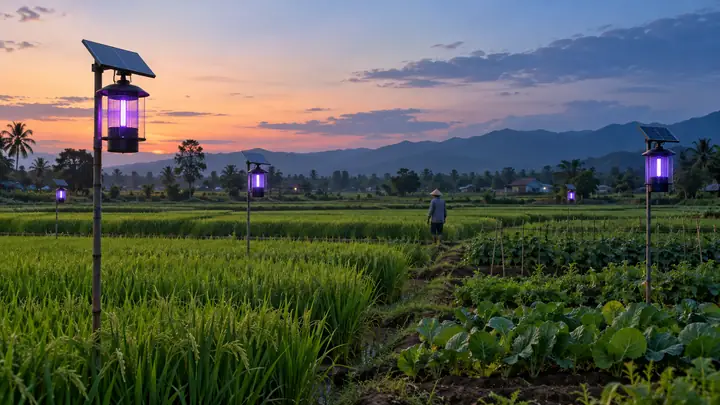
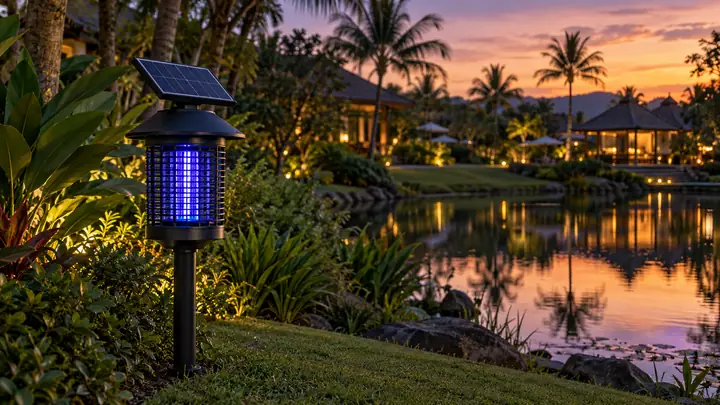
For resorts and campsites, plan traps around guest areas, using carbon dioxide or attractant traps along vegetation edges and UV units at perimeter points away from paths. The same lamps used in farm insect light trap programmes often suit large grounds, because they run off-grid and need little attention. Browse our solar pest control products or the solar electric shock IoT insect killer for perimeter use.
Mars Vertical Farm exports solar insect-killing lamps from Shanghai to buyers in markets including Australia, Brazil, Saudi Arabia and Vietnam. Contact us with your site map and the insects you are dealing with, and we can suggest unit types and positions.