Short answer
Hydroponics is the method of growing plants without soil, supplying water and dissolved mineral nutrients directly to the roots. Roots sit in a nutrient solution or in an inert medium such as rockwool or coco coir. Growers control nutrient strength (EC), pH, oxygen and light, which usually gives faster growth and lower water use than soil, at a higher setup cost.
What is hydroponics?
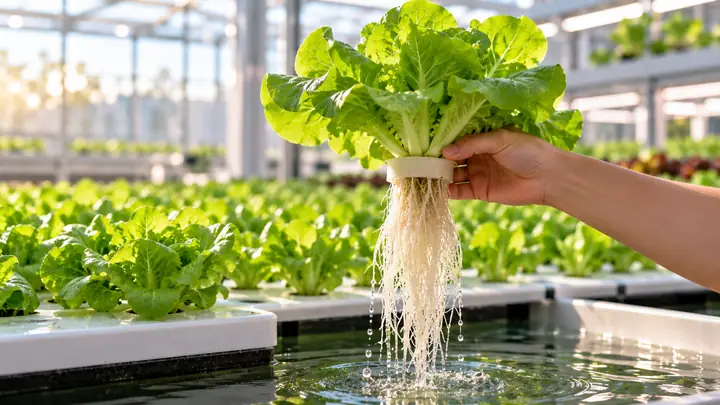
Hydroponics is a way of growing plants without soil, feeding the roots with a water-based nutrient solution that carries every mineral the crop needs. The roots either sit directly in that solution or grow in an inert medium such as rockwool, coco coir or perlite, which holds the plant up but supplies little or no nutrition of its own.
The simplest hydroponics definition, then, is "soilless culture with a managed nutrient solution". The word comes from Greek roots meaning water and work, and it was popularized in the 1930s by William Gericke at the University of California, who grew large tomato plants in water culture and coined the term. Today hydroponic agriculture ranges from a 5 gallon bucket on a balcony to multi-hectare greenhouses and fully enclosed plant factories.
What does "hydroponically grown" mean on a label?
When produce is described as hydroponically grown, it means the plant spent its life in a soilless system, receiving water and dissolved minerals through its roots rather than from field soil. Most hydroponic food sold in supermarkets is lettuce, herbs, tomatoes, cucumbers, peppers and strawberries, usually grown in greenhouses or indoor farms.
How does hydroponics work?
Plants do not need soil itself. They need water, oxygen at the roots, mineral nutrients, light, carbon dioxide and a suitable temperature. Soil is simply one way of delivering water and nutrients. Hydroponics replaces it with a system that delivers those inputs directly and in measured amounts.
If you drew a hydroponics diagram for almost any system, it would contain the same parts:
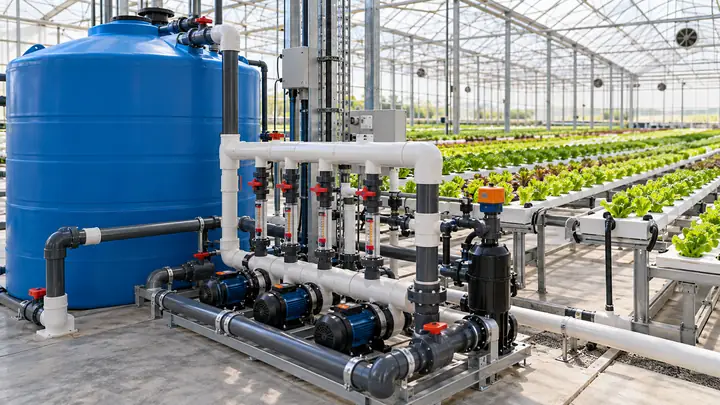
- A reservoir (tank or tub) holding the nutrient solution.
- A delivery method: a pump, drippers, a thin film in a channel, a flooded tray, mist nozzles, or simply roots hanging in the tank.
- A root zone: net cups, channels, buckets, slabs or rafts that hold the plants.
- Oxygen supply: air pumps and air stones, falling water, or periodic draining so air reaches the roots.
- Monitoring instruments: at minimum an EC meter and a pH meter; on larger farms, an automatic hydroponic controller that doses nutrients and acid.
- Light: sunlight in a greenhouse, or LED grow lights indoors.
In a recirculating (closed) system, the solution drains back to the reservoir and is reused. In a run-to-waste (open) system, each feed passes through the medium once and the drainage is discarded or reused elsewhere.
The hydroponics cycle, step by step
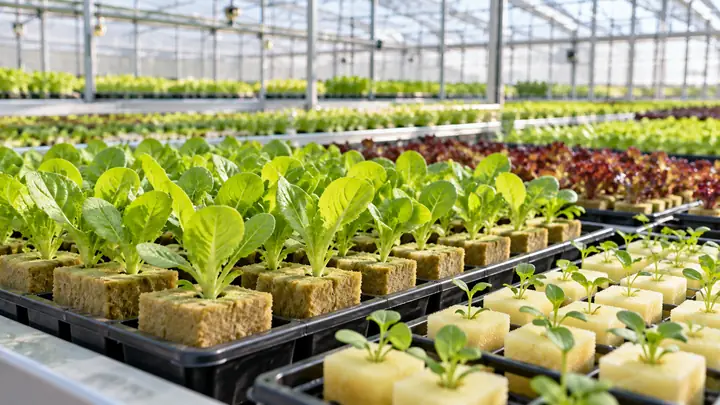
- Seed starting. Seeds germinate in sponge plugs, rockwool cubes or small trays kept moist with plain water or a weak solution.
- Transplanting. Once roots show through the plug, seedlings move into net cups, channels, slabs or buckets.
- Feeding. The system delivers nutrient solution continuously or on a timer.
- Monitoring. The grower checks EC (nutrient strength), pH, water temperature and solution level, typically daily on a small system and continuously with sensors on a commercial one.
- Topping up and replacing. Water is added as plants drink; the whole solution is replaced or rebalanced every few weeks, or according to test results.
- Harvest and clean. After harvest, channels, trays and tanks are cleaned before the next crop.
What are the main types of hydroponic systems?
There are six common hydroponic methods, plus several hybrids. Our full guide to types of hydroponic systems compares them in detail; the table below is a quick overview.
| System | How the roots are fed | Typical crops | Learn more |
|---|---|---|---|
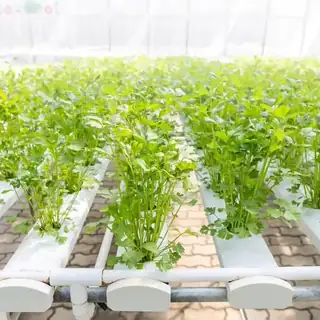
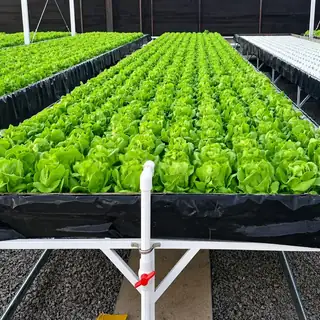
| Nutrient film technique (NFT) | A thin film of solution flows along sloped channels | Lettuce, herbs, leafy greens, strawberries | NFT guide |
| Deep water culture (DWC) | Roots hang in aerated solution, often under floating rafts | Lettuce, basil, leafy greens | DWC guide |
| Ebb and flow (flood and drain) | A tray floods on a timer, then drains back | Seedlings, potted plants, herbs | Ebb and flow guide |
| Drip / substrate culture | Drippers feed slabs, bags or buckets of medium | Tomatoes, cucumbers, peppers, strawberries | Dutch buckets and slabs |
| Aeroponics | Roots hang in air and are misted | Leafy greens, herbs, propagation | Aeroponics vs hydroponics |
| Wick and Kratky (passive) | Capillary wicks or a static tank, no pump | Small herbs, teaching, hobby use | Home use only |
Deep hydroponics variants such as RDWC (recirculating deep water culture) link several buckets to one reservoir so the solution is shared and easier to manage. A five gallon bucket hydroponics setup is essentially a single DWC or drip unit, which is why it is a popular way to learn hydroponics before scaling up.
What do plants need in a hydroponic system?
Nutrient solution
Hydroponic nutrition must supply all essential elements: nitrogen, phosphorus, potassium, calcium, magnesium and sulfur, plus iron, manganese, zinc, copper, boron and molybdenum in small amounts. Commercial growers usually mix two concentrated stocks (A and B) so that calcium does not precipitate with sulfates and phosphates. Strength is measured as electrical conductivity (EC). Leafy greens typically run at roughly 0.8–1.8 mS/cm and fruiting crops such as tomatoes at roughly 2.0–3.5 mS/cm, depending on stage, climate and variety.
pH
Most hydroponic crops grow best at a pH of about 5.5–6.5, inside the broader 5.0–7.0 range that Penn State Extension gives for vegetables. Outside that window, iron, phosphorus and calcium become less available even when they are present. Our hydroponic nutrients, EC and pH guide covers recipes and targets by crop.
Oxygen and temperature
Roots respire. Warm water holds less dissolved oxygen, so most growers aim to keep solution temperature around 18–22 °C. Some add small doses of hydrogen peroxide (H2O2) to hydroponics reservoirs as an oxidizer, but it also harms beneficial microbes and must be dosed carefully; good aeration, clean tanks and correct temperature matter more.
Growing media
Media anchor the plant and buffer moisture. Common choices are rockwool, coco coir, perlite, expanded clay pebbles and sponge plugs. Each holds a different balance of water and air; see our hydroponic growing media guide.
Light
In greenhouses the sun does most of the work, with supplemental lighting in winter. Indoors, LED lights for hydroponics are now standard because they are efficient and run cooler than older lamp types. A hydroponic light system is often the largest electricity load in an indoor farm, so fixture efficiency and photoperiod deserve careful planning.
What are the pros and cons of hydroponics?
Advantages and benefits of hydroponics
- Water efficiency. Recirculating systems lose water mainly through the plants, not through deep drainage or evaporation from bare soil, so they can use a fraction of the water of field growing for the same crop.
- Faster, more uniform growth. Roots get nutrients and oxygen without searching through soil, so leafy greens often reach harvest sooner and more evenly.
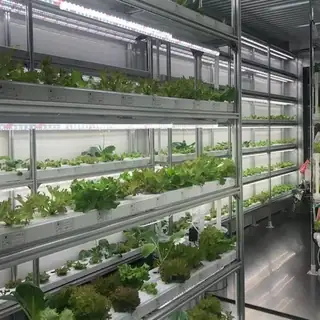
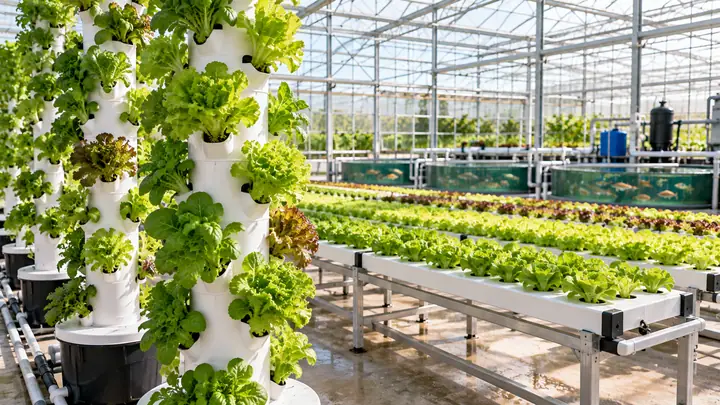
- Higher yield per square meter. Dense spacing and vertical layouts such as racks, towers and hydroponic walls make more use of floor area.
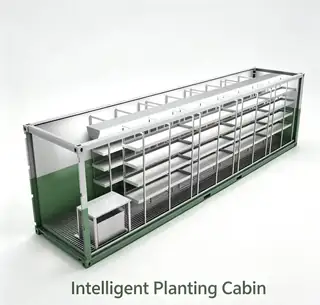
- Location independence. Crops can be grown on non-arable land, rooftops, warehouses and shipping containers, close to the buyer.
- Fewer soil-borne pests and weeds, which usually reduces pesticide and herbicide use.
- Precise control of feeding, which makes quality more repeatable from batch to batch.
Disadvantages and cons of hydroponics
- Higher start-up cost for structures, channels, pumps, controllers and, indoors, lighting and climate control.
- Dependence on power. In NFT and aeroponics, a pump failure can stress roots within hours; backup power and alarms are worth the cost.
- Skill and monitoring. EC, pH and water temperature need regular attention, and mistakes affect every plant at once.
- Waterborne disease risk. In a recirculating system, a root pathogen can spread quickly through the shared solution.
- Crop limits. Large field crops such as grains and most root crops rarely pay back in hydroponics.
So, is hydroponics healthy? Hydroponically grown vegetables are broadly comparable in nutritional value to soil-grown ones; quality depends more on variety, light, nutrient management and freshness at sale than on the presence of soil. Whether hydroponic produce can be certified organic depends on the rules in each country, and those rules differ.
How does hydroponics compare with soil growing?
| Factor | Hydroponics | Soil growing |
|---|---|---|
| Nutrient delivery | Dissolved, measured and adjusted directly | Released from soil and fertilizer over time |
| Water use | Low in recirculating systems | Higher; losses to drainage and evaporation |
| Space use | Dense; can be vertical or stacked | Mostly single layer |
| Start-up cost | Higher | Lower |
| Operating skill | Daily monitoring of EC and pH | More forgiving buffer in the soil |
| Best crops | Leafy greens, herbs, vine crops, strawberries | Almost anything, including grains and root crops |
What can you grow with hydroponics?
Almost any plant can be grown hydroponically, but the economics favor fast, high-value hydroponic crops:
- Leafy greens: lettuce, spinach, kale, pak choi, arugula. These suit NFT, DWC and vertical racks.
- Herbs: basil, mint, coriander, parsley, chives.
- Fruiting crops: tomatoes, cucumbers, peppers and eggplant, normally in drip-fed slabs or Dutch buckets in a greenhouse.
- Strawberries: in elevated gutters, A-frames and vertical systems.
- Microgreens and sprouts.
- Hydroponic fodder: barley or wheat "hydroponics grass" sprouted in trays for livestock feed.
- Flowers and nursery stock, often started on ebb and flow benches.
Fruit trees are not practical in hydroponics at commercial scale. A so-called hydroponic tree or "space tree" is usually a vertical tower that holds many small plants around a central column.
How do you start growing with hydroponics?
Whether you are setting up a tabletop hydroponics kit or planning a hydroponics business, the same steps apply:
- Choose the crop and market first. The crop decides the system, spacing and climate.
- Pick a system that suits the crop. NFT or DWC for greens, drip substrate for vine crops, ebb and flow for propagation.
- Test your water. Source water EC, alkalinity and sodium set your nutrient recipe and whether you need filtration or reverse osmosis.
- Plan light and climate. Greenhouse or indoor, ventilation, heating, cooling and dehumidification.
- Size pumps and plumbing for the full layout, with spare capacity and backup power.
- Start small, record everything, then scale once your EC, pH and yields are consistent.
Commercial growers usually buy channels, racks and dosing equipment from specialist hydroponics companies rather than building from hardware-store parts, because food-grade materials, correct slopes and UV resistance matter at scale. Our range of hydroponic channels, benches and media covers NFT, DWC, Dutch bucket and tidal systems, and a customized PLC hydroponic system adds automatic dosing and control. For fully indoor production, a hydroponic vertical plant factory for leafy greens integrates racks, lighting and climate control.
Mars Vertical Farm has 20+ years of production experience manufacturing hydroponic equipment in Shanghai and exports to growers worldwide. If you are planning a project, send us your crop, site size and target output and our engineers will suggest a system layout and quotation.