Short answer
The six main types of hydroponic systems are wick, deep water culture (DWC), nutrient film technique (NFT), ebb and flow, drip (substrate) and aeroponics. Wick systems are passive and suit small herbs. NFT and DWC are the usual choice for commercial leafy greens, ebb and flow for seedlings and potted plants, and drip substrate systems for tomatoes, cucumbers and peppers.
What are the types of hydroponic systems?
There are six main types of hydroponic systems: wick, deep water culture (DWC), nutrient film technique (NFT), ebb and flow, drip (substrate) systems and aeroponics. They differ in one thing above all: how water, nutrients and oxygen reach the roots.
Every hydroponic system shares the same goal, but each method suits different crops, budgets and skill levels. Passive systems such as wick and Kratky need no pump and suit small herbs. Active, recirculating systems such as NFT, DWC and ebb and flow dominate commercial leafy greens and propagation. Drip-fed substrate systems carry most greenhouse tomatoes, cucumbers and peppers. If you are new to the subject, start with our explainer on what hydroponics is.
How does a hydroponic system work?
A hydroponic growing system replaces soil with a nutrient solution. A pump (or gravity, or capillary action) moves that solution to the roots, the plants take up water and minerals, and in a recirculating design the remainder drains back to a reservoir to be reused. The grower keeps the solution within a target range for nutrient strength (EC) and pH, and makes sure the roots get oxygen.
Parts of a hydroponic system
Whatever the type, the parts of a hydroponic system are broadly the same:
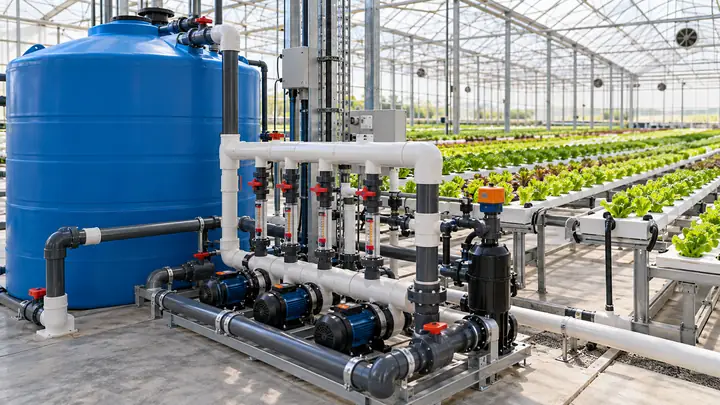
- Reservoir: a light-proof tank that holds the nutrient solution.
- Pump and plumbing: a submersible or inline pump, supply pipes, return lines and valves.
- Grow containers: channels, gutters, rafts, trays, hydroponic grow buckets or slabs.
- Hydroponic grow cups and media: net cups with sponge plugs, rockwool, coco coir or clay pebbles to anchor plants.
- Aeration: air pumps and air stones for DWC; free fall and draining for other systems.
- Monitoring and control: EC and pH meters, timers, and on larger farms a dosing controller.
- Light: sunlight in greenhouses, or hydroponic grow LED fixtures indoors.
What is a closed hydroponic system?
A closed hydroponic system recirculates the nutrient solution: whatever the plants do not take up flows back to the reservoir, is topped up and rebalanced, and is used again. NFT, DWC, ebb and flow and most aeroponic systems are closed. An open (run-to-waste) system delivers fresh solution each time and lets the drainage leave the system; many drip-fed substrate greenhouses work this way, though more and more collect and disinfect their drain water for reuse. Closed systems save water and fertilizer but need tighter hygiene, because a root disease can spread through the shared solution.
The six main hydroponic methods explained
1. Wick system
The wick is the simplest hydroponic system. Fabric or rope wicks draw solution by capillary action from a reservoir into a medium such as perlite or vermiculite. There are no pumps or moving parts, so it is cheap and silent. The drawback is limited flow: wicks cannot keep up with large, thirsty plants, and the medium can stay too wet. It suits small herbs, classrooms and simple tabletop units, not commercial production.
The related Kratky method suspends plants over a static tank of solution. As the plants drink, the level drops and an air gap opens for the upper roots. It is arguably the simplest hydroponic system of all for a single crop of lettuce, but it is not designed for continuous production.
2. Deep water culture (DWC)
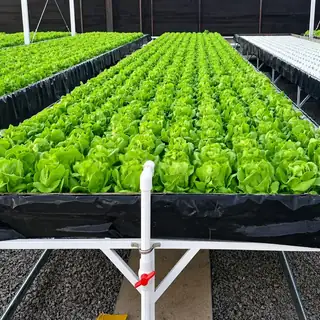
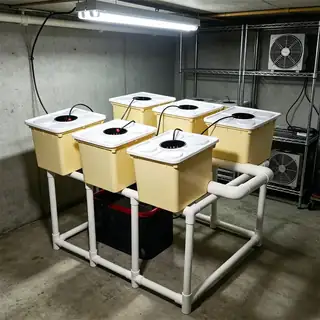
In DWC, plant roots hang directly in a deep, aerated nutrient solution. Small units use a 5 gallon bucket hydroponic system with an air stone; commercial farms use long floating raft beds where foam boards carry hundreds of plants. The large water volume buffers temperature and EC, which makes DWC forgiving and stable. Air pumps must run continuously, and water temperature should stay roughly at 18–22 °C to keep dissolved oxygen up. RDWC (recirculating deep water culture) links several buckets or tanks to one reservoir so the solution is shared and easier to manage. Read more in our deep water culture guide.
3. Nutrient film technique (NFT)
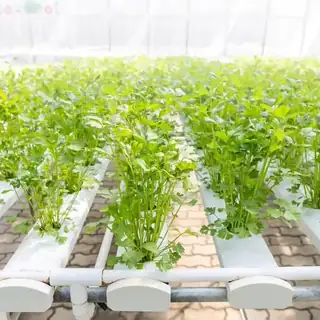
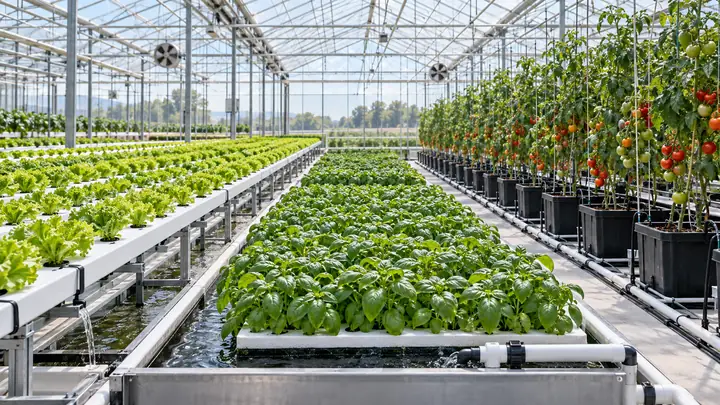
NFT runs a shallow film of solution down sloped channels, usually at a slope of roughly 1–3%. Roots sit in the film at the bottom while their upper part stays in moist air, giving excellent oxygen supply. NFT uses little water, is light enough for vertical racks and A-frames, and is the standard for commercial lettuce and herbs. Its weakness is that there is almost no water buffer: if the pump stops, roots can dry within hours, so alarms and backup power are important. See our NFT hydroponic system guide or the circulating-water NFT system for vegetables.
4. Ebb and flow (flood and drain)
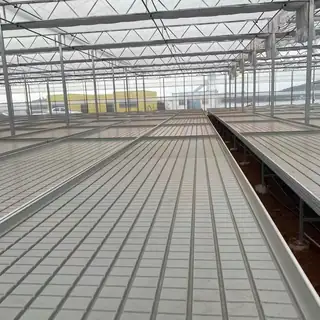
An ebb and flow system floods a tray or bench with solution for a short period, typically 10–30 minutes, then drains it back to the reservoir, pulling fresh air into the medium. It suits potted plants, seedlings and nursery production, because each pot is watered evenly from below and leaves stay dry. Commercial growers use tidal benches and rolling benches, such as a portable tidal seedbed for vegetable seedlings. Our ebb and flow guide covers cycle timing and bench design.
5. Drip and substrate systems
Drip systems feed each plant through an emitter into a container of medium: coco coir slabs, rockwool slabs, perlite bags or Dutch (Bato) buckets. Irrigation runs in short pulses through the day, and drainage is either collected and recirculated or run to waste. This is the dominant method for long-cycle vine crops such as tomatoes, cucumbers and peppers, and for strawberries in elevated gutters. A complete Dutch bucket kit with pump is a common entry point. Drip systems scale easily and pair naturally with fertigation units.
6. Aeroponics
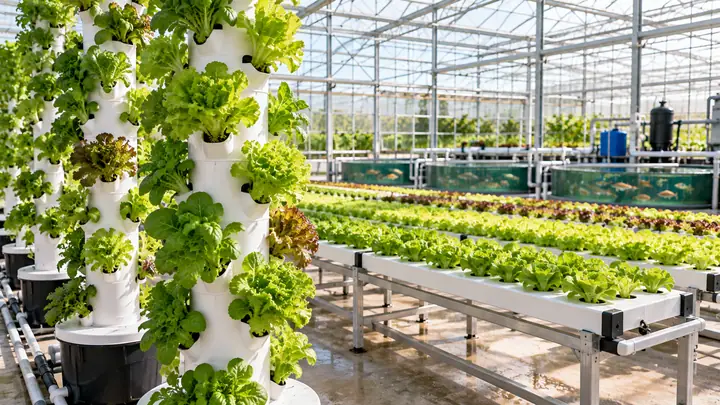
Aeroponics suspends roots in air inside a closed chamber or tower and sprays them with a fine nutrient mist on short, frequent cycles. Oxygen supply is excellent and water use is very low, which can speed early growth. However, nozzles clog, timers and pumps must be reliable, and a failure dries roots very quickly. Low-pressure tower systems are common for leafy greens and herbs. For a detailed comparison, see aeroponics vs hydroponics.
Which hydroponic system type is best for each crop?
There is no single best hydroponic system. The right choice depends on the crop, scale and how much monitoring you can provide.
| System | Recirculating? | Pump needed | Water buffer | Best crops | Skill level |
|---|---|---|---|---|---|
| Wick / Kratky | No (static) | No | Medium | Small herbs, lettuce | Beginner |
| Deep water culture | Yes | Air pump | High | Lettuce, basil, leafy greens | Beginner to commercial |
| NFT | Yes | Yes | Very low | Lettuce, herbs, strawberries | Intermediate |
| Ebb and flow | Yes | Yes | Medium | Seedlings, potted plants, herbs | Intermediate |
| Drip / substrate | Either | Yes | Medium (in media) | Tomatoes, cucumbers, peppers, strawberries | Intermediate to advanced |
| Aeroponics | Yes | Yes, often high pressure | Very low | Leafy greens, herbs, propagation | Advanced |
For a head-to-head comparison of the three most common commercial setups, read NFT vs DWC vs Dutch bucket.
Vertical towers and wall mounted hydroponic gardens
Vertical towers, racks and wall mounted hydroponic gardens are not separate methods; they are layouts that use one of the six methods above. A hydroponic system wall usually runs NFT or drip down stacked pockets or channels, while most towers use drip or aeroponic misting inside a column. Our vertical hydroponic towers and racks apply NFT, drip and aeroponic principles to multi-layer layouts.
How do you set up a hydroponic system step by step?
Whether you want to build a hydroponic garden for a classroom or plan a greenhouse, setting up a hydroponic system follows the same sequence:
- Choose the crop. Leafy greens point to NFT or DWC; vine crops point to drip substrate; seedlings point to ebb and flow.
- Choose the system type and layout from the table above, matching it to your space, light and budget.
- Draw a hydroponic system diagram. Mark the reservoir, pump, supply lines, channels or trays, return lines and drain. A simple hydroponic system map catches slope and drainage errors before you buy parts.
- Size the reservoir and pump. Larger reservoirs buffer EC, pH and temperature better; pumps need enough flow and head for the furthest channel.
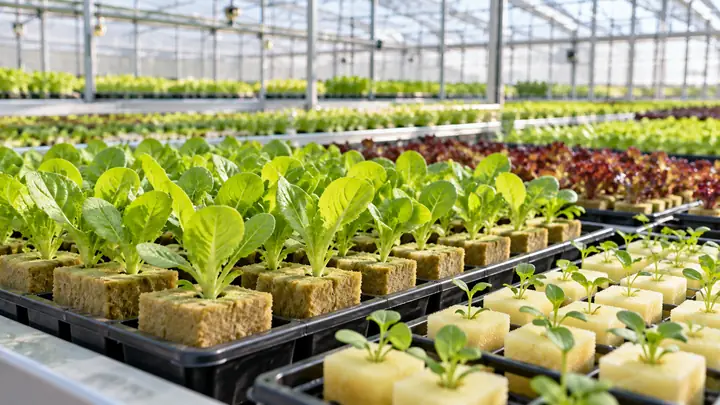
- Select media and grow cups. Sponge plugs or rockwool cubes for starting, net cups for NFT and DWC, coir or rockwool slabs for drip.
- Test your water and mix nutrients. Start at the target EC for the crop and adjust pH to roughly 5.5–6.5.
- Run the system with water first to check for leaks, flow and drainage, then plant.
- Monitor daily at first: EC, pH, solution level and temperature, and record what you change.
What can you grow in a hydroponic garden, and which seeds work best?
Most vegetables, herbs and flowers grow hydroponically. Compact, fast varieties give the best results: butterhead, romaine and loose-leaf lettuces, basil, coriander, mint, pak choi, kale, cherry tomatoes and day-neutral strawberries. The best seeds for a hydroponic garden are usually pelleted or untreated seeds started in sponge plugs or rockwool cubes, kept moist until roots emerge from the bottom, then transplanted into the system.
Hydroponic system design tips from the factory floor
- Keep the reservoir dark. Light in the tank grows algae, which competes for oxygen and clogs lines.
- Use food-grade, UV-stabilized plastics for channels and tanks, especially in greenhouses.
- Plan for power failures. NFT and aeroponics need alarms and ideally backup power; DWC needs air pumps that never stop.
- Design for cleaning. Channels and trays should be easy to remove, flush and disinfect between crops.
- Size for growth. A full hydroponic system designed for 20% more capacity than today is cheaper than rebuilding later.
Mars Vertical Farm manufactures NFT channels, DWC beds, tidal benches, Dutch buckets and vertical racks in its Shanghai factory and exports them to growers on several continents. If you would like help choosing between system types, share your crop and site dimensions and our engineers will propose a layout and quotation.