Short answer
Ebb and flow hydroponics, or flood and drain, periodically floods a tray or table of plants in pots or media with nutrient solution from a reservoir, then drains it back so roots get air. A timer-controlled pump and an overflow fitting control each cycle. Flood frequency depends on media, plant size and light, typically several times per day.
What is ebb and flow hydroponics?
Ebb and flow hydroponics, also called flood and drain, is a system in which a tray or bench holding plants in pots or growing media is periodically flooded with nutrient solution from a tank below, then drained back so roots can take in air. A timer-controlled pump does the flooding; gravity does the draining. The cycle repeats several times a day.
In commercial horticulture the same principle runs on a larger scale as flood tables, flood floors and tidal benches, widely used for seedlings, potted plants and nursery stock. In this guide we cover how an ebb and flow system works, how to size and choose flood tables and trays, how to set flood timing, and what to watch for. For the wider context, see our overview of types of hydroponic systems.
How does an ebb and flow system work?
An ebb flow hydroponic system has a short list of components:
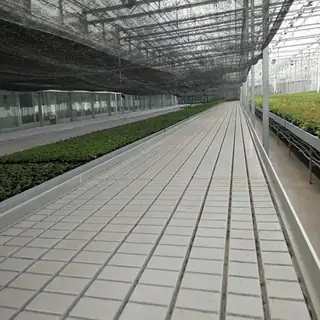
- Flood table or tray: a shallow, watertight basin with raised channels molded into the floor so solution spreads evenly and drains completely.
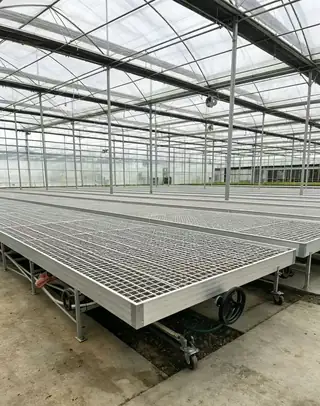
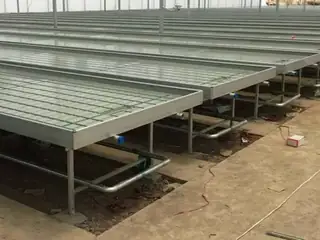
- Support: a stand, bench or rolling bench frame that holds the tray level and at working height.
- Reservoir: usually under or beside the table, sized to hold more than one full flood volume.
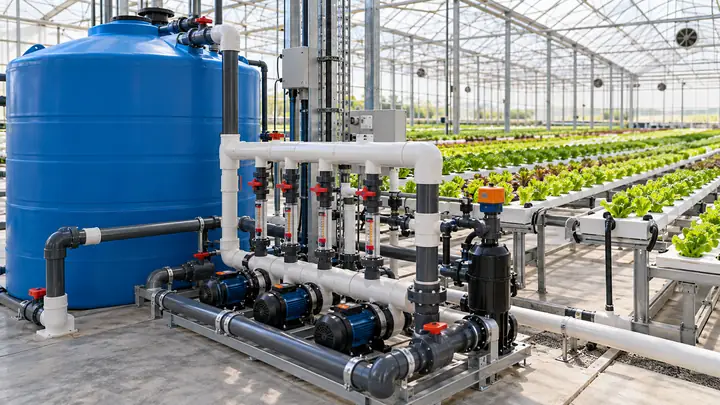
- Pump and timer or controller: start each flood cycle and set its length.
- Fill and drain fittings: an inlet that also lets solution return, plus an overflow fitting that sets the maximum flood height and prevents spills if the pump runs too long.
During the flow phase, the pump lifts solution into the table until it reaches the overflow height. Media in the pots soak up water and nutrients from below. During the ebb phase, the pump stops and solution drains back to the reservoir, pulling fresh air into the root zone. Because irrigation comes from below, leaves stay dry, which helps reduce foliar disease.
What are flood tables and hydroponic trays?
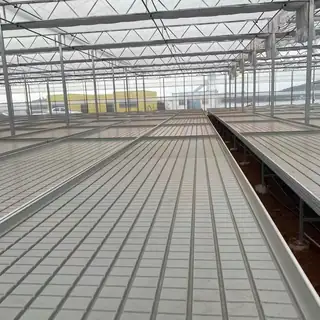
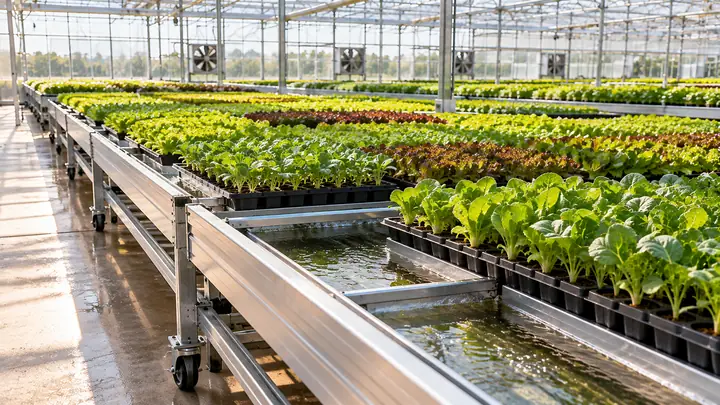
A flood table, or ebb and flow table, is the combination of a flood tray and the stand it sits on. Hydroponic flood trays are typically molded ABS or polystyrene plastic, with ribbed floors, a drain recess and sometimes a lip to hold a cover. Commercial tidal benches use larger trays on steel frames, and many sit on rolling benches that slide sideways to remove fixed aisles in a greenhouse.
Common flood tray sizes
Trays are often sold in imperial sizes, and the names are nominal outside dimensions in feet. The table below converts the most common ones and notes typical uses.
| Tray size | Approx. metric | Typical use |
|---|---|---|
| 2x4 flood tray | 0.6 × 1.2 m | Trials, propagation, small clone or seedling areas |
| 3x6 flood tray | 0.9 × 1.8 m | Small production areas, research rooms |
| 4x4 flood tray | 1.2 × 1.2 m | Square grow rooms and tents; potted crops |
| 4x8 flood tray | 1.2 × 2.4 m | The standard size for indoor production tables |
| Commercial tidal bench | Custom, often 1.2–2 m wide and many meters long | Greenhouse seedling and pot plant production on rolling benches |
Keep table width within comfortable reach, usually no more than about 1.2 m when accessed from one side or about 2 m when accessed from both.
Wood flood tray tables vs. metal benches
A wood flood tray table, such as a 4x8 frame built from lumber, is popular in small indoor farms because it is cheap and easy to make locally. Wood works if it is sealed, strong enough for the wet load and kept off the floor, but it can warp, harbor mold in humid rooms and is hard to sanitize. A full 4x8 tray flooded a few centimeters deep, plus wet media and pots, puts a substantial load on the frame. For commercial greenhouses, hot-dip galvanized steel or aluminum benches last longer, stay level under load and can be cleaned with standard disinfectants. Our greenhouse tidal rolling bench with recirculation is an example of that approach.
How often should you flood an ebb and flow table?
There is no universal schedule; flood frequency depends on the media, pot size, crop stage, light and temperature. The aim, as extension guidance puts it, is to reflood before the media dries and shrinks, not on a fixed clock. Practical starting points:
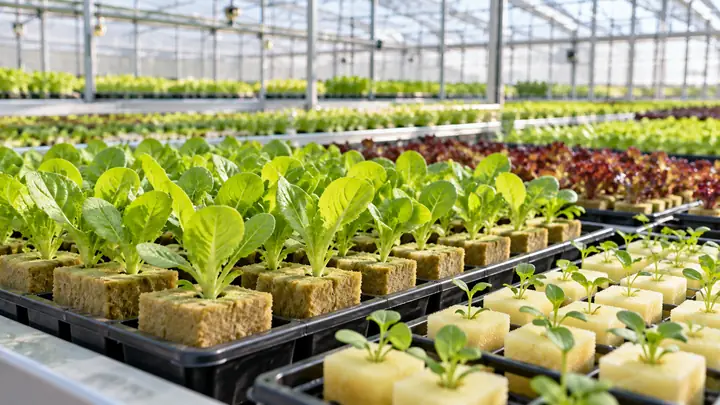
- Rockwool cubes or sponge plugs: water-retentive, so floods are less frequent; often a few times per light period.
- Expanded clay or coarse perlite: fast draining, so more frequent floods are needed, especially under strong light.
- Peat-based or coir potting mixes: hold a lot of water; one or two floods per day may be enough for small plants, more for large ones in summer.
Flood depth is usually set so solution rises part-way up the pot or to about 2–3 cm below the media surface, then drains within roughly 10–20 minutes. Raise frequency as plants grow, on hot days and under high light; lower it at night and in cloudy weather. A smart controller tied to light or a timer with day and night programs makes this easier. Media choice is covered in our hydroponic growing media guide.
How do you set up an ebb and flow system?
- Level the table. A tray that tilts floods one end and leaves the other dry. Check level with water before planting.
- Size the reservoir. It must hold the full flood volume of every table it serves, plus a working reserve so the pump never runs dry. Tray area times flood depth gives a first estimate.
- Size the pump. Choose a pump that fills the table in a few minutes at the actual head height. Pump and pipe sizing are covered in our guide to hydroponic pumps and plumbing.
- Fit the overflow. Set the overflow standpipe to the maximum safe flood height and make sure it returns directly to the reservoir.
- Add filtration. A screen on the return stops media and roots from reaching the pump.
- Program the timer or controller with a conservative starting schedule, then adjust by watching media moisture and plant turgor.
- Mix and check nutrients. Set EC and pH for the crop; see our hydroponic nutrients, EC and pH guide.
- Run a dry test. Run several cycles with water only and check for leaks, full drainage and even spread.
What grows well in ebb and flow systems?
Ebb and flow is one of the most flexible hydroponic methods because plants sit in their own pots or media:
- Seedlings and transplants: vegetables, flowers and herbs in plug trays. This is the main commercial use; see the portable tidal seedbed for vegetable seedlings.
- Potted ornamentals and nursery stock: bedding plants, foliage plants and young trees.
- Herbs and leafy greens in pots or cubes.
- Peppers and compact fruiting crops in deeper media.
What are the pros and cons of flood and drain hydroponics?
| Advantages | Disadvantages |
|---|---|
| Delivers water, nutrients and air in turn, with good root oxygenation | Depends on a reliable timer and pump; a missed cycle can dry plants |
| Uniform sub-irrigation keeps foliage dry | Recirculated solution can spread root pathogens between plants |
| Works with many media and pot sizes; easy to rearrange plants | Salts can build up in the top of the media without occasional flushing |
| Closed loop with little runoff | Large reservoir volume needed for big tables |
| Scales from one tray to whole greenhouses on rolling benches | Algae can grow on wet, lit tray surfaces |
What problems should you watch for?
- Overflow and spills: usually a blocked or missing overflow fitting. Always fit one, and test it.
- Uneven watering: a sagging or out-of-level tray. Re-level and add supports.
- Salt crust on the media surface: water moves upward and evaporates, leaving salts. Flush occasionally with plain or RO water and avoid running EC too high.
- Root disease: warm solution and poor sanitation. Keep the reservoir cool and dark, clean trays between crops, and consider water treatment.
- Algae: cover the reservoir, keep media surfaces from staying wet under light, and clean tray channels regularly.
How do you clean and maintain flood tables?
Hydroponic grow trays collect root debris, algae and mineral deposits over time. A simple routine between crops keeps them productive:
- Drain the table and reservoir completely and remove plant debris from tray channels and drain fittings.
- Scrub trays and rinse, then apply a horticultural disinfectant at the label rate and rinse again if the label requires it.
- Descale fittings where hard water leaves deposits, and clean the pump intake screen.
- Check the bench frame for level, loose bolts and corrosion, especially on wheels and rails of rolling benches.
- Calibrate EC and pH meters before refilling with fresh solution.
How do commercial tidal benches differ from hobby kits?
An ebb and flow hydroponics kit for a grow room is typically one tray, one stand and a small reservoir. A commercial greenhouse system is engineered as part of the building: trays sized to the bay, rolling benches that free up aisle space, central nutrient tanks feeding many benches through valves, and drains sized to empty large areas quickly. Tray rigidity, UV resistance and frame galvanizing matter far more at that scale. Options range from ABS tidal trays for nursery seedbeds to complete rolling-bench systems.
Mars Vertical Farm manufactures tidal trays and benches on three production lines in Shanghai, with CE-marked products and OEM/ODM service. See the range of hydroponic channels, benches and media, read about irrigation design in our greenhouse irrigation system guide, or send us your greenhouse bay size and crop plan for a flood bench layout and quotation.