Short answer
Drip tape is a thin-walled, collapsible tube with built-in emitters, typically 5 to 15 mil thick, used for one or a few seasons on row crops at about 0.5 to 1 bar. Drip line has a thicker round wall and inserted emitters, lasts many years and is often pressure compensating, so it suits orchards, vineyards, greenhouses and subsurface systems.
What is the difference between drip tape and drip line?
Drip tape is a thin-walled, collapsible polyethylene tube with emitters formed or welded inside, built for one or a few seasons at low pressure. Drip line is a thicker, round polyethylene tube with molded emitters inserted inside, built to last many years and often available in pressure compensating versions. In the drip tape vs drip line choice, tape wins on cost per meter and line wins on durability.
A third option, plain drip tubing (blank PE pipe) with punched-in emitters or micro tube leaders, is used where plants are widely or irregularly spaced, such as trees, containers and nursery beds. This guide compares all three, explains wall thickness and sizes, and shows which fits vegetables, orchards, greenhouses and subsurface systems.
What is drip tape?
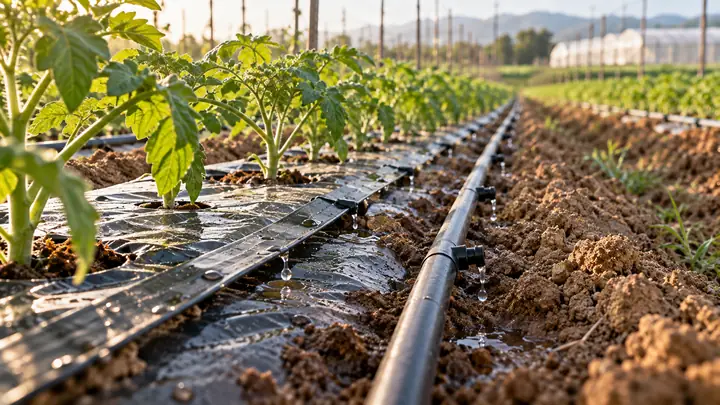
Drip tape, also called irrigation tape or T-tape in some markets, lies flat when empty and rounds out under pressure. Emitters are formed into a seam or bonded inside at fixed spacing, commonly every 10–30 cm. A drip tape irrigation system is the standard choice for row crops such as tomatoes, peppers, onions, melons, strawberries, lettuce, cotton and sweetcorn.
- Wall thickness is quoted in mil (thousandths of an inch) or mm. Extension sources describe a typical range of about 5 to 15 mil. Thin tape of roughly 5–8 mil is usually used for a single season; around 10–15 mil is used for multi-season or buried use.
- Diameter is most often 16 mm (5/8 in), with 22 mm (7/8 in) for long runs.
- Pressure is low, typically about 0.5–1 bar (8–15 psi).
- Installation is fast by machine, often together with bed shaping and plastic mulch.
Drip tape irrigation is cheap per meter and quick to lay, but tape is easily damaged by insects, birds, rodents and handling, and thin tape is usually discarded after the season.
What is drip line?
Drip line, or dripline irrigation tubing, is round PE tubing with a thicker wall, often around 0.6–1.2 mm, and cylindrical or flat emitters inserted at fixed spacing during extrusion. It keeps its shape when empty, can be rolled up and reused, and typically lasts many years on the surface and longer in protected or buried applications.
- Sizes: common drip line sizes are 12, 16, 17 and 20 mm outside diameter, with 1/2 inch drip line widely used in North America. Larger 22–25 mm lines are used for long orchard rows.
- Emitter spacing: commonly 20–100 cm.
- Flow: typically about 0.6–4 L/h per emitter.
- Options: pressure compensating (PC), anti-drain (CNL, which stops lines emptying at shutdown) and anti-siphon emitters, plus root-inhibiting versions for subsurface use.
Inline vs. online drip line emitters
Drip line with built-in emitters (inline) is faster to install and has a smooth outer surface that is easy to roll up and pass through fittings. Online drip tube emitters are pushed into blank tubing afterwards, which lets you place them exactly at each plant and change flow later. On large blocks with regular spacing, inline drip line emitters are usually more economical in labor; on irregular plantings, online emitters give more flexibility. Both types are scheduled the same way, by a drip line timer or a full irrigation controller.
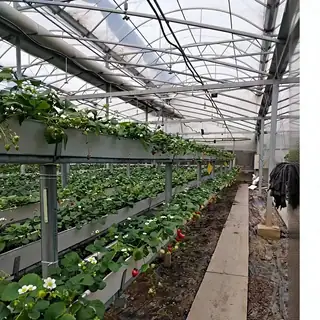
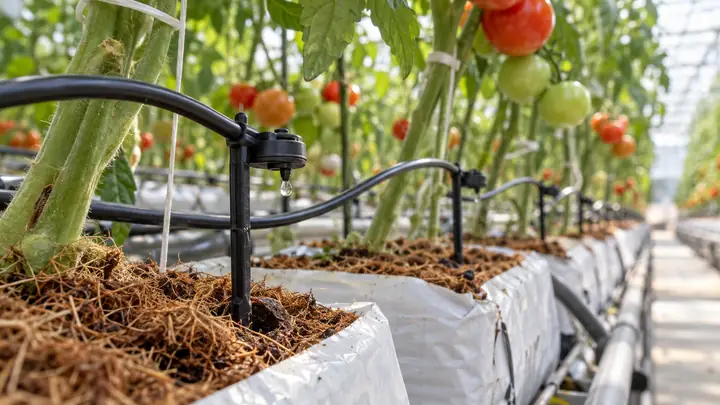
A drip line irrigation system is standard in orchards, vineyards, greenhouses, substrate growing and permanent beds. In greenhouses it is often laid along gutters, benches or A-frame strawberry troughs to feed coir slabs.
What about blank drip tubing with emitters?
Distribution tubing for drip irrigation is plain PE pipe, typically 13–20 mm, with no built-in emitters. You punch in online emitters exactly where plants are, or run micro tube drip irrigation leaders (often 4–6 mm) to stakes in pots and Dutch buckets. This drip irrigation tubing with emitters added by hand suits:
- Trees with irregular spacing, or young trees that need more emitters as they grow.
- Container nurseries and potted crops.
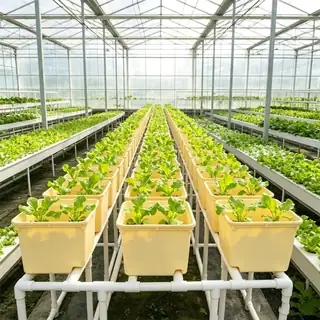
- Hydroponic substrate systems such as a commercial Dutch bucket system, where each bucket gets its own dripper stake.
It is flexible but labor-intensive for large areas. Our guide to drip emitters and fittings covers emitter types.
Drip tape vs drip line vs tubing: side-by-side comparison
| Feature | Drip tape | Drip line (inline emitters) | Blank tubing + online emitters |
|---|---|---|---|
| Wall | Thin, about 5–15 mil (0.13–0.38 mm); collapses when empty | Thick, often 0.6–1.2 mm; stays round | Thick PE, stays round |
| Typical diameter | 16 mm (5/8 in), 22 mm | 12–20 mm, larger for orchards | 13–20 mm, plus 4–6 mm micro tube |
| Operating pressure | About 0.5–1 bar | About 0.5–2 bar standard; wider for PC | Depends on emitter |
| Typical life | One season (thin) to several seasons (thick or buried) | Many years | Many years for tubing; emitters replaceable |
| Pressure compensating option | Rare | Common | Common (choose PC emitters) |
| Cost per meter | Lowest | Higher | Tubing low, labor high |
| Installation | Fast by machine; often with mulch | Fast, reusable | Slow; each emitter installed by hand |
| Best for | Annual vegetables, field crops, berries | Orchards, vineyards, greenhouses, substrate, SDI | Trees, pots, buckets, irregular plantings |
Which should I choose for my crop?
Annual vegetables and field crops
Drip tape is usually the most economical. Choose wall thickness by how long the crop stays and how rough the handling is: thin tape for a single short crop, thicker tape for long-season crops or where tape is buried a few centimeters under the bed. See drip irrigation for vegetables and small farms.
Orchards and vineyards
Drip line is the standard because it lasts, resists damage and offers pressure compensating emitters for long rows and slopes. Drip line irrigation for trees is often hung on a trellis wire or laid on the soil in one or two lines per row. More in drip irrigation for orchards and fields.
Greenhouses and substrate
Use PC drip line along slabs or gullies, or blank tubing with PC, anti-drain dripper stakes for pots and buckets. Uniformity and no dripping after shutdown matter more than cost per meter. See the greenhouse irrigation system guide.
Subsurface drip
Buried systems typically use heavier-wall tape or drip line with root-inhibiting emitters, sized for a life of many years.
What pipes are used for mains and sub-mains?
Drip tape and drip line are only the laterals. They connect to sub-mains and mains made of:
- PE pipe, flexible and UV-stabilized, common for sub-mains up to around 63 mm and laid on the surface.
- PVC pipe, the usual pipe for a buried PVC pipe irrigation system main line, rigid and economical in larger diameters. PVC must be protected from sunlight or rated for UV.
- Lay-flat hose, used as a temporary sub-main along field headlands for drip tape, quick to roll up between seasons.
The best pipe for an irrigation system depends on pressure class, whether it is buried, and how often it moves. Size it so water velocity stays modest; see how to design a drip irrigation system.
Drip tape fittings and drip line connectors
Tape and line need different fittings because tape walls are thin. Common drip line parts include:
- Start connectors (takeoffs) from the sub-main or lay-flat, with or without a mini-valve. Drip tape fittings usually use a lock ring to grip thin walls.
- Couplings to join or repair lines.
- Elbows and tees for routing.
- End closures: figure-8 ends, plugs or automatic flush valves.
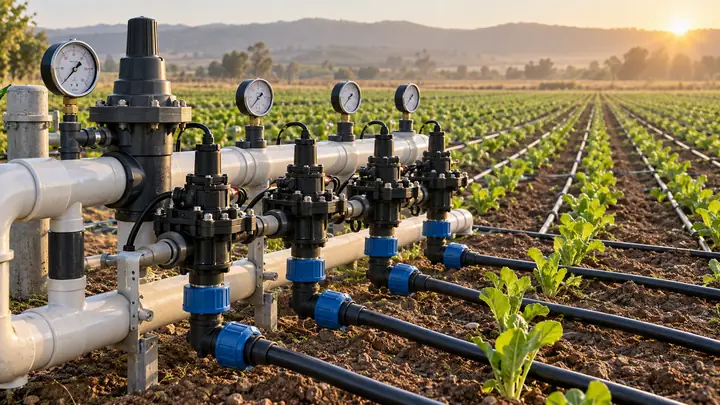
- A drip line manifold: a short header that feeds several laterals from one valve, common in greenhouses and orchard blocks.
Match fittings to the exact outside diameter and wall thickness. A 16 mm fitting made for thick drip line may not grip thin tape, and barbed connectors can tear thin tape. A simple drip line tool (hole punch) makes clean holes in the sub-main for takeoffs.
Do drip tape and drip line need a pressure regulator?
Usually yes, especially for tape. A drip line pressure regulator, also called a drip line pressure reducer or drip line regulator, holds pressure in the lateral's working range. Tape can burst or blow off fittings above its rating; standard drip line loses uniformity at high pressure. Install the regulator after the filter and zone valve, sized for the zone's flow. With PC drip line, a regulator still protects fittings and keeps pressure within the compensating range.
Filtration and maintenance
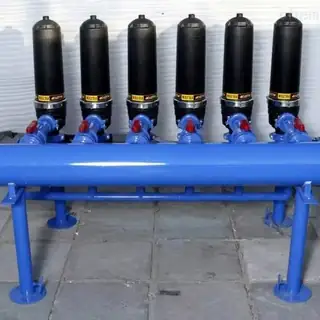
Both products clog without good filtration; tape emitter passages are often smaller, so tape may need finer filtration. A self-cleaning disc filter such as a centrifugal disc filter for agricultural water is a common choice for drip, combined with a sand media filter on dirty surface water. Our disc vs. sand vs. screen filter comparison explains which to choose.
Maintenance checklist for any drip line irrigation setup:
- Clean or backwash filters on a pressure-difference or time schedule.
- Flush lateral ends regularly, more often with surface water or after fertigation.
- Inspect lines for leaks and damage from rodents, birds and machinery after each operation in the field.
- Check zone flow against the baseline to detect clogging or leaks early.
- Treat with acid or chlorine where water quality requires it, following product guidance and never mixing the two.
- Drain and store reusable drip line out of sunlight between seasons.
Drip tape irrigation kits vs. engineered systems
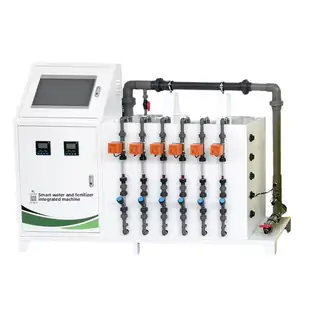
Drip tape irrigation kits and drip line irrigation kits bundle tape or line, fittings, a filter and a regulator, and they are a reasonable way to trial drip on a small plot. For commercial fields, an engineered layout with correctly sized filtration, zoning, fertigation and control usually performs better and costs less to run. Explore the irrigation, fertigation and water treatment range, or share your crop, field size and water source and we will propose a drip layout and head unit.