

Short answer
The best strawberry fertilizer is a complete, balanced feed with moderate nitrogen and extra potassium during fruiting. Strawberries prefer a soil pH of about 5.5 to 6.5 or a hydroponic solution pH of about 5.5 to 6.2, at least 6 to 8 hours of direct sun or about 17 to 20 mol/m2/day of light indoors, and pollen moved by wind, bees or a brush.
What is the best strawberry fertilizer?
The best strawberry fertilizer is a complete, balanced feed with moderate nitrogen, adequate phosphorus and extra potassium once plants start fruiting, plus calcium, magnesium and micronutrients. In soil that usually means a soil-test-based balanced fertilizer such as 10-10-10 at planting with light feeding afterwards; in hydroponics it means a complete strawberry nutrient solution run at an electrical conductivity (EC) of roughly 1.0–1.5 mS/cm for young plants, rising to about 1.5–2.2 mS/cm during fruiting.
This guide covers the four things that decide whether a strawberry plant is productive: fertilizer, pH, light and pollination, with notes for both garden beds and hydroponic or indoor systems. If you are still choosing plants, start with the best strawberry varieties for hydroponics.
What nutrients do strawberries need?
Strawberries need the same essential nutrients as other fruiting crops, but the balance shifts as they move from leaf growth to fruit.
- Nitrogen (N): drives leaf and crown growth. Do strawberries like nitrogen? Only in moderation. Too much nitrogen produces lush leaves, many runners, soft fruit and more gray mold (Botrytis).
- Potassium (K): supports fruit size, sugar and color, so demand rises during fruiting. Many hydroponic recipes raise the potassium-to-nitrogen ratio as the crop moves into fruit.
- Phosphorus (P): important for roots and early growth; usually adequate in a balanced feed.
- Calcium (Ca): needed for firm fruit and healthy new leaves; shortage shows as leaf tipburn and soft berries, often because of poor airflow or high humidity rather than lack of calcium.
- Magnesium, iron and boron: magnesium and iron keep leaves green; boron supports flowering and fruit set. Iron chlorosis (yellow leaves with green veins) often signals that pH is too high.
Strawberry fertilizer for soil beds vs hydroponic systems
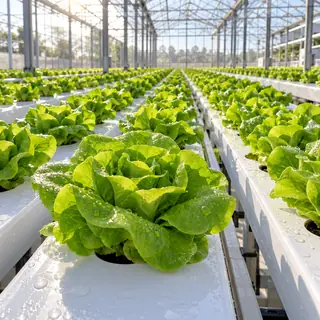
Strawberry nutrient requirements are the same in soil and hydroponics, but how you deliver them is very different. Soil buffers nutrients and pH, so feeding can be occasional; a hydroponic substrate holds almost nothing, so plants are fed with every irrigation.
| Factor | Garden bed, backyard strawberry patch or container | Hydroponic or indoor substrate system |
|---|---|---|
| Fertilizer type | Granular balanced fertilizer, compost, organic or liquid strawberry fertilizer | Complete water-soluble nutrients, usually two-part (A and B) stock solutions |
| Typical timing | Before planting, then light side-dressings; June-bearers mainly after harvest | Every irrigation, via fertigation or a recirculating reservoir |
| Strength target | Follow soil test and label rates | EC about 1.0–1.5 mS/cm vegetative, about 1.5–2.2 mS/cm fruiting |
| pH target | Soil pH about 5.5–6.5 | Solution pH about 5.5–6.2 |
| Monitoring | Soil test every 2–3 years, leaf color | EC and pH daily, drain EC and volume, periodic leaf or solution analysis |
| Main risk | Too much nitrogen in spring | Salt build-up from high EC or poor drainage |
What about organic fertilizer for strawberries?
Organic fertilizer for strawberries, such as compost, well-rotted manure, feather meal or fish emulsion, works well in soil because soil microbes release the nutrients slowly. In recirculating hydroponics, organic inputs can feed biofilm, clog drippers and make EC readings unreliable, so most commercial hydroponic strawberry nutrient solutions use mineral salts. Growers who want organic certification should check what their certifier allows before designing the system.
Do foliar and liquid strawberry fertilizers help?
A liquid strawberry fertilizer is convenient for containers and small beds because it feeds quickly. Foliar fertilizer for strawberries, usually calcium or boron sprays, can correct a specific shortage but cannot replace root feeding, and sprays on flowers or fruit may encourage disease. Fix root-zone pH and EC first.
When should you fertilize strawberries?
Feeding should follow the plant type. Spring feeding suits day-neutral and everbearing types, which flower all season and benefit from light, frequent feeding. For everbearing types, that typically means small doses every few weeks from spring to late summer. For June-bearing beds, many university extension services recommend feeding mainly after harvest, when plants form next year's flower buds, because heavy spring nitrogen softens fruit. Do strawberry plants need fertilizer every year? In soil, yes, but in smaller amounts than vegetables; let a soil test guide the rate.
What pH do strawberries like?
Strawberry pH preference is slightly acidic: a soil pH of about 5.5–6.5, with roughly 5.8–6.2 often cited as ideal, and a hydroponic solution pH of about 5.5–6.2. Are strawberries acid loving plants? Only mildly; they prefer much less acidity than blueberries, which want a soil pH around 4.5–5.5.
- pH too high (above about 6.5–7): iron and manganese become less available and young leaves turn yellow between the veins.
- pH too low (below about 5.2): roots can be damaged and calcium and magnesium uptake falls.
- Adjusting soil pH: use elemental sulfur to lower and garden lime to raise, ideally months before planting, guided by a soil test.
- Adjusting hydroponic pH: use dilute nitric or phosphoric acid to lower and potassium hydroxide to raise; automatic dosing keeps strawberry hydroponic pH stable. The hydroponic nutrients, EC and pH guide compares targets for other crops.
How much sun do strawberries need?
Strawberries need full sun: at least 6–8 hours of direct sunlight a day outdoors, and more gives more flowers and sweeter fruit. They tolerate light shade, but yield and flavor drop noticeably with less than about 6 hours.
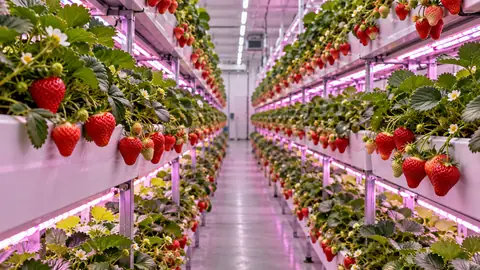
Indoors, light is measured as daily light integral (DLI), the total photosynthetic light per day. Commonly cited controlled-environment guidance suggests a minimum of about 17 mol/m²/day and an optimum around 20 mol/m²/day for strawberries. For example, an average photosynthetic photon flux density (PPFD) of about 350 µmol/m²/s for 16 hours delivers roughly 20 mol/m²/day. Day-neutral varieties are usually run with 14–16 hours of light; short-day varieties need shorter days to trigger flowering. Our guide to PAR, PPFD and light spectrum explains how to convert between these values.
Temperature matters as much as sun. Most varieties perform best at about 18–24 °C (64–75 °F) by day and 10–15 °C (50–59 °F) at night; sustained heat above about 30 °C (86 °F) reduces flowering and fruit quality.
Do strawberries need to be pollinated?
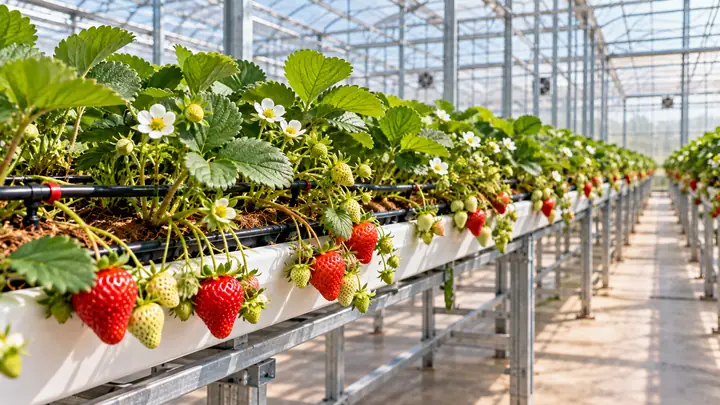
Yes, strawberries need to be pollinated to form well-shaped berries, and good strawberry pollination is the difference between full, even fruit and lopsided berries, even though most varieties are self-pollinating. Each flower has both male and female parts, so a plant does not need a second variety, but pollen still has to be moved onto the hundreds of pistils in the center of each flower. Outdoors, wind and insects do this; bees are not strictly required, but bee visits measurably improve fruit size and shape.
Every pistil that is not fertilized leaves a hard, seedy patch where the flesh does not swell, producing lopsided or "catfaced" fruit. Indoors, with no wind and no insects, unpollinated flowers are the most common cause of misshapen strawberries.
How do you pollinate strawberries indoors?
Here is how to pollinate strawberry plants when there is no wind or insect traffic:
- Check that flowers are ready. Pollinate open flowers whose yellow anthers are shedding powdery pollen, usually from late morning to early afternoon.
- Keep conditions right. Relative humidity around 50–70% and temperatures around 20–25 °C (68–77 °F) help pollen release and viability. Very humid or cold air makes pollen sticky and weak.
- Hand pollinate strawberries with a soft, small paintbrush or cotton swab: brush gently in circles over the anthers and across the whole central cone of each flower.
- Repeat every 1–2 days while flowers are open, because pistils mature over several days.
- Add air movement. Horizontal airflow fans gently shake flowers and spread pollen in small rooms and grow cabinets.
- Scale up with pollinators. Greenhouses and larger indoor farms commonly use commercial bumblebee hives; some use bees combined with tuned lighting and climate.
What is the best irrigation system for strawberries?
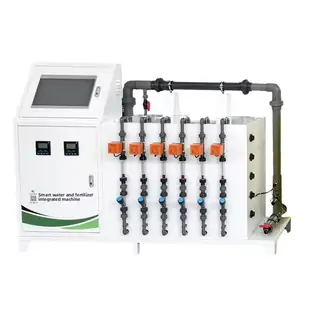
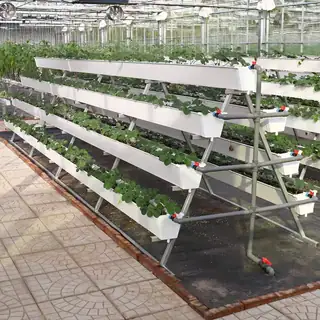
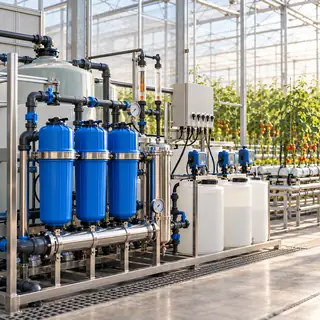
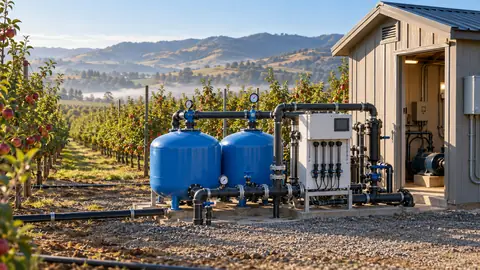
Drip irrigation is the best irrigation system for strawberries because it waters the root zone, keeps leaves and fruit dry and lets you feed with every irrigation. In soil beds, drip tape or drip line under plastic mulch is standard. In substrate troughs and grow bags, growers typically use one pressure-compensating dripper per plant or per few plants, with several short irrigations a day and about 10–30% drainage to prevent salt build-up. A smart fertigation machine mixes stock solutions to your EC and pH targets automatically; see how to size a fertigation system for flow and channel planning.
How to take care of strawberry plants: a routine checklist
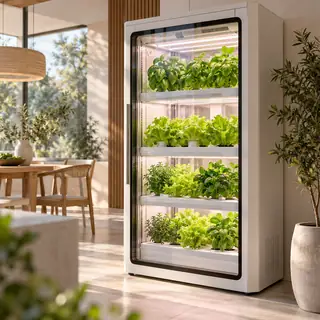
If you are wondering how to care for a strawberry plant, it comes down to a short routine of inspection, cleaning and adjustment. This checklist works for a garden strawberry plant, an indoor rack or a commercial hydroponic farm.
- Plant at the right depth: set the crown exactly at the surface; buried crowns rot and exposed crowns dry out.
- Remove runners from fruiting plants unless you are propagating, and remove old, diseased or yellowing leaves weekly.
- Watch EC and pH daily in hydroponics; brown leaf edges often mean EC is too high or drainage too low.
- Control humidity and airflow to limit gray mold and powdery mildew; see fungus gnats and powdery mildew control.
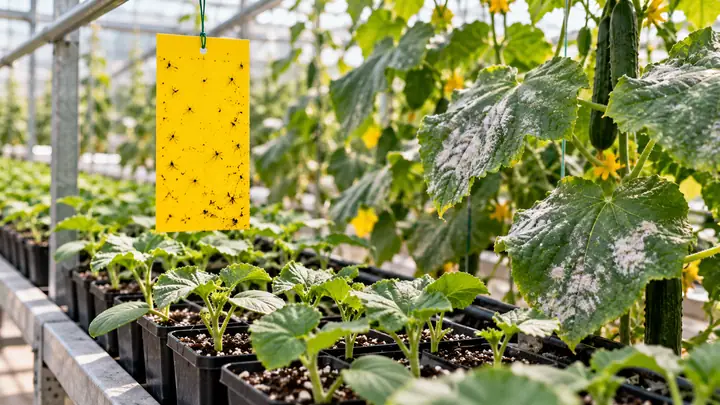
- Scout for pests such as two-spotted spider mites, thrips and aphids under leaves at least weekly.
- Harvest often: pick ripe fruit every 1–3 days so rotting berries do not spread disease.
- Plan plant orders: when to buy strawberry plants depends on scale; home growers buy in early spring, while commercial farms order plug or tray plants several months ahead.
- Keep records of feed, EC, pH, light and yield so you can link problems to causes.
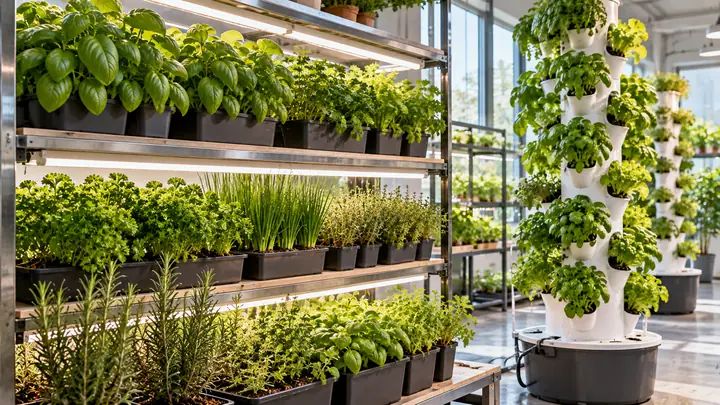
If you grow herbs alongside strawberries, see the best herbs to grow indoors. For system-level advice, including substrates and troughs, read hydroponic strawberries and tomatoes.
Next steps
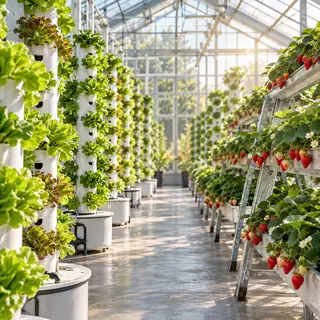
Good strawberry care is a balance: the right strawberry fertilizer at the right EC, a slightly acidic pH, enough light, reliable pollination and dry, well-ventilated foliage. Controlled environments make that balance easier to hold year-round. Mars Vertical Farm builds automatic strawberry plant factories, substrate troughs and fertigation units factory-direct, sized to your varieties and floor area. Send us your project details and our engineers will propose a system and quotation.