


Short answer
Good hydroponic suppliers can prove their manufacturing capability, hold certifications relevant to your market such as ISO 9001, CE or North American electrical listings, and back quality with approved samples. They quote clear MOQ, lead time and payment terms on a stated Incoterm such as EXW, FOB or CIF, and provide a written warranty with spare parts. Compare quotes only on identical specifications and scope.
What should you look for in hydroponic suppliers?
The best hydroponic suppliers combine verifiable manufacturing capability, relevant certifications for your market, consistent product quality proven by samples, clear terms on minimum order quantity (MOQ), Incoterms and lead time, and a written warranty with spare parts support. Price matters, but only once quotations are compared on the same specification and scope.
This buyer's guide is for commercial growers, distributors, project contractors and retailers sourcing hydroponic equipment, grow supplies and other horticultural products, from NFT channels and tidal benches to grow cabinets, vertical racks and plant factories. It explains the types of suppliers, what to verify, how to handle samples, MOQ and payment, how Incoterms change your landed cost, and how to set up a wholesale or distribution partnership. For customs, duties and shipping documents, see our companion guide on importing farm equipment from China.
What types of hydroponic suppliers are there?
Hydroponic suppliers range from factories that make the equipment to shops that resell it, and each fits a different buyer. The table compares the main types.
| Supplier type | Pricing | Typical MOQ | Customization | Best for |
|---|---|---|---|---|
| Manufacturer (factory) | Factory-direct, lowest per unit | Moderate; higher for custom molds or colors | High: sizes, materials, OEM/ODM, private label | Projects, distributors, importers |
| Trading company or sourcing agent | Factory price plus margin | Often low; mixed-product orders | Limited to what partner factories offer | Buyers needing many small product lines in one container |
| Horticulture distributors and wholesalers | Wholesale pricing from local stock | Case or pallet quantities | Low | Grow shops, garden centers, contractors |
| Retail grow shops and online stores | Retail | None | None | Hobbyists, small trials, urgent spares |
| System integrators and turnkey builders | Project pricing including design and installation | Per project | Full design to your site | Large greenhouses, indoor farms, plant factories |
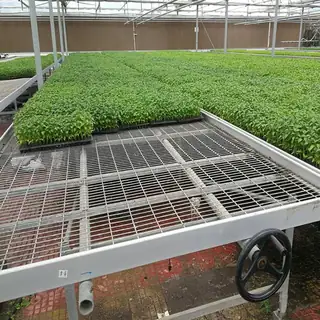
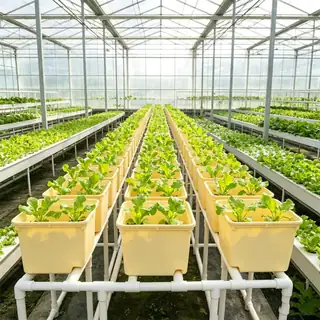
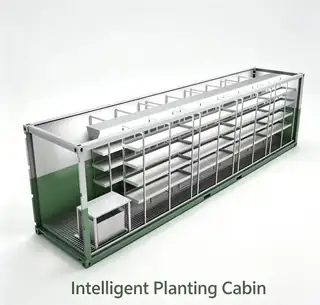
Many buyers use more than one. A vertical farm might buy racks, channels and benches factory-direct, LED horticulture fixtures from a lighting specialist, and fertilizers, seeds and other growing supplies from local horticultural wholesalers. Our commercial hydroponic systems guide lists the equipment a typical farm needs.
How can you tell a manufacturer from a trading company?
Ask for the business license and check that its scope includes manufacturing, request a live video walk-through of production lines such as PVC extrusion, sheet-metal work and welding, and ask which processes are done in-house and which are outsourced. A genuine factory can usually show raw-material stock, tooling and quality control (QC) stations, and can discuss wall thickness, material grades and tolerances in detail. Trading companies are not bad partners, but you should know who controls quality.
Which certifications and compliance documents should you check?
Certifications prove that a supplier runs a managed quality system and that products can be legally sold and installed in your market. Check these, and verify certificate numbers with the issuing body rather than relying on a PDF:
- ISO 9001: a quality management system certificate covering the actual factory and product scope you are buying.
- CE marking (European Union): required for many electrical products and machinery sold in the EU, backed by a declaration of conformity and test reports. CE is not recognized in the United States.
- North American electrical approval: for powered equipment such as cabinets, controllers and lights, inspectors, insurers and retailers commonly expect listing by a Nationally Recognized Testing Laboratory (NRTL), for example UL or ETL marks. Wireless controllers may also need FCC authorization.
- RoHS and material declarations: restriction of hazardous substances in electronics, and food-contact or potable-water compliance statements for channels, tanks and pipes that touch nutrient solution.
- Material specifications: UV-stabilized PVC or PP grades, hot-dip galvanizing standards for steel frames, and IP (ingress protection) ratings for electrics in wet areas.
- Performance data: pump curves, photon efficacy and PPFD maps for horticultural lighting, and load ratings for racks.
Requirements differ by country and change over time, so confirm current rules with your importer, customs broker or local authority before ordering.
How should you use samples to judge quality?
Samples are the cheapest insurance in sourcing: they show real material, finish and fit before you commit to a container. Most factories charge for samples and freight, and many credit the sample cost against the first order.
- Order the actual product, not a showroom piece. Ask for a standard production unit or a short channel section, bucket, tray or cabinet panel.
- Measure against the specification. Check dimensions, wall thickness, weight, coating thickness and hole spacing with calipers and a scale.
- Test function. Run water through channels and benches, check drainage and leaks, measure pump flow, and power up lights and controllers.
- Check material behavior. Look for UV stabilizer statements, smell and odor from plastics, and flexing or cracking under load.
- Approve a reference sample. Keep a signed "golden sample" and reference it in the purchase contract so bulk production must match it.
How do MOQ, pricing, lead time and payment terms work?
MOQ, pricing, lead time and payment terms are linked, and understanding how a factory sets them makes negotiation easier.
- MOQ: standard items such as NFT channels, tidal trays or grow cabinets often have modest MOQs, sometimes per meter or per carton. Custom colors, molds, sizes or private-label packaging carry higher MOQs or tooling charges. Wholesale buyers can often mix several products to reach a container load.
- Pricing: quotations should list unit price, currency, Incoterm, packing method, validity period and what is included, such as fittings, end caps, pumps, controllers or installation drawings.
- Lead time: depends on product type, order size and season; standard products are usually faster than custom designs. Ask for a written production schedule with milestones.
- Payment: a common structure for new buyers is a deposit by bank transfer (T/T), often around 30%, with the balance before shipment or against a copy of the bill of lading. Letters of credit (L/C) suit larger orders. Avoid paying 100% upfront to an unverified supplier.
Which Incoterms should you use, and what do they include?
Incoterms are standard trade rules published by the International Chamber of Commerce (ICC), currently Incoterms 2020, that define where the seller's costs and risks end and the buyer's begin. The term you choose changes the price you see and the costs you still have to pay.
| Incoterm | Seller arranges | Risk passes to buyer | Buyer still pays | Good for |
|---|---|---|---|---|
| EXW (Ex Works) | Goods ready at the factory | At the factory | Loading, export clearance, all freight, insurance, import costs | Buyers with their own forwarder in China |
| FOB (Free on Board), e.g. FOB Shanghai | Inland transport, export clearance, loading on the vessel | When goods are on board at the port of loading | Ocean freight, insurance, destination charges, duties | Importers who control freight and insurance |
| CIF (Cost, Insurance and Freight) | Ocean freight and minimum insurance to the destination port | When goods are on board at the port of loading | Destination port charges, customs, duties, delivery | First-time importers who want a port-to-port price |
| DAP (Delivered at Place) | Transport to a named place | At the named place, ready for unloading | Import clearance, duties, unloading | Buyers wanting door delivery while handling customs |
| DDP (Delivered Duty Paid) | Everything, including import duties | At the named place | Unloading | Simplest for buyers; seller must handle your country's import rules |
Two practical points: under CIF the seller only has to buy minimum insurance cover, so many buyers add their own; and FOB is technically intended for sea freight, while FCA (Free Carrier) is the ICC's recommended equivalent for containerized cargo. Mars Vertical Farm typically quotes EXW, FOB Shanghai or CIF.
What warranty and after-sales support should you expect?
A credible supplier puts its warranty, spare parts and support in writing, with clear limits. Ask for:
- Warranty terms: length and coverage for each component group, for example structure and channels versus pumps, fans, LED drivers and controllers, plus exclusions such as misuse, poor water quality or unauthorized modifications.
- Claim process: how defects are reported (photos, video, serial numbers), response times, and whether replacements ship free.
- Spare parts: a recommended spares kit with the first order, such as end caps, fittings, drippers, pumps, sensors and fuses, and availability for several years.
- Documentation: drawings, assembly manuals, wiring diagrams and parts lists in your language.
- Support: remote video support across time zones, and on-site installation supervision for large projects, with costs stated up front.
Step-by-step supplier evaluation checklist
A structured process makes supplier quotes comparable and reduces risk on the first order. Use these steps:
- Write a specification. Define crop, layout, dimensions, materials, voltage and frequency (for example 110–120 V/60 Hz or 220–240 V/50 Hz), plug type, certifications and packing.
- Shortlist three to five suppliers. Use trade fairs, industry directories, referrals and manufacturer websites.
- Send the same request for quotation (RFQ). Ask every supplier to quote the same specification, quantity and Incoterm.
- Compare like for like. Normalize for scope, wall thickness, galvanizing, included accessories and warranty.
- Audit the factory. Visit, request a live video audit, or hire a third-party audit firm.
- Order and approve samples. Sign off a reference sample.
- Sign a clear contract or proforma invoice. Include specifications, drawings, the golden sample, lead time, payment, packing, warranty and how disputes are handled.
- Inspect before shipment. A pre-shipment inspection, often using AQL (acceptance quality limit) sampling, checks quantity, workmanship and packing before you pay the balance.
- Review after delivery. Record defects, damage and installation issues, and feed them back for the next order.
How do wholesale and distribution partnerships work?
Manufacturers looking for horticulture distributors usually expect a business plan for the territory, realistic annual volumes, local stock and after-sales service, and marketing support. In return, distributors can negotiate tiered pricing, OEM or private-label branding, marketing materials, priority production slots and sometimes territory protection. Start with a trial order and a defined review period before signing exclusivity.
What about seeds, lights and greenhouse glass?
Equipment manufacturers rarely supply every horticultural product. Hydroponic seed suppliers are usually specialist seed companies, and imported seed typically needs phytosanitary certificates and may need import permits. LED horticulture fixtures should come with independent photometric reports; see grow lights for indoor farming. Horticultural glass and polycarbonate for greenhouses are specified by light transmission, thickness and safety rating, as compared in greenhouse panels: polycarbonate vs glass. For vertical horticulture projects, our vertical farming equipment guide lists what each system needs, and how to start a vertical farm covers budgeting and phasing purchases.
Getting a quote
Choosing hydroponic suppliers well comes down to verifying the factory, testing samples, agreeing clear terms and planning for after-sales support. Mars Vertical Farm is a Shanghai manufacturer with more than 20 years of experience, ISO 9001 and CE certification, and customers in 12+ countries; our range covers hydroponic channels, Dutch buckets and tidal benches, vertical racks and A-frames, grow cabinets and plant factories. If you are comparing suppliers for a project or a distribution line, send us your specification and target quantities for a factory-direct quotation, with custom sizing and OEM options where needed.