Short answer
Glass transmits the most light (about 90%) and lasts 30 years or more, but it is heavy and costly. Twin wall polycarbonate transmits roughly 75 to 80%, insulates far better, resists hail and lasts about 10 to 20 years. Polyethylene film is the cheapest but needs replacing every three to four years. Choose based on crop light needs, climate and budget.
What are greenhouse panels and which types exist?
Greenhouse panels are the transparent or translucent sheets that cover a greenhouse roof and walls, and the four main types are glass, polycarbonate, acrylic and fiberglass, with polyethylene film as the low-cost flexible alternative. The choice of greenhouse glazing sets light transmission, heat loss, lifespan, structural load and much of the build cost.
There is no single best material for greenhouse panels. Glass gives the highest and most durable light transmission, twin wall polycarbonate gives insulation and impact resistance at lower weight, and film is the cheapest way to cover large areas. The right choice depends on crop, climate, structure and budget. This guide compares them with typical figures from university extension sources and explains where each one fits.
How do greenhouse glazing materials compare?
The values below are typical published averages. Actual figures vary by product, thickness, coating and age, so always ask for data sheets.
| Material | Typical light transmission | Typical lifespan | Insulation | Relative cost |
|---|---|---|---|---|
| Single glass (horticultural or tempered) | About 90% | 30+ years | Poor (single layer) | Highest, plus a heavier frame |
| Double glass / insulated glass | Lower than single, roughly 75–80% | 30+ years | Good | Very high |
| Twin wall polycarbonate (8–10 mm) | About 75–80% | Roughly 10–20 years with UV protection | Good | Medium |
| Corrugated polycarbonate | Up to about 90% | Roughly 10–20 years | Poor (single layer) | Low to medium |
| Twin wall acrylic | About 84–86% | About 20 years | Good | High |
| Fiberglass (FRP) | High when new, falls with UV ageing | From a few years up to about 20 with good coatings | Poor | Low to medium |
| Polyethylene film, single layer | About 85–88% | About 3–4 years | Poor | Lowest |
| Polyethylene film, double inflated | About 77% | About 3–4 years | Moderate | Low |
Extension data suggests that a double layer of air-inflated film loses roughly 60% of the heat of a single layer, and that twin wall rigid plastics insulate roughly as well as double glass. That is why multiwall panels are popular in cold climates.
When is a glass greenhouse the right choice?
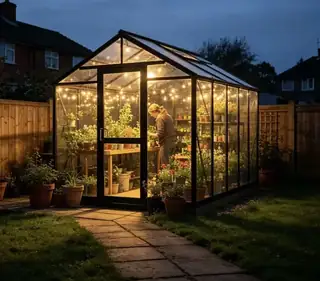
A glass greenhouse delivers the most light over the longest life. Glass does not yellow, resists scratching, and keeps its transmission for decades. That is why commercial glass greenhouses dominate high-value crops such as tomatoes, cucumbers, peppers and cut flowers in northern regions where winter light limits yield.
Types of greenhouse glass
- Float or horticultural glass: the traditional low-cost option, but it breaks into sharp pieces.
- Tempered glass: about four to five times stronger than float glass and breaks into small granules. It is the standard for roofs, garden glass greenhouses and any area near people.
- Diffuse glass: textured or coated to scatter light deeper into the canopy and reduce leaf scorch.
- Anti-reflective coated glass: adds a few percentage points of transmission for high-light crops.
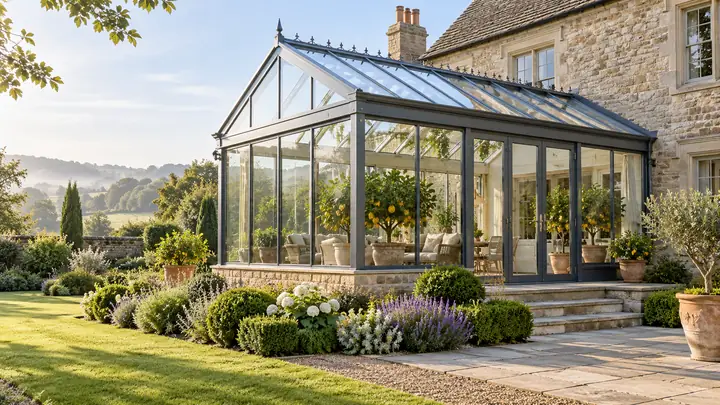
- Insulated (double) glass: used in sunrooms, glass greenhouses attached to a house and some modern commercial houses where energy cost is high.
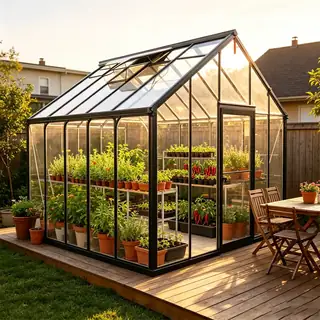
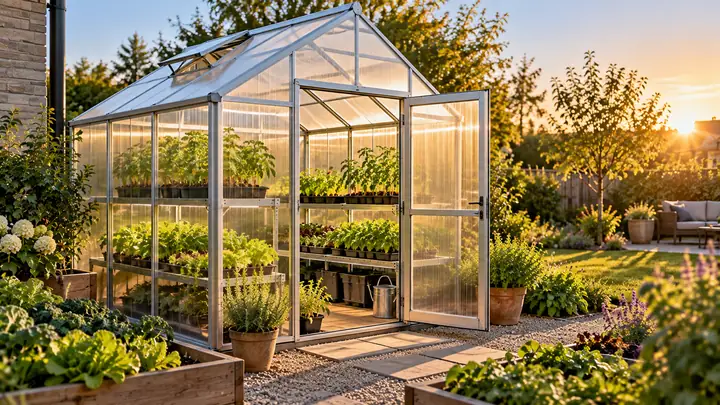
The trade-offs are weight and cost. Glass needs a stronger, more precise frame, and greenhouse glass panes are more expensive to ship and replace. For a small glass greenhouse or a glass greenhouse kit in a garden, tempered glass in an aluminum frame is the usual combination.
Why choose polycarbonate greenhouse panels?
Polycarbonate is the most common rigid plastic glazing. It is roughly 200 times more impact resistant than glass, light, and easy to cut and bend.
Twin wall and multiwall polycarbonate
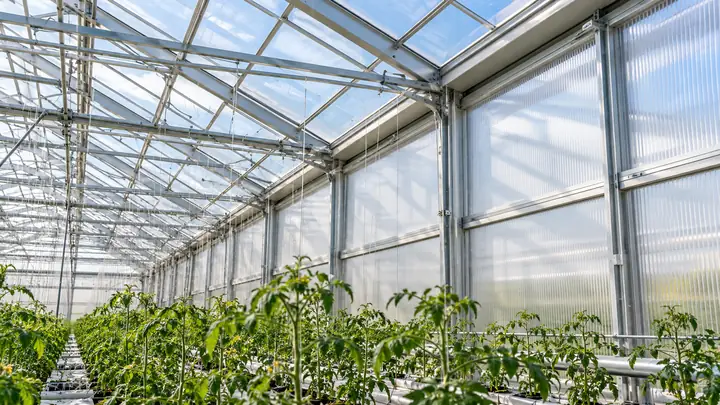
Twin wall greenhouse panels (also called double wall greenhouse panels) have two skins separated by ribs. The trapped air makes them insulated greenhouse panels, typically in 4, 6, 8, 10 or 16 mm thicknesses, with triple and multiwall sheets for colder climates. They diffuse light, which reduces shadows and hot spots, and are widely used as greenhouse roof panels and wall panels in garden and commercial structures.
Corrugated and solid polycarbonate
Corrugated greenhouse panels are single-skin profiled sheets with high clarity and good strength across spans. They are cheaper than multiwall but insulate poorly. Solid flat polycarbonate looks like glass and is used where clarity matters.
What to check
- UV-protected surface: one side is co-extruded with a UV layer and must face outward. Unprotected sheets yellow and become brittle.
- Thickness and weight per m²: thin, light sheets cost less but sag and hail-dent more easily.
- Anti-condensation coating: helps drops run off instead of dripping on crops.
- Edge sealing: tape the top flutes and use breather tape at the bottom to keep out dirt, algae and insects.
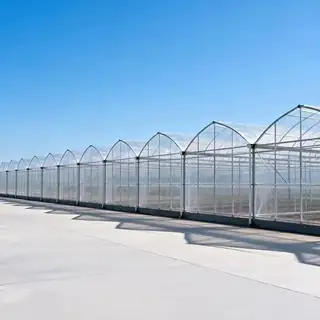
Standard sheet sizes such as 4x8 ft greenhouse panels suit small structures, while long sheets in 2.1 m widths cover commercial roofs with fewer joints. See our polycarbonate greenhouse with fertigation and the multi-span polycarbonate tunnel greenhouse for commercial examples.
What about acrylic and fiberglass greenhouse panels?
Acrylic greenhouse panels (PMMA) transmit more light than polycarbonate and resist yellowing very well. They are stiffer and more brittle, so they crack more easily under hail or impact, and they cost more. They are a good fit for display greenhouses and some research houses, less so where hail is common.
Fiberglass greenhouse panels (fiberglass-reinforced polyester) were once common in commercial greenhouses. New sheets transmit plenty of light, but UV ageing roughens the surface, collects dirt and reduces transmission over time unless the sheet has a good protective coating. Today most growers choose polycarbonate instead.
When does polyethylene film make sense?
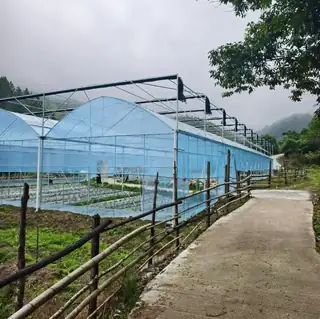
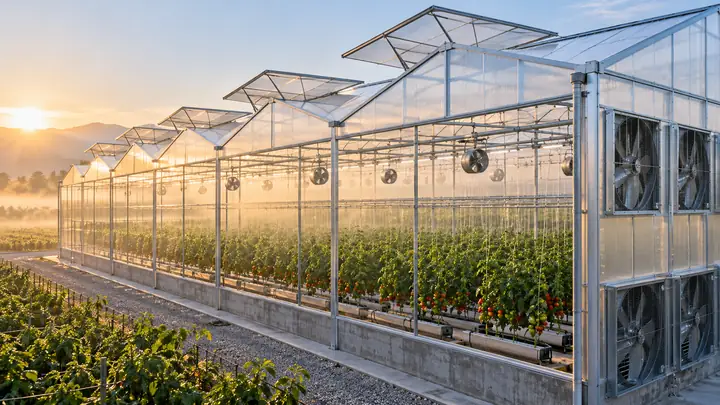
Greenhouse film is the cheapest covering per square meter and the standard for hoop houses, high tunnels and multi-span film greenhouses. Greenhouse-grade polyethylene is UV-stabilized, usually around 6 mil (about 150 microns) thick, and lasts roughly three to four years. Extra additives make a real difference:
- Infrared (thermal) additive: reduces heat loss on clear nights.
- Anti-drip or anti-condensate: keeps condensation from dripping on plants and blocking light.
- Diffusing: spreads light and reduces scorching.
A double layer inflated with a small blower creates an insulating air gap. For an affordable large structure such as a 20x40 greenhouse, or for a large commercial range, film keeps capital cost low, though it must be replaced regularly. Our film-covered multi-span steel greenhouse uses this approach. For the structural side, see hoop house vs high tunnel.
Should greenhouse roof panels and wall panels be the same?
Not necessarily. Many well-designed greenhouses mix materials to balance light, insulation and cost:
- Roof: most light enters through the roof, so it gets the highest-transmission material the budget allows, such as diffuse glass, clear twin wall polycarbonate or a fresh, anti-drip film.
- North wall (northern hemisphere): receives little direct sun, so an insulated panel or thicker multiwall polycarbonate saves heat with little loss of light.
- Side walls: often polycarbonate for impact resistance at the level where carts, tools and people move.
- End walls and gables: rigid panels make it easier to frame doors, fans and vents than film.
Clear plastic panels for a greenhouse are not always better than diffused ones. Clear glazing suits seedlings and low-light winters; diffuse glazing spreads light more evenly through tall crops and reduces scorch in bright summers.
What is the best material for greenhouse panels?
- High-value crops in low-light northern regions: glass, ideally diffuse, for maximum light over a long life.
- Cold climates where heating cost dominates: twin wall or multiwall polycarbonate, or double inflated film.
- Hail-prone regions: polycarbonate rather than glass or acrylic.
- Large areas on a tight budget: polyethylene film on a steel frame.
- Garden and hobby greenhouses: tempered glass for appearance and longevity, or 4–6 mm twin wall polycarbonate for safety and insulation.
- Attached greenhouses and sunrooms: tempered or insulated glass, sometimes with a polycarbonate roof.
How do you choose greenhouse panels step by step?
- Define the crop's light needs. Fruiting crops need far more light than leafy greens or propagation.
- Check the climate. Note winter low temperatures, snow and wind loads, hail frequency and summer heat.
- Estimate heating and cooling costs. Compare single and double glazing against the expected energy bill.
- Match the frame. Glass needs a heavier, more precise frame; film needs a frame designed for tensioning and inflation. Our guide to greenhouse frames covers this.
- Compare lifetime cost. Divide installed cost by expected life, and add replacement labor for film.
- Request data sheets. Ask for light transmission, U-value, UV warranty, thickness and weight per m².
- Plan ventilation and shading. High-transmission glazing needs good venting and shade screens; see our ventilation and heating guide.
How should greenhouse panels be installed and maintained?
Install polycarbonate with the flutes running vertically so condensation drains, and leave expansion gaps because plastic expands far more than aluminum. Use the correct profiles and screws with EPDM washers, and never over-tighten. Glass should sit on rubber gaskets or glazing tape with clips that allow movement. Clean all glazing at least once a year, typically before winter when light is scarce. Dust and algae can cut transmission noticeably. Replace film on schedule rather than waiting for it to tear in a storm.
Mars Vertical Farm supplies glass and polycarbonate covered greenhouses, film multi-span houses and aluminum sunrooms, with OEM/ODM options. Browse the greenhouses and sunrooms range, read our commercial greenhouse guide, or send your site, crop and climate data for a glazing recommendation and quotation.