Short answer
A shipping container farm is a 20 or 40 ft container converted into an insulated hydroponic grow room with racks or towers, LED lighting, air conditioning, dehumidification and automated EC/pH dosing. It grows leafy greens, herbs, microgreens or fodder year-round in almost any climate. Electricity for lighting and cooling is usually the largest running cost, so check power draw against local tariffs.
What is a shipping container farm?
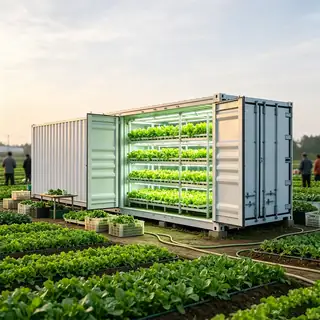
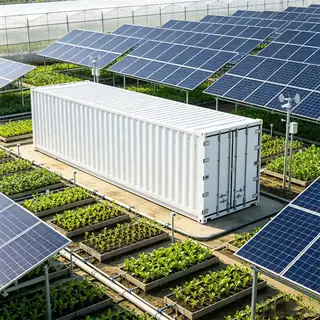
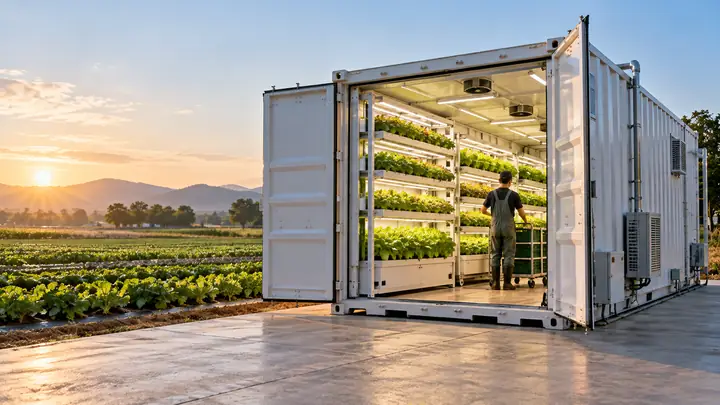
A shipping container farm is a steel shipping container, usually 20 or 40 feet long, converted into an insulated, climate-controlled grow room with hydroponic racks or towers, LED lighting, air conditioning and automated nutrient dosing. It lets you grow leafy greens, herbs, fodder or other crops year-round in almost any climate, on a site no larger than a parking space.
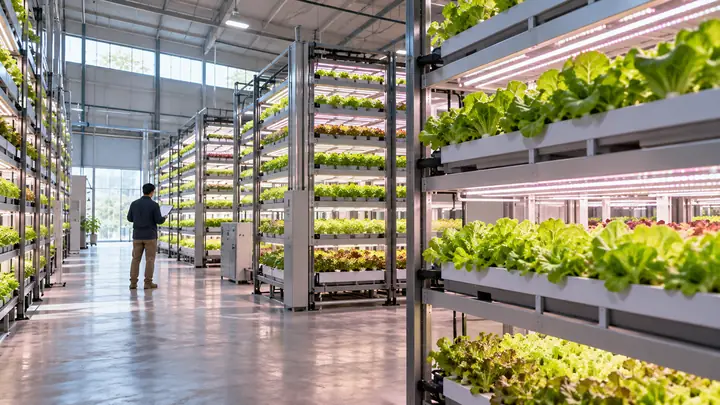
Container farming sits at the small, modular end of vertical farming. This guide explains what is inside a hydroponic shipping container, what it can grow, what drives container farming cost, how to prepare a site and what to check before you buy. If you are deciding between a container and a larger indoor facility, read our comparison of container farm vs. indoor plant factory first; this article assumes the container is already on your shortlist.
How does hydroponic farming in shipping containers work?
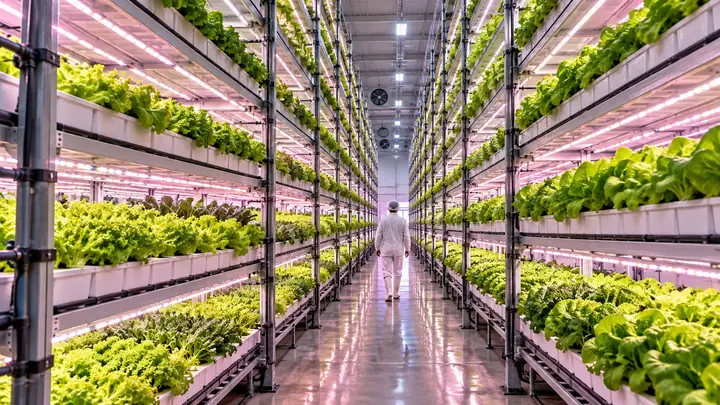
A container farm is a complete small plant factory. The main subsystems are:
- Insulated shell. The steel box is lined with insulated sandwich panels and a food-safe interior finish, with a sealed door and often a small entry vestibule to keep pests and outside air out.
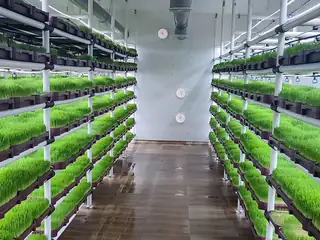
- Growing system. Multi-tier racks with NFT channels, ebb-and-flow trays or vertical towers. The layout decides how many plant positions fit inside.
- LED lighting. Fixtures on every layer provide all the light the crop receives, on a schedule.
- Climate control. An air conditioner, dehumidification, circulation fans and sometimes CO₂ enrichment hold temperature and humidity in range.
- Water and nutrients. A tank, pump, filtration and EC/pH dosing recirculate nutrient solution, so water use is low compared with field production.
- Controls. A controller or PLC runs the equipment, logs data and sends alarms, often with remote access by phone.
- Nursery. A germination rack or separate area where seedlings start before transplanting into the main system.
Because the box is sealed, the grower controls every input: light hours, temperature, humidity, CO₂ and nutrients. That is why a shipping container grow room can produce on a fixed weekly schedule regardless of the weather outside.
Should I choose a 20 ft or 40 ft container farm?
| Factor | 20 ft container | 40 ft high-cube container |
|---|---|---|
| Approximate internal length | About 5.9 m | About 12 m |
| Internal height | About 2.4 m (standard) | About 2.7 m, allowing more rack layers |
| Growing capacity | Smaller; suits trials and a single buyer | Roughly two to three times a 20 ft unit, depending on layout |
| Cost per growing position | Higher, because controls and HVAC are shared by fewer plants | Usually lower |
| Transport and placement | Easier to move and fit on tight sites | Needs more access space and a larger crane or truck |
| Typical use | Training, research, schools, small restaurants | Commercial supply, fodder production, remote communities |
For commercial production, most buyers choose a 40 ft high-cube unit. A 20 ft unit makes sense where space is tight or the goal is learning rather than volume.
What can you grow in a hydroponic shipping container?
| Crop group | Fit in a container | Notes |
|---|---|---|
| Lettuce and leafy greens | Excellent | Short cycles of a few weeks, compact, most common choice |
| Basil and other herbs | Excellent | High value; keep basil warm to avoid chilling damage |
| Microgreens | Very good | Fast turnover, tray-based, labor-intensive harvest |
| Hydroponic fodder (barley, wheat) | Very good | Uses dedicated sprouting racks; see our fodder system planning guide |
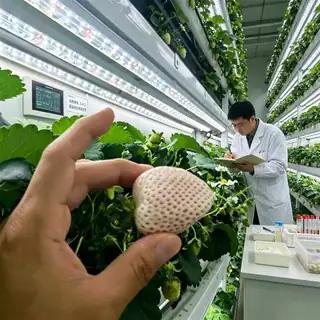
| Strawberries | Possible | Needs more light, pollination and careful climate control |
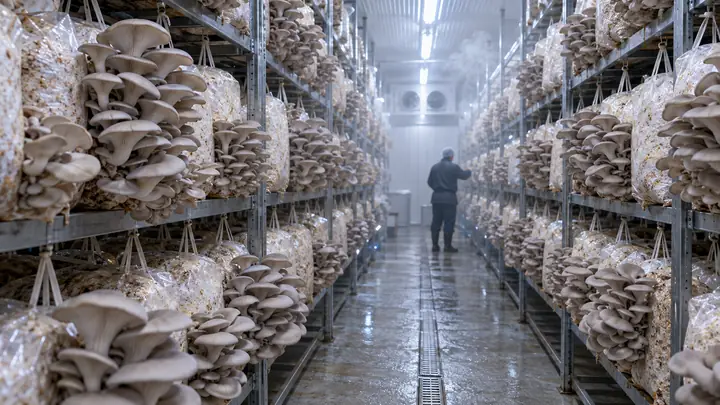
| Mushrooms | Good, with a different setup | Uses shelving and humidity control instead of LEDs |
| Tomatoes, cucumbers, peppers | Poor | Too tall and light-hungry; better in a greenhouse |
Many suppliers build each container for one crop group. A hydroponic shipping container vertical farm for leafy greens is laid out very differently from a PLC-controlled forage system in a shipping container, so decide the crop before comparing offers.
What are the pros and cons of container farming?
Advantages
- Year-round, weather-independent production with predictable weekly output.
- Fast deployment: the unit arrives largely pre-built and can be producing soon after commissioning.
- Relocatable and modular; you add containers as demand grows.
- Low water use thanks to recirculation, and little or no pesticide use in a sealed room.
- Can sit next to the customer, such as a restaurant, school, mine camp or supermarket.
Disadvantages
- Small growing area, so cost per square meter is higher than in a large indoor farm.
- High electricity use for lighting and cooling, especially in hot climates.
- Limited crop range; tall and fruiting crops are difficult.
- Cramped working space; daily tasks take longer per plant than in a purpose-designed building.
How much does container farming cost?
Hydroponic shipping container farm cost depends on size, crop, level of automation, climate at the site and what is included in the quote. Rather than rely on a single figure, break the budget into these parts:
- The unit: container shell, insulation, growing system, LEDs, HVAC, dosing and controls.
- Freight and import: sea freight, insurance, duties and local trucking. Our guide to importing agricultural equipment from China explains EXW, FOB and CIF terms.
- Site work: level pad or foundation, electrical connection, water supply, drainage and crane hire.
- Start-up: seeds, media, nutrients, packaging, training and a few trial cycles.
- Operating costs: electricity (usually the largest item), labor, consumables, water, maintenance and LED replacement over time.
Climate has a big effect on running cost. In a hot climate the air conditioner works hard to remove both lighting heat and outside heat; in a cold climate lighting heat may cover most heating needs. Ask for an estimated power draw in kW and daily energy use in kWh for your location, and price it at your local tariff before you buy.
What does a site need before the container arrives?
- Level, firm base. A concrete pad, strip footings or compacted gravel that will not settle.
- Electrical supply. Confirm voltage, phase and available capacity against the unit's rated load, plus a suitable breaker and cable route.
- Water supply. Potable or treated water with a lab analysis of EC, pH, alkalinity and sodium.
- Drainage. A way to dispose of condensate, cleaning water and occasional tank dumps in line with local rules.
- Access. Room for the delivery truck and crane, and a clear path for daily harvest and deliveries.
- Permits. Check zoning, building and food-safety requirements; some areas treat a container as a temporary structure.
- Shade or shelter. In hot climates, a roof or shade over the container noticeably reduces cooling load.
- Backup power. A generator or at least an alarm, because a long power failure can lose a whole crop.
How do I compare container farms for sale?
When comparing shipping container farms for sale or a hydroponic shipping container for sale, ask every supplier for the same information:
- Number of plant positions in the nursery and main system, and expected weekly harvest for your crop.
- Insulation type and thickness, interior finish and door design.
- LED fixture specification, light intensity at the canopy and total lighting power.
- Air conditioner and dehumidifier capacity, and the outside temperature range they are designed for.
- Irrigation method, tank volume, filtration and EC/pH dosing details.
- Control system features, remote access and alarm options.
- Rated power, voltage and plug standard for your country.
- Spare parts list, manuals, training and what is included in commissioning.
Look at container farming companies on the strength of their technical documents and support, not photos. A good supplier will ask about your crop, climate and buyers before quoting. For the full equipment picture, see our vertical farming equipment guide, and for business planning, how to start a vertical farm.
How many containers do I need?
Work backward from demand. Suppose a buyer wants 600 heads of lettuce per week, and the crop spends about four weeks in the main system after two to three weeks in the nursery. You then need roughly 600 × 4 = 2,400 main-system positions, plus about 10–15% extra for losses and uneven growth, so around 2,700 positions, and a nursery that can start somewhat more than 600 seedlings every week. Compare that with the plant positions quoted for each container model to see whether one unit is enough or you need two.
The same arithmetic works for herbs and fodder, using their own cycle lengths and plants per tray. If the answer is more than a handful of containers, a building fit-out may become cheaper per position. Smaller projects, such as shipping container gardening for a school, community garden or research team, can use the same calculation at a lower target.
What does running a container farm involve day to day?
A typical routine includes seeding and transplanting on a fixed weekly schedule, checking EC, pH and water level, inspecting plants for tipburn, pests and root problems, harvesting and packing, and cleaning trays and channels between cycles. Weekly tasks include calibrating sensors, cleaning filters and reviewing climate data. One trained person can often run a single container part-time, but harvest days and deliveries need planning.
How can we help?
Mars Vertical Farm has built plant factories for more than 20 years and exports container farms to markets including Canada, the USA, Saudi Arabia, Australia and South Africa. We can customize size, layout and crop system, including the turnkey climate-controlled container farm. See our full range of container and indoor plant factories, then tell us your crop, site climate and weekly target for a container layout and quotation.