
Short answer
The main types of greenhouses are defined by roof shape (A-frame, gable, Quonset hoop, Gothic arch and dome), by how they stand (free-standing, lean-to or gutter-connected multi-span) and by purpose, such as greenhouse shed combos, DIY cattle panel and PVC houses, Venlo glasshouses and passive solar winter greenhouses. Hoop houses cost least per square meter; gable and Venlo glass houses give the most light and headroom.
What are the main types of greenhouses?
The main types of greenhouses are grouped by roof shape (A-frame, gable, Quonset hoop, Gothic arch and dome), by how they stand (free-standing, lean-to or gutter-connected multi-span), and by purpose, such as greenhouse shed combos, DIY cattle panel and PVC houses, Venlo glasshouses and passive solar winter greenhouses. Each type trades off cost, light, snow shedding, headroom and ease of building.
This guide walks through the types from backyard structures to commercial ranges, with the strengths and weaknesses of each. For the commercial side in more depth, including equipment and budgets, see our commercial greenhouse guide.
Greenhouse types by roof shape
Roof shape decides how a greenhouse sheds snow and rain, how much headroom it has at the sides, and how easy it is to cover. The table compares the common shapes.
| Shape | Typical covering | Strengths | Weaknesses |
|---|---|---|---|
| A-frame | Polycarbonate, film, glass | Simple to build, sheds snow well | Little headroom and growing space at the sides |
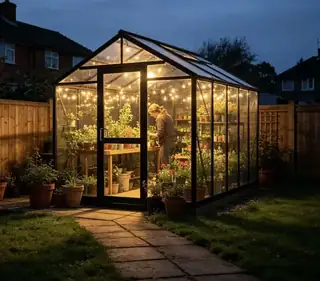
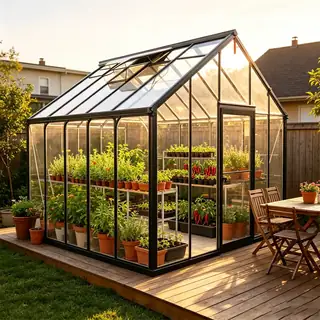
| Gable (straight walls, pitched roof) | Glass, polycarbonate | Full headroom, easy to bench, classic look | More framing and glazing than a hoop |
| Quonset (round hoop) | Film | Lowest cost per area, quick to build | Low side headroom; flatter top holds snow |
| Gothic arch | Film, polycarbonate | Sheds snow and condensation, more side height | Slightly more steel than a round hoop |
| Geodesic dome / circular | Polycarbonate, film | Strong, wind resistant, good light from all angles | Complex to build and fit out; awkward bench layouts |
| Lean-to | Polycarbonate, glass | Uses a warm house wall, saves heat and space | Light from one side only |
A-frame greenhouse
An A-frame greenhouse has steep sloping sides that meet at a ridge, like the letter A. It is one of the easiest shapes to build from lumber and polycarbonate, and a small A-frame for a family garden is a popular weekend project. The steep roof sheds snow, but the sloping walls cut usable floor space near the edges, so it suits low crops and seed starting more than tall tomatoes.
Quonset hoop and Gothic arch
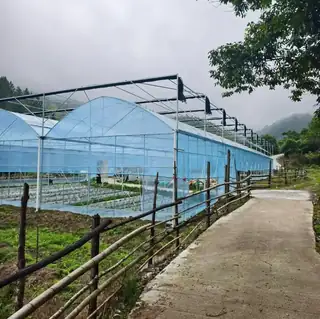
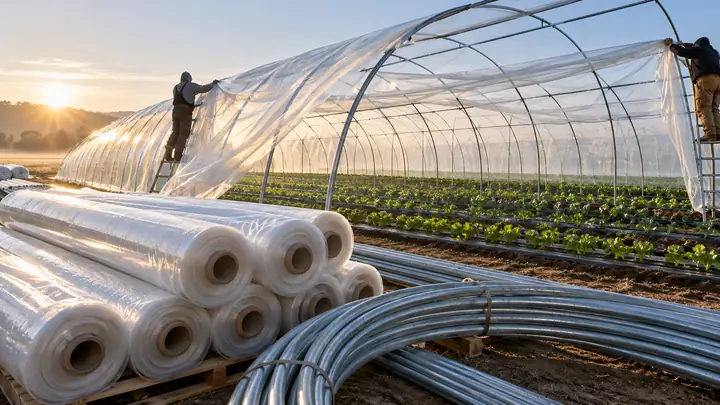
Hoop shapes dominate farm production. A metal hoop house with round Quonset bows is the cheapest way to cover a large area with film. The Gothic arch adds a pointed peak so snow slides off and condensation runs down the walls instead of dripping on crops. A galvanized steel hoop house in either shape is the basis of most high tunnels; our hoop house vs. high tunnel guide explains the differences.
Circular and dome greenhouses
A circular greenhouse or geodesic dome uses a triangulated frame that is very strong for its weight and catches light from every direction. Domes are attractive for education and display, but curved glazing, ventilation and bench layouts are harder to design than in rectangular houses.
What is a greenhouse shed combo?
A greenhouse shed combo is a single building with a glazed growing area on one side and an enclosed storage or potting room on the other. A combined greenhouse shed saves space and gives you somewhere dry to keep tools, soil, seed trays and irrigation parts next to the plants.
- Layout: typically one-third to one-half shed and the rest greenhouse, separated by a partition wall and door. A potting shed greenhouse combo adds a workbench under a window.
- Orientation: put the shed end to the north (in the Northern Hemisphere) so it does not shade the growing area.
- Materials: timber or steel frame, solid shed walls, and twin-wall polycarbonate or glass on the greenhouse side.
- Options: a prefab kit arrives with pre-cut parts and fixings, while published plans let you build a DIY version to your own size and materials.
A small greenhouse shed combo of about 2.4 × 3.6 m (8 × 12 ft) is a common size for a family garden. A shed combo cannot replace a production house, but the design is handy for market gardens that need a dry room for seed, packing and tools. Whether you buy a kit or build from plans, a few details decide how well it works: a level concrete or timber base anchored against wind, at least one roof vent plus a louvered side vent in the growing area, a solid partition so shed contents stay dry and shaded, and gutters that route rainwater to a barrel for irrigation. If you are comparing kits for sale, check glazing thickness, frame anchoring, ventilation and whether the floor and foundation are included.
How do cattle panel and PVC greenhouses work?
Cattle panel and PVC greenhouses are low-cost DIY hoop structures. They are good learning projects and backyard season extenders, but they are not designed for heavy snow or commercial use.
Cattle panel greenhouse
A cattle panel greenhouse (also called a cow panel greenhouse) is made by bending welded-wire livestock panels, commonly about 4.9 m (16 ft) long and 1.3 m (50 in) tall, into an arch and fixing the ends to wooden base rails. Covered with greenhouse film, a typical arch is roughly 2.4 m (8 ft) wide and 1.8–2.1 m (6–7 ft) high, and each panel adds about 1.3 m of length. A double cattle panel greenhouse joins two panels per arch for a wider, taller house. Plans are easy to find and a DIY build goes up in a weekend, but wear gloves and eye protection when bending panels, because the stiff galvanized wire springs back, and fix every panel end firmly to the base rails; dimensions and budgets are covered in our greenhouse cost and sizes guide.
PVC greenhouse
A PVC greenhouse uses bent PVC pipe as hoops or a cut-and-glued PVC greenhouse frame. PVC is cheap and easy to work, so PVC plans are common for raised beds and small hoop houses. Its limits are strength, sun degradation and interaction with film, so tape contact points and anchor well. When learning how to build a PVC greenhouse, plan for wind bracing and remove the cover before heavy snow. For film choice, see the greenhouse plastic film guide.
Free-standing, lean-to and brick base greenhouses
A free standing greenhouse sits on its own foundation and gets light from all sides, while attached types share a wall with a house or garage.
- Free-standing: best light and flexible siting; needs its own utilities.
- Lean-to: attached to a south-facing wall, which stores heat and gives easy access to power and water. See our lean-to greenhouse guide.
- Brick greenhouse and brick base greenhouse: a low masonry wall (often 0.5–0.8 m high) under the glazing adds thermal mass and durability. Traditional Victorian and Gothic Victorian greenhouses use a brick base with ornate glass and ironwork.
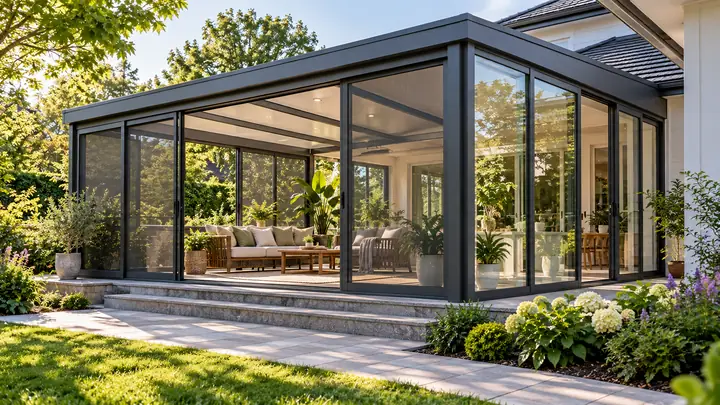
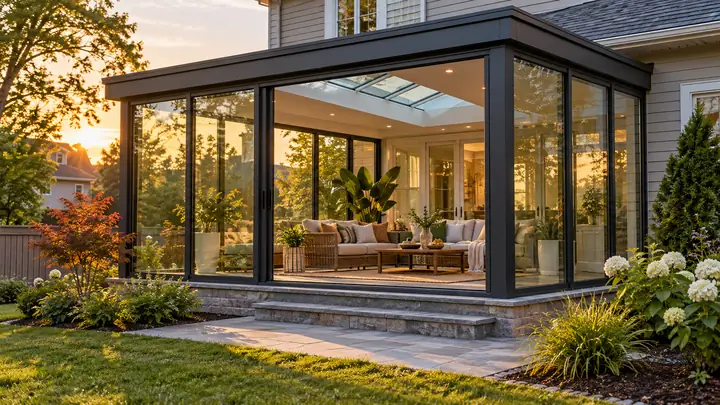
- Sunroom-style: a glazed room built to building codes for living space; a gable roof sunroom addition overlaps with greenhouse design but is primarily for people, not crops.
What is a Venlo greenhouse, and what are commercial greenhouse types?
A Venlo greenhouse, also called a Dutch Venlo greenhouse, is a gutter-connected glass greenhouse with several small pitched roofs per bay, developed in the Netherlands for maximum light. It typically uses aluminum glazing bars, alternating roof vents and tall gutters, often 5–7 m, for high-wire vegetables and flowers.
Other commercial greenhouse types include:
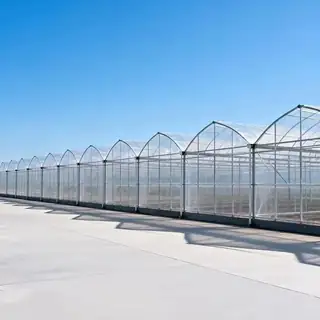
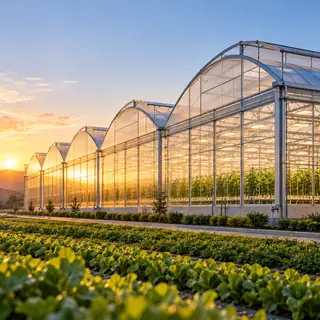
- Gutter-connected multi-span film houses: Gothic or round bays linked by gutters, the most common commercial type by area. An example is our customized multi-span steel frame film greenhouse.
- Multi-span polycarbonate houses: better insulation and hail resistance; see the multi-span polycarbonate greenhouse.
- Sawtooth houses: vertical roof openings that ventilate naturally, suited to hot climates.
- Shade and net houses: fabric-covered structures for tropical and nursery production.
What are winter greenhouses?
Winter greenhouses are designed to keep crops growing through cold months with little or no heating, mainly by capturing and storing solar energy. Common designs are:
- Passive solar greenhouses with an insulated north wall, steep south glazing angled for the low winter sun, and thermal mass such as water barrels or masonry.
- The Chinese solar greenhouse, widely used in northern China, with a thick earth or brick north wall, a sloping film roof and an insulating blanket rolled down at night.
- Pit greenhouses (walipini), dug partly into the ground to use the soil's stable temperature.
- Double-glazed or double-film houses with thermal curtains, for heated production.
How do you choose the right greenhouse type?
Choose a greenhouse type by matching climate, crop, budget and permanence. A practical sequence:
- Define the use: seed starting, home food, market garden or commercial production.
- Check climate loads: snow favors Gothic, A-frame or gable roofs; high wind favors low, well-anchored hoops or domes.
- Set a budget per square meter: hoops are cheapest, gable glasshouses and Venlo the most expensive.
- Pick the covering: film, polycarbonate or glass, using our panels comparison.
- Decide on permanence: DIY PVC and cattle panel houses are temporary; galvanized steel and aluminum structures last decades.
- Plan the extras: storage (a shed combo), ventilation, heating and irrigation.
Next steps
The types of greenhouses range from a weekend cattle panel arch to a multi-hectare Venlo range, and the right one depends on your climate, crops and budget. Mars Vertical Farm manufactures Gothic and round-arch tunnels, multi-span film and polycarbonate greenhouses and sunrooms, factory-direct with custom sizing. Browse our greenhouses and sunrooms, or send us your site and crop plan for a layout and quotation.