Short answer
A small greenhouse is a compact covered growing space, usually under about 15 m², used to start seeds, extend the season or protect plants. Mini and pop-up models suit seed starting and season extension, small walk-in greenhouses with aluminium or steel frames and polycarbonate panels suit year-round growing, and indoor greenhouse cabinets with LED lights grow herbs and greens without sunlight.
What is a small greenhouse?
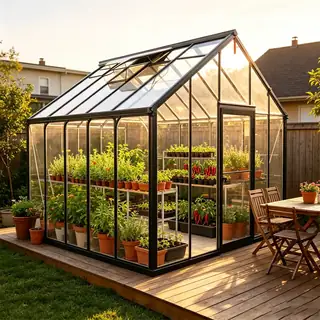
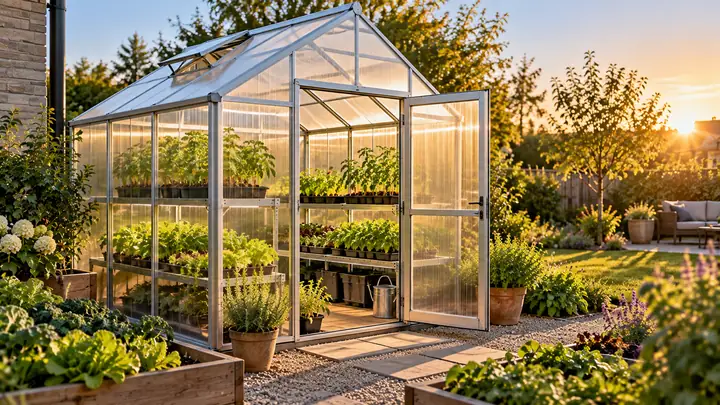
A small greenhouse is a compact covered growing space, usually under about 15 m² (roughly 160 sq ft), used to start seeds, extend the season or grow plants that need protection from cold, wind and rain. The term covers everything from a tabletop mini greenhouse indoors to a small walk-in greenhouse with an aluminium frame and polycarbonate panels in the backyard.
Small greenhouses are popular with home growers, schools, research groups and garden centres, and they are often the first step before a larger investment. Choosing well comes down to three questions: what you want to grow, how harsh your weather is, and whether the structure must be permanent or portable. This guide compares the main types of small, mini and portable greenhouses, explains sizes and layouts, and covers how to build or set one up so it actually performs.
What types of small greenhouses are there?
| Type | Typical size | Frame and cover | Best for | Main limitations |
|---|---|---|---|---|
| Tabletop or mini seed starter greenhouse | Tray to bench size | Plastic tray with clear lid | Germinating seeds, cuttings, mini greenhouse indoor use | Very small volume; overheats in sun |
| Mini greenhouse with shelves (cover over a shelf rack) | Roughly 0.5–1 m wide | Light steel tube, PVC or PE cover | Patio and balcony seedlings | Blows over easily; covers degrade in UV |
| Pop up greenhouse tent or portable walk-in greenhouse | Roughly 2 × 2 m to 3 × 6 m | Steel or fibreglass poles, PE film cover | Temporary greenhouse, season extension | Weak in wind and snow; short cover life |
| Small walk-in polycarbonate greenhouse | Roughly 4 × 4 ft to 8 × 12 ft | Aluminium or steel frame, polycarbonate panels | Year-round backyard growing | Needs a level base and anchoring |
| Small wooden greenhouse | Roughly 6 × 6 ft to 8 × 10 ft | Cedar or treated timber, glass or polycarbonate | Gardens where looks matter; better insulation | Wood needs maintenance |
| Lean-to greenhouse | Wall length × 1.5–3 m | Aluminium or wood against a building | Using a sunny wall; easier heating | Orientation fixed by the wall |
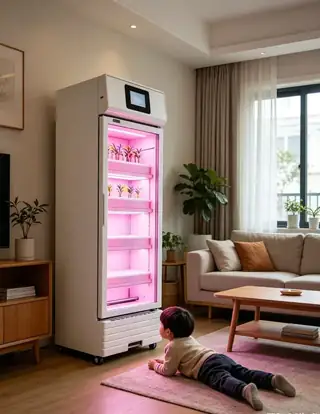
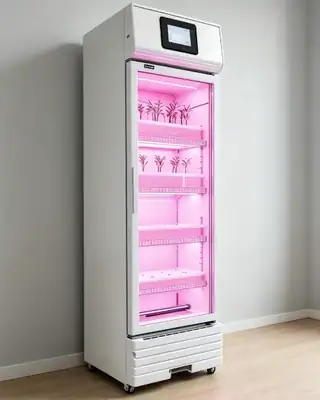
| Indoor greenhouse cabinet with lights | Cabinet size | Enclosed cabinet with LED, fan and often hydroponics | Herbs, greens and seedlings indoors all year | Electricity for lights; limited height |
Are mini and portable greenhouses worth it?
A mini greenhouse or portable greenhouse is worth it for seed starting and for adding a few weeks to each end of the season. A portable mini greenhouse with a zip-up PE cover warms up fast on sunny spring days and keeps light frost off seedlings. Pop up greenhouses and portable greenhouse kits are easy to store over summer and move around the garden.
Their weaknesses are just as clear. Film covers usually last only one or a few seasons in strong sunlight, thin frames bend in gusty wind, and small volumes swing from cold at night to very hot at midday. To get the most from one:
- Anchor it to the ground or a heavy base, and add weight to the lowest shelf.
- Open the zip or roll-up door on sunny days, even in spring; a closed mini greenhouse can overheat within an hour.
- Use a small max/min thermometer to learn how it behaves.
- Do not rely on a portable greenhouse on wheels or a pop up greenhouse tent for winter in cold climates; it will not hold enough heat.
What should you look for in a small walk-in greenhouse?
A small walk-in greenhouse is the point where a greenhouse becomes a real growing space. Whether you choose an aluminium frame greenhouse, a steel kit or a small wooden greenhouse, check these features:
- Frame strength. Look for rated wind and snow loads, cross-bracing and a base frame that can be anchored. Aluminium is light and corrosion resistant; galvanized steel is stiffer; cedar looks good and insulates but needs care. See aluminum vs. steel vs. wood greenhouse frames.
- Glazing. Twin-wall polycarbonate insulates better and is far more impact resistant than single glass; clear glass gives the most light. See polycarbonate vs. glass greenhouse panels.
- Ventilation. At least one roof vent, ideally with an automatic opener, plus a door or louvre for cross-flow. Small greenhouses overheat faster than large ones.
- Headroom and door width. Enough to stand upright and get a wheelbarrow in.
- Gutters and downpipes to collect rainwater for irrigation.
For buying advice on kits, including what to check in the parts list and instructions, read the greenhouse kit buying guide.
What size small greenhouse do you need?
Buy the largest greenhouse your space and budget allow; almost every grower runs out of room. As a guide:
- 4x4 greenhouse (about 1.2 × 1.2 m): shelving for seed trays and a few pots. Too small to walk around inside.
- 4x6 greenhouse (about 1.2 × 1.8 m): one shelf side and standing room; good for seedlings and a couple of tomato plants.
- 6x6 greenhouse (about 1.8 × 1.8 m): a true small walk-in greenhouse with a bench on one side and a bed or grow bags on the other.
- 6x8 to 8x10 ft (about 1.8 × 2.4 to 2.4 × 3 m): room for benches on both sides, a central path, and summer crops such as tomatoes, peppers and cucumbers.
Larger volume also means more stable temperatures, because a bigger body of air heats and cools more slowly.
Small greenhouse layout and floor plan
A practical small greenhouse layout floor plan has a central path about 60 cm (2 ft) wide, benches or shelves at waist height on the sunnier side for seedlings and pots, and a ground-level bed or grow bags on the other side for tall crops. Keep tall plants on the side or end where they shade the least. Leave space near the door for a water butt and a potting area.
How do you build a small greenhouse?
Whether you assemble a kit or build from small greenhouse blueprints, the steps are similar:
- Choose the site. Pick a spot with full sun, especially in winter, away from overhanging trees and sheltered from the strongest wind. A ridge running roughly east-west captures more low winter sun.
- Level and prepare the ground. Remove turf and roots and level the area so the frame sits square.
- Build the base. Use paving slabs, a timber base frame on a gravel bed, or a concrete strip. Anchor the greenhouse base into the ground; most wind damage happens because small greenhouses were never fixed down.
- Assemble the frame. Follow the instructions in order and check diagonals for square before tightening bolts.
- Fit glazing. Install panels or film on a calm day. For polycarbonate, keep the UV-protected side facing out and seal or tape the flute ends.
- Add vents and doors, and fit an automatic vent opener.
- Plan water and power. Rainwater collection, a tap, and a weatherproof outdoor socket installed by a qualified electrician if you want a heater or lights.
- Fit out the inside with benches, shelving and a simple drip system.
Making a mini greenhouse from PVC pipe and clear film is a low-cost DIY project for raised beds, but treat it as temporary and expect to replace the film. For larger structures, foundations and framing, see our full guide on how to build a greenhouse.
What is an indoor greenhouse and when does it make sense?
An indoor greenhouse is an enclosed growing space used inside a home, classroom, office or warehouse. Small indoor greenhouses range from a tabletop greenhouse with a light to an indoor greenhouse cabinet with lights, a fan and an automatic watering or hydroponic system.
Indoor greenhouse cabinets make sense when you have no outdoor space, when you want herbs and greens all year regardless of weather, or when you need controlled conditions for seedlings and research. Because they rely on LED lighting rather than the sun, their output depends on light intensity and photoperiod, not on season. Examples include a single-door hydroponic grow cabinet with full-spectrum LED and an environment-controlled hydroponic seedling cabinet for raising transplants. See our guide to grow cabinets and grow boxes and the full range of smart grow cabinets and home systems.
Can a small greenhouse be used in winter?
Yes, with the right structure. A small greenhouse in winter needs insulating glazing such as twin-wall polycarbonate, a frame that can carry snow, and good sealing. In mild climates that is often enough to overwinter tender plants and grow hardy greens. In cold climates, a small electric heater with a thermostat or a lean-to position against a heated house keeps it frost-free. Ventilation is still needed on sunny winter days. Our greenhouse ventilation and heating guide shows how to size a heater for a small house.
What are the options beyond a small greenhouse?
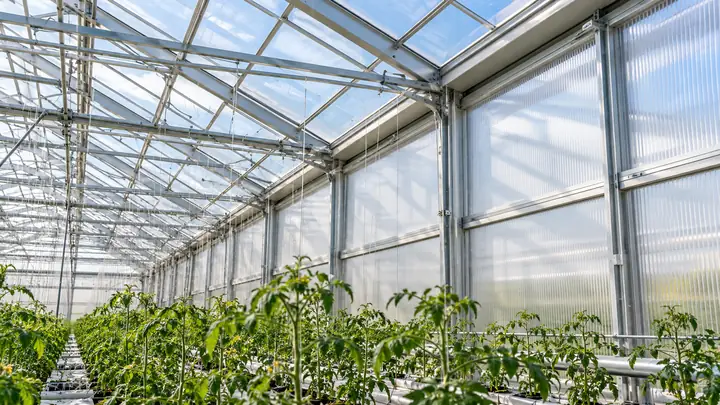
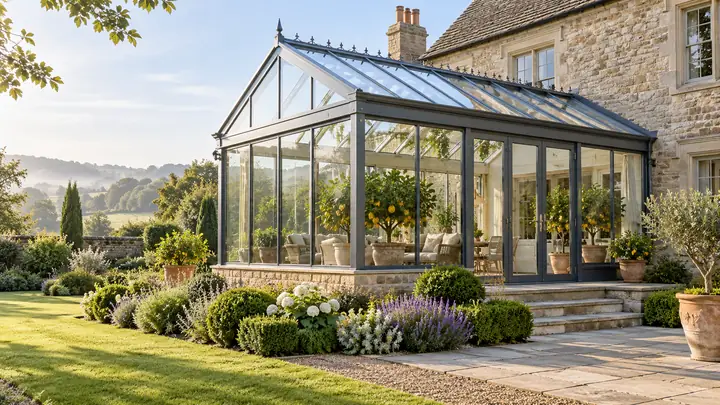
If you want a garden room that also grows plants, a glazed sunroom with an aluminium frame is a sturdier, better-insulated option than a small hobby greenhouse. Our double-glazed aluminum sunroom greenhouse is designed for year-round use, and the wider greenhouses and sunrooms range scales up to commercial structures.
Mars Vertical Farm builds sunrooms, greenhouses and grow cabinets in Shanghai for distributors and project buyers, with OEM/ODM options. If you are a retailer or contractor planning a small greenhouse or grow cabinet range, contact us for specifications and a quotation.