Short answer
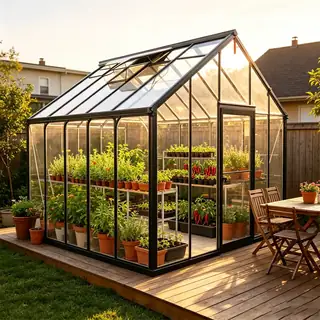
Galvanized steel greenhouse frames give the most strength per cost and dominate commercial multi-span greenhouses. Aluminum greenhouse frames are light, corrosion resistant and low-maintenance, so they suit kits, glass houses and sunrooms. Wood frames, usually cedar or treated timber, insulate better and look attractive but need regular maintenance and suit smaller garden greenhouses.
What is a greenhouse frame and why does the material matter?
A greenhouse frame is the structural skeleton that holds the glazing and carries wind, snow and crop loads down to the foundation. The three main frame materials are aluminum, galvanized steel and wood, and the choice affects strength, span, light transmission, maintenance and how long the greenhouse lasts.
The frame works in a harsh environment: high humidity, condensation, fertilizer splash, UV and daily temperature swings. A frame that looks fine in a showroom can corrode, rot or deflect within a few years if the material or its protection is wrong for the job. This guide compares an aluminum greenhouse frame, a galvanized steel greenhouse frame and a wood frame greenhouse, and explains which suits hobby, sunroom and commercial projects.
Aluminum vs steel vs wood: how do greenhouse frames compare?
| Property | Aluminum | Galvanized steel | Wood (cedar, timber) |
|---|---|---|---|
| Weight | Light | Heavy | Medium |
| Stiffness and span | Moderate; deeper profiles needed for wide spans | High; best for wide spans and multi-span houses | Moderate; thick members limit light |
| Corrosion and decay | Naturally corrosion resistant; anodized or powder coated for extra protection | Protected by zinc coating; cut edges and welds need care | Rots unless naturally durable or treated; needs regular finishing |
| Maintenance | Very low | Low if well galvanized | Regular staining, sealing and inspection |
| Heat loss through frame | High conductivity; can form cold bridges unless thermally broken | Conducts heat, but members are usually slim | Good natural insulator |
| Light blocking | Slim profiles, little shading | Slim tube and truss members | Thicker members shade more |
| Typical use | Kits, glass houses, sunrooms, glazing bars and gutters | Commercial tunnels and multi-span greenhouses | Garden and display greenhouses |
| Appearance | Clean, modern; any powder-coat colour including black | Industrial | Warm, traditional |
In short, galvanized steel gives the most strength for the money on large greenhouses, aluminum gives the lowest maintenance and best appearance on glazed structures, and wood gives the most attractive and best-insulated small greenhouse at the cost of upkeep. Many commercial greenhouses combine materials: a steel greenhouse frame with aluminum gutters, glazing bars and vent frames.
What are the pros and cons of an aluminum greenhouse frame?
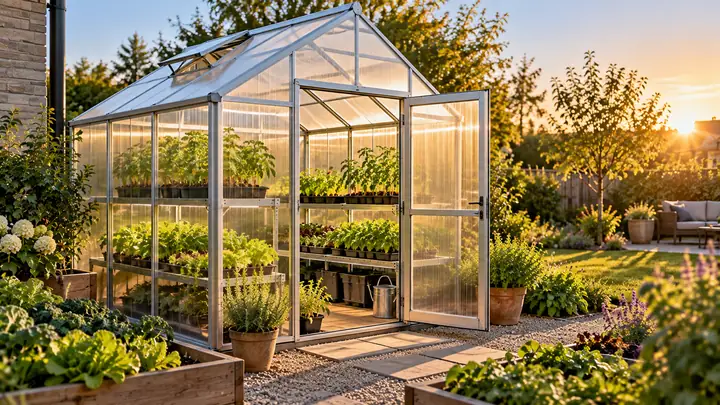
Aluminum greenhouse framing is made from extruded profiles, usually from 6000-series alloys that are easy to extrude into complex shapes with built-in glazing channels, bolt slots and gutters. That makes aluminum greenhouse kits quick to assemble and accurate.
Advantages
- Corrosion resistance. Aluminum forms a protective oxide layer and does not rust, so it copes well with greenhouse humidity. Extension sources describe aluminum framing as needing little maintenance after installation and having a long life span.
- Light weight. Easier transport and handling, and lighter foundations for small structures.
- Precision. Extruded aluminum greenhouse frame parts fit tightly with gaskets, which helps with glass and twin-wall polycarbonate.
- Finishes. Mill finish, anodized or powder coated. A black frame greenhouse is simply a powder-coated aluminum frame, popular for garden and sunroom designs.
Limitations
- Lower stiffness than steel. Aluminum deflects roughly three times more than steel for the same section, so wide spans and heavy snow need deeper profiles or steel reinforcement.
- Thermal bridging. Aluminum conducts heat well. In heated sunrooms and conservatories, thermally broken profiles reduce heat loss and condensation.
- Galvanic corrosion. Avoid direct contact between aluminum and bare steel or copper in wet conditions; use stainless fixings and isolating washers.
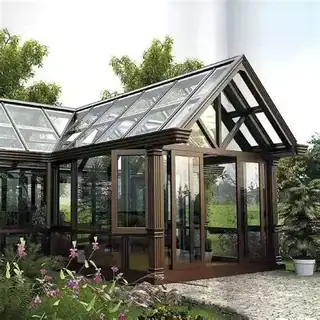
Aluminum suits glass and polycarbonate kit greenhouses, lean-tos, sunrooms and conservatories. Examples include our double-glazed aluminum sunroom greenhouse and aluminum sunroom and conservatory. For more on glazed garden rooms, see our sunroom kit guide.
Why are most commercial greenhouses built with galvanized steel frames?
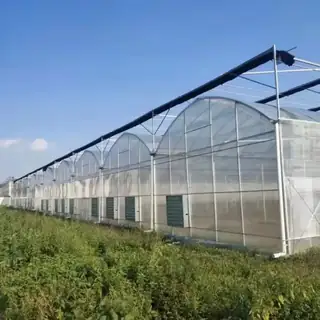
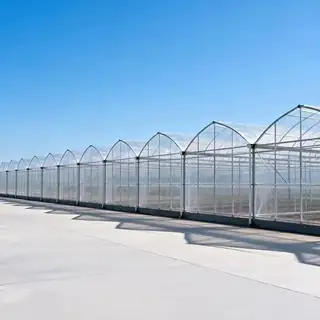
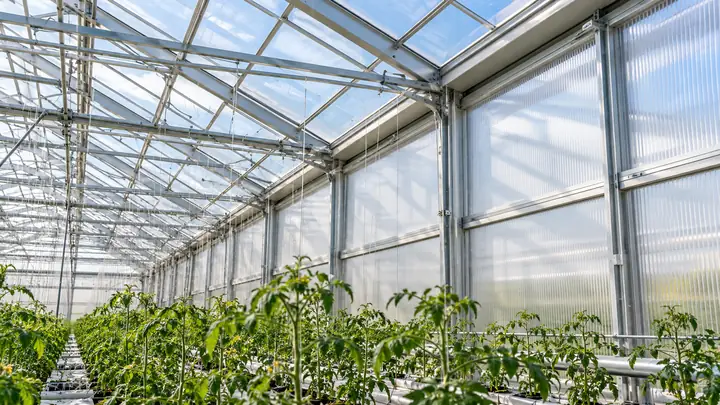
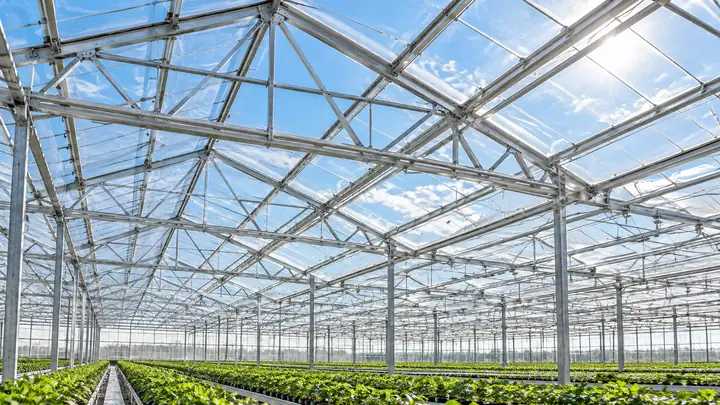
A galvanized steel greenhouse frame offers the highest strength and stiffness per unit of cost, which is why it dominates commercial greenhouse construction. Steel tube, rectangular hollow sections and lattice trusses can span wide bays and carry heavy crop loads from trellised tomatoes or hanging gutters.
Galvanizing matters more than steel grade
Bare steel corrodes quickly in a humid greenhouse, so zinc protection is essential. There are two common approaches:
- Pre-galvanized steel: strip or tube coated before forming and cutting. Economical, with a thinner zinc layer; cut ends and drilled holes are exposed.
- Hot-dip galvanizing after fabrication: finished parts are dipped in molten zinc, typically to a standard such as ISO 1461, so cut edges, holes and welds are covered with a thicker coating. This is the more durable option for structural members.
Ask suppliers which method is used for columns, trusses, arches and purlins, and what the coating thickness is. Welding or drilling galvanized parts on site removes zinc, so damaged areas should be repaired with zinc-rich paint.
Where steel is used
- Single-span tunnels and high tunnels with round or gothic arches.
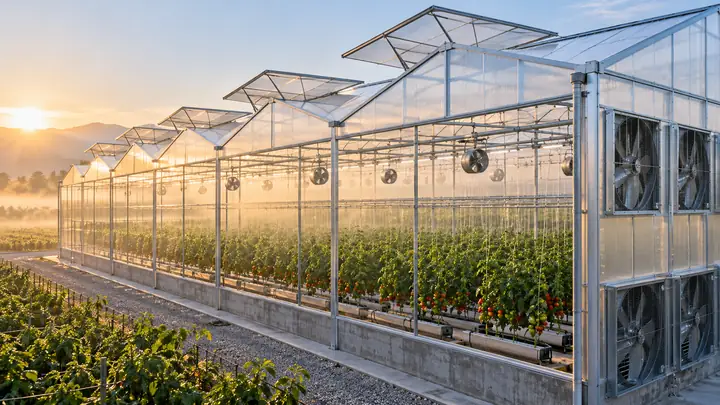
- Gutter-connected multi-span film and polycarbonate greenhouses.
- Glass greenhouses, where steel trusses carry aluminum glazing bars.
- Small metal greenhouse kits with powder-coated or galvanized steel tube.
See the large multi-span steel frame greenhouse and the multi-span polycarbonate tunnel greenhouse for typical commercial steel structures, and our commercial greenhouse guide for how frames fit into a full project.
Is a wood greenhouse a good choice?
A wood greenhouse is a good choice for gardens, schools and display settings where appearance and insulation matter and someone will maintain it. Wood frames are traditional, easy to modify, and insulate better than metal, so a timber frame greenhouse loses a little less heat through the structure and suffers less condensation on the frame.
Cedar greenhouses
Western red cedar is the most popular wood for greenhouses because it contains natural oils that resist decay and insects, it is light and stable, and it weathers to a silver grey if left untreated. A cedar greenhouse kit typically uses pre-cut cedar members with glass or polycarbonate glazing. Even cedar benefits from a protective finish and from being kept off wet ground.
Other timbers and treatments
Pressure-treated softwood is a lower-cost alternative for wood framed greenhouse designs. Extension guidance warns against wood treated with creosote or pentachlorophenol, because their fumes can damage plants. Use stainless or hot-dip galvanized fixings, since some treatments corrode ordinary steel screws.
Limitations of wood
- Thicker members block more light than aluminum or steel.
- Regular staining or oiling, and checks for rot at joints and the base.
- Limited spans, so wood is rarely used for commercial greenhouses.
Wood greenhouse foundation
The most common cause of failure in wooden greenhouses is rot at ground level. Build the wooden greenhouse base on a concrete strip, a low masonry wall or a well-drained gravel bed with a damp-proof layer, so the bottom rail stays dry. See how to build a greenhouse for foundation options.
What about PVC, fibreglass and hybrid greenhouse frames?
Beyond the three main materials, a few other options appear in the market:
- PVC pipe frames are cheap and easy for DIY hoop houses and mini greenhouses, but PVC softens in heat, becomes brittle with UV exposure and cannot carry much wind or snow. Treat them as temporary structures.
- Fibreglass poles are used in pop-up and portable greenhouse tents. They flex rather than break, but the structures are light and need good anchoring.
- Hybrid frames combine materials to get the best of each: a galvanized steel structure with aluminum glazing bars and vents, or a timber lower wall with an aluminum roof. Hybrids are common in glass greenhouses and high-end garden structures.
For long-term or commercial use, steel and aluminum remain the practical choices because their strength and life span can be engineered and verified.
How do wind and snow loads affect frame choice?
Whatever the material, a greenhouse frame must be designed for the wind speed, snow load and crop load at your site. Greenhouse structures are commonly designed to standards such as EN 13031-1 in Europe, with site loads taken from national codes. A frame that is fine in a mild coastal climate may fail under heavy snow inland.
Key questions for any greenhouse kit or structure:
- What wind speed and snow load is it rated for, in km/h or m/s and kN/m² (or psf)?
- What crop load can roof members carry if you hang trellis or gutters?
- How is bracing arranged in walls and roof?
- How is the frame anchored to the foundation?
How do you choose the right greenhouse frame?
- Define the use. Hobby growing, a home sunroom, research, or commercial production.
- Collect site loads. Local design wind speed and snow load.
- Choose glazing first. Glass is heavy and needs a stiff, precise frame; polycarbonate and film are lighter. See polycarbonate vs. glass greenhouse panels.
- Match material to span. Steel for wide spans and multi-span houses; aluminum for kits, glass houses and sunrooms; wood for small garden structures.
- Check corrosion protection. Hot-dip galvanizing on structural steel, anodizing or powder coat on aluminum, durable species or proper treatment for wood.
- Consider maintenance and life span. Who will maintain the frame, and for how many years must it last?
- Review drawings and parts lists. A good supplier provides structural drawings, labelled aluminum greenhouse frame parts or steel members, and installation manuals.
Where can you buy greenhouse frames and kits?
Steel greenhouse kits and aluminum greenhouse kits are sold for hobby use through retailers and for commercial use directly from manufacturers. For larger projects, buying from a manufacturer that also produces the glazing, vents and irrigation simplifies coordination.
Mars Vertical Farm manufactures galvanized steel greenhouses and aluminum sunrooms in Shanghai, with CE-marked products and OEM/ODM options for distributors. Browse our greenhouses and sunrooms or send us your site loads, size and glazing preference for a frame specification and quotation.