Short answer
To choose a greenhouse kit, start with the bench area your crops need, then add aisles to set the floor size. Match the frame and glazing to your local wind and snow loads: aluminum or galvanized steel with twin-wall polycarbonate suits most year-round use, film suits low-cost tunnels. Budget separately for the foundation, ventilation, heating and irrigation.
What is a greenhouse kit?
A greenhouse kit is a prefabricated greenhouse supplied as a set of pre-cut frame members, glazing panels or film, fasteners, doors and vents, with drawings for assembly on your own foundation. Buying a greenhouse kit rather than building from scratch trades some design freedom for engineered parts, predictable cost and a much shorter build time.
Kits range from a greenhouse mini kit that sits on a patio to walk-in backyard models and multi-span commercial structures covering thousands of square meters. This guide covers how to choose between them: size, frame, roof and siding materials, foundation, accessories and what drives the price. It is written for growers, garden centers and distributors comparing greenhouses for sale, but the same logic applies to a single hobby greenhouse.
Which types of greenhouse kits are available?
Most prefab greenhouse products fall into six groups. The right one depends less on looks and more on what you will grow, how long you need the structure to last and your local wind and snow loads.
| Kit type | Typical size | Frame and cover | Best for | Main limitation |
|---|---|---|---|---|
| Mini greenhouse and greenhouse tent | Under 2 m² | Light steel tube, PE or PVC cover | Seed starting, herbs, balcony use | Short life, little wind resistance, poor temperature control |
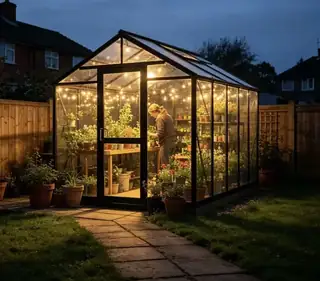
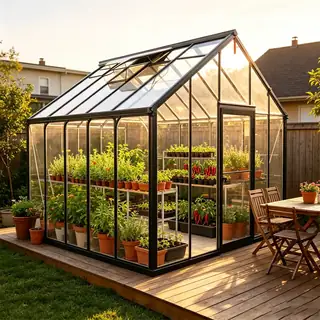
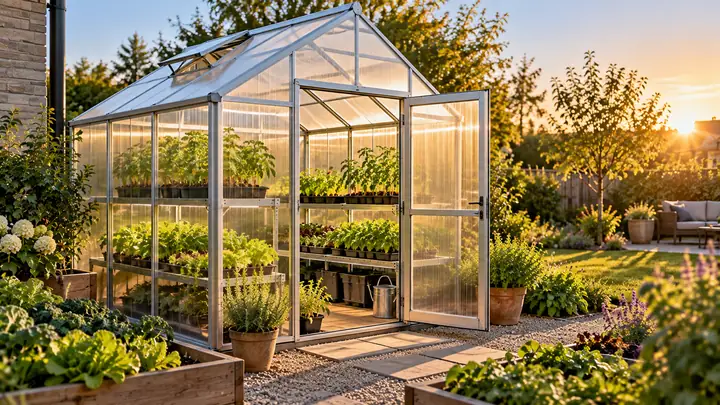
| Hobby freestanding kit | 6x8 to 10x12 ft | Aluminum, twin-wall polycarbonate or glass | Backyard greenhouse gardening, vegetables and flowers | Limited bench space, small vents |
| Lean-to or attached greenhouse | 6 to 12 ft deep | Aluminum or wood, glass or polycarbonate | A greenhouse connected to house walls, easier heating and power | Orientation fixed by the house wall; permits often stricter |
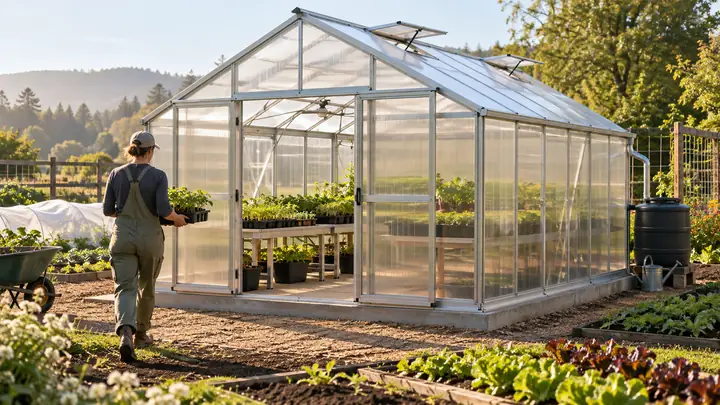
| Walk-in backyard and heavy duty greenhouse kits | 10x12 to 20x40 ft | Galvanized steel or heavy aluminum, polycarbonate or film | Serious hobbyists, market gardeners, schools | Needs a proper foundation and ventilation planning |
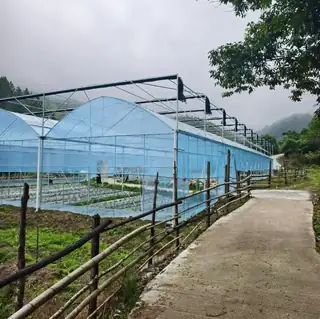
| Hoop house and tunnel | Bays 6 to 10 m wide, any length | Galvanized steel hoops, PE film | Season extension, low-cost crop cover | Limited climate control and snow load in basic versions |
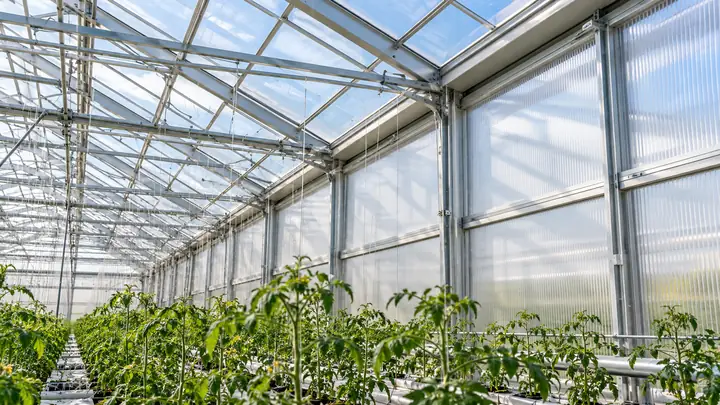
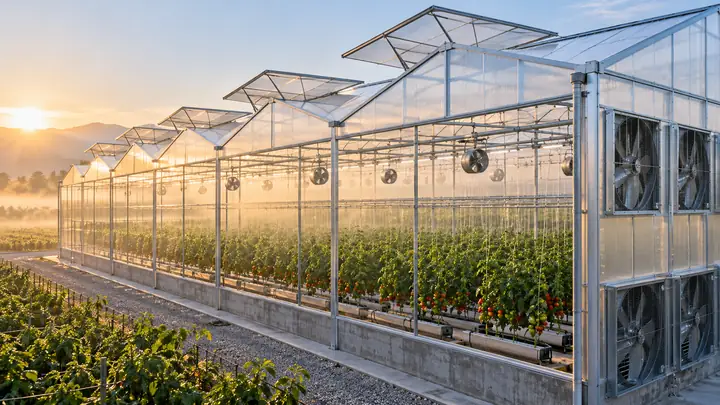
| Commercial multi-span greenhouse | From roughly 500 m² upward | Hot-dip galvanized steel, film, polycarbonate or glass | Production vegetables, flowers, nurseries, hydroponics | Engineered project rather than a boxed kit |
Tunnels and high tunnels suit low-cost season extension, while compact hobby models suit small yards; the rest of this guide focuses on the decisions that apply to all of them.
What size greenhouse kit do you need?
The most common regret among first-time buyers is a structure that is too small. Benches, a potting area, a heater and walkways take up more room than expected, and plant collections grow. As a rule of thumb, decide the bench area you need, then add aisles and work space before choosing a model.
- 6x8 and 8x10 greenhouse: enough for seed starting, a herb greenhouse and a few tomato plants. An 8x10 greenhouse kit usually fits one bench along each side with a single aisle.
- 10x10, 10x12 and 12x12 greenhouse: a practical size for a family vegetable greenhouse with room for a potting bench. A 10x12 greenhouse kit is a common starting point for serious hobby growers.
- 10x20, 12x20 and 12x16 greenhouse: space for staged planting, a small propagation area and a separate climate zone with a partition.
- 20x20, 20x30 and 20x40 greenhouse: the border between a huge greenhouse for a home and a small production unit. At this size, ventilation, heating and irrigation design matter as much as the frame.
Check sidewall and ridge height too. Tall crops such as tomatoes and cucumbers need roughly 2 m or more at the eaves, and a taller structure holds a more stable temperature because the larger air volume buffers heat swings.
Which greenhouse frame material is best?
The frame sets the lifespan, the wind and snow rating and how much light reaches the plants. A slender frame casts less shadow; a heavy frame carries more load.
- Aluminum: light, does not rust and needs little maintenance. It is the standard for an alu greenhouse in a garden and for modern greenhouse and sunroom designs. Thin hobby profiles can flex in high wind, so check the rated loads.
- Galvanized steel: stronger per section and the usual choice for walk-in, commercial and heavy duty greenhouse kits. Hot-dip galvanizing gives much longer corrosion protection than pre-galvanized tube.
- Wood: attractive for an english greenhouse or a greenhouse addition to a period home, and a good insulator, but it needs treatment and periodic maintenance in humid conditions.
- PVC and light tube: found in cheap and collapsible greenhouse kits. Fine for a season or two of seed starting, not for year-round use.
Our article on aluminum, steel and wood greenhouse frames compares load capacity, corrosion and maintenance in detail.
What greenhouse roof and siding materials should you choose?
The glazing is the second big decision and often the largest share of the cost. It controls light transmission, light diffusion, insulation and how the greenhouse behaves in hail and snow.
- Horticultural or tempered glass: highest clarity and longest life; heavy and needs a strong frame. Tempered glass is safer if it breaks.
- Twin-wall or multi-wall polycarbonate: diffuses light, insulates noticeably better than single glass and resists impact. It is the most common greenhouse roof material for a 4 season greenhouse or cold climate greenhouse. Choose sheets with a UV-protected outer face.
- Corrugated plastic and single-wall polycarbonate: lower cost and good light, but lower insulation.
- PE film: the cheapest plastic greenhouse cover and the standard on tunnels. Double-layer inflated film improves insulation. Film is typically replaced every few years, depending on grade and UV exposure.
Clear plastic sheets for a greenhouse give maximum light; diffused or white greenhouse coverings spread light more evenly and reduce leaf scorch in sunny climates. See polycarbonate vs. glass greenhouse panels for a full comparison.
How much does a greenhouse kit cost?
Greenhouse cost varies enormously, from the price of a garden tool for a greenhouse tent to a significant construction budget for a commercial range. Rather than quote prices that change with steel, aluminum and freight markets, it is more useful to know what drives greenhouse pricing:
- Floor area and height. Cost per square meter usually falls as the structure grows, but taller structures need heavier members.
- Design loads. A kit engineered for heavy snow or coastal wind uses more and thicker steel or aluminum.
- Glazing. Glass and multi-wall polycarbonate cost much more than film.
- Climate equipment. Vents, fans, shading, heating, cooling and automation can cost as much as the structure in a climate controlled greenhouse.
- Foundation and site work. Concrete footings, leveling and drainage are often left out of the advertised kit price.
- Freight and import duties. Large kits ship in containers; packing density and destination matter.
Clearance greenhouse kits and used greenhouses for sale can be good value if the frame is sound, but check for missing parts, bent members and aged glazing. Replacement panels and greenhouse parts for discontinued models can be hard to source.
What foundation does a greenhouse kit need?
Almost every failure of a backyard greenhouse in a storm starts at the base. A walk-in greenhouse must be anchored, level and square, or doors will bind and panels will pop out.
- Timber or metal greenhouse base: acceptable for small kits on firm, level ground, anchored with ground spikes or screw anchors.
- Concrete strip footings or piers: the usual choice for walk-in and heavy duty kits. In cold regions, footings should extend below the local frost line.
- Concrete slab: easy to clean and good for benches and trolleys, but plan floor drains; standing water raises humidity and disease pressure.
- Commercial foundations: individual concrete footings under each column, designed by the supplier for the structure's wind uplift and snow loads.
Before you buy, check local building codes and any homeowner association rules. Many areas need a permit above a certain floor area or for an attached greenhouse.
Which greenhouse accessories and supplies matter most?
A greenhouse without ventilation overheats on the first sunny spring day. Budget for these greenhouse accessories from the start rather than as afterthoughts:
- Ventilation: roof vents of roughly 15–25% of floor area, side vents or louvers, and exhaust fans for larger houses. Automatic vent openers are inexpensive and very effective on hobby kits.
- Shading: internal or external shade screens, or shade paint, for summer.
- Heating: sized for your coldest night and the glazing's insulation value. See our greenhouse ventilation and heating guide.
- Benches and shelving: they set your usable growing area.
- Irrigation: drip lines, a timer and a filter save hours each week; larger houses benefit from a fertigation unit.
- Greenhouse automation: temperature, humidity and irrigation controllers turn a hobby greenhouse into a dependable production space.
Buying greenhouse supplies wholesale or from the same supplier as the frame helps make sure vents, screens and benches fit the profiles.
Should you buy an attached or freestanding greenhouse?
An attached greenhouse, or lean-to, shares one wall with the house. It is cheaper to heat, easy to reach in bad weather and close to water and power. The trade-off is fixed orientation and less light from one side. A freestanding greenhouse can face the best direction, typically with the ridge running east–west in higher latitudes for winter light, and it can be larger. The lean-to greenhouse guide covers attached and window mounted designs, and our aluminum sunroom greenhouses suit buyers who want a living space and a growing space in one.
How do you buy the right greenhouse kit? A step-by-step checklist
- Define the crops and season. Seedlings in spring need far less than year-round tomatoes in a cold climate.
- Set the bench area, then add aisles and work space to get the floor size.
- Find your design loads. Ask your local building office for wind speed and snow load, and compare them with the kit's rated values.
- Choose frame and glazing to match those loads, your light needs and your budget.
- Plan the site: sun hours in winter, wind shelter, drainage, and access to water and electricity.
- Specify ventilation, heating, shading and irrigation at the same time as the structure.
- Review greenhouse building plans or the supplier's drawings, foundation details and assembly time.
- Confirm the full scope of supply, including fasteners, seals, doors, gutters and spare parts, plus warranty and freight terms.
If you are weighing a kit against building from raw materials, compare the total build time and the cost of engineering your own connections; a kit usually wins below a few hundred square meters unless the site is unusual.
When does a hobby kit stop making sense?
Once you grow for sale, a standard boxed kit is usually not the best value. Commercial growers need gutter-connected bays, engineered loads, wide doors for equipment and integrated climate and irrigation systems. That calls for a custom greenhouse built from standard modules, such as a film-covered multi-span steel greenhouse for cost-sensitive vegetable production, a polycarbonate greenhouse with integrated fertigation for colder climates, or a double-glazed aluminum sunroom greenhouse for residential and garden-center use. Our commercial greenhouse guide explains layout, ventilation and cost drivers at production scale.
Mars Vertical Farm has more than 20 years of production experience and builds greenhouse structures in its Shanghai factory under ISO 9001, with OEM/ODM options for distributors. You can browse the full greenhouses and sunrooms range, or send us your site size, crop and climate for a layout and quotation in USD on EXW, FOB Shanghai or CIF terms.