

Short answer
Irrigation pipe is the network of mains, sub-mains, laterals and micro tubing that carries water from the pump to each emitter or sprinkler. Buried mains are usually PVC (Class 160/200 or Schedule 40), surface lines and drip tubing are UV-stabilized PE, and micro tubing is 1/8 to 1/4 inch. Size pipe to keep velocity at or below about 1.5 m/s (5 ft/s); a 2 inch main carries roughly 11 m³/h (50 gpm).
What is irrigation pipe and which type should you use?
Irrigation pipe is the network of mains, sub-mains, laterals and small tubing that carries water from the pump or filter to each emitter or sprinkler, usually made of PVC (polyvinyl chloride) for rigid buried mains and PE (polyethylene) for flexible surface lines and drip tubing. The right irrigation pipe depends on flow, pressure, burial, sunlight exposure and how often the line is moved.
This guide covers the pipe side of a system: materials, pressure classes, sizes from 1/8 inch micro tubing to 2 inch and larger mains, the fittings that join them, and how to build an irrigation manifold. Emitters and drippers themselves are covered in our separate guide to drip emitters and fittings.
How an irrigation pipeline is laid out
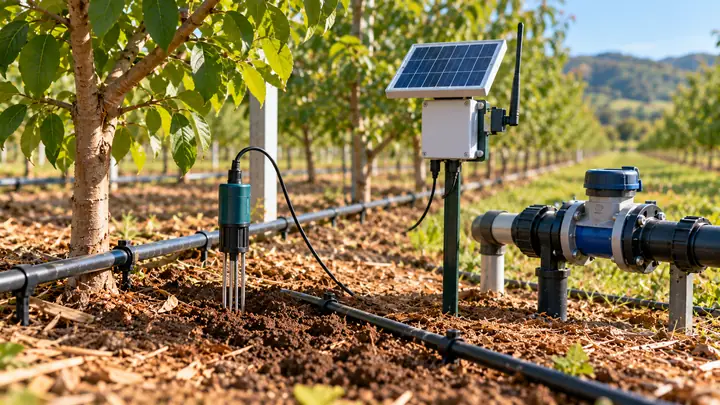
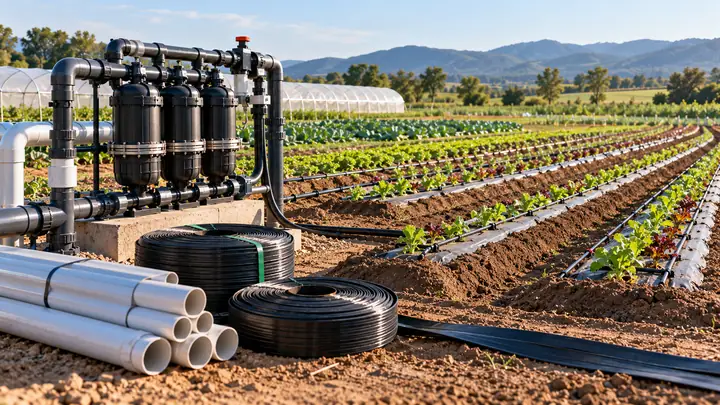
Every irrigation pipeline steps down in size from the source to the plant, and each level has its own preferred material. Thinking in these four levels makes it easier to specify irrigation piping and order the right parts:
- Main line: carries the full system flow from the pump and head unit, typically 50–160 mm (2–6 in), usually buried PVC or HDPE.
- Sub-main: feeds one zone or block from a valve, often 32–90 mm (1–3 in) PE or PVC, or lay-flat hose for drip tape in fields.
- Manifold or header: a short pipe with outlets that distributes one valve's flow to many laterals.
- Laterals and micro tubing: drip tape, drip line or blank poly tubing at 12–20 mm (about 1/2–3/4 in), plus 3–6 mm (1/8–1/4 in) spaghetti tubing to individual pots and stakes.
Our guide on how to design a drip irrigation system walks through hydraulic calculations for each level; this article focuses on choosing and joining the components.
PVC vs PE irrigation pipe: materials and pressure ratings
PVC and PE are the two workhorse materials for irrigation pipe; PVC is rigid and economical in large buried sizes, while PE is flexible, tough and UV-stabilized for surface use. Lay-flat hose and flexible PVC tubing fill specialized roles.
| Material | Common sizes | Typical pressure class | Joining method | Best use |
|---|---|---|---|---|
| PVC Schedule 40 | 1/2–6 in (20–160 mm) | Rating falls as size rises; small sizes well above 10 bar | Solvent weld or threaded | Head units, manifolds, short buried mains |
| PVC Class 160/200 (SDR 26/21) | 1–8 in | About 11–14 bar (160–200 psi) | Solvent weld or gasketed | Buried mains and sub-mains |
| Metric PVC-U | 20–315 mm | PN 6–16 (6–16 bar) | Solvent weld or rubber ring | Mains outside North America |
| PE / HDPE pipe | 16–160 mm (1/2–6 in) | PN 4–10 or 80–125 psi | Compression, insert or butt fusion | Surface sub-mains, flexible mains, greenhouses |
| Poly drip tubing | 12–25 mm (1/2–3/4 in) | Low, about 1–3.5 bar | Barbed, compression or lock fittings | Drip laterals and distribution tubing |
| Micro tubing (spaghetti) | 3–6 mm (1/8–1/4 in) | Low | Barbed micro fittings | Dripper stakes, pots, Dutch buckets |
| Lay-flat hose | 2–6 in (50–150 mm) | Low to medium | Start connectors, couplers | Temporary field sub-mains for drip tape |
Always confirm the working pressure on the manufacturer's datasheet, because ratings depend on wall thickness, size and water temperature. Above-ground PVC must be UV-protected or painted; black PE contains carbon black for UV resistance, which is why most poly irrigation tubing is black. Brown irrigation tubing and brown drip line tubing exist mainly so lines blend into mulch in landscapes; they work the same.
What size irrigation pipe do I need?
Size irrigation pipe so water velocity stays at or below about 1.5 m/s (5 ft/s); faster flow wastes pressure through friction and increases the risk of water hammer. The table gives approximate maximum flows at that velocity. Use friction-loss tables from the pipe manufacturer for final sizing on long runs.
| Pipe | Approx. inside diameter | Approx. flow at 1.5 m/s |
|---|---|---|
| 16 mm PE / 1/2 in drip tubing | 13–15 mm | 0.7–0.9 m³/h (3–4 gpm) |
| 3/4 in PVC Sch 40 | 21 mm | 1.9 m³/h (8 gpm) |
| 1 in PVC Sch 40 / 32 mm PE | 27 mm | 3.1 m³/h (13 gpm) |
| 1-1/2 in PVC Sch 40 / 50 mm PE | 41–43 mm | 7.2 m³/h (32 gpm) |
| 2 inch irrigation pipe (Sch 40) / 63 mm PE | 52–55 mm | 11.6 m³/h (51 gpm) |
| 3 in PVC Sch 40 / 90 mm | 78 mm | 26 m³/h (115 gpm) |
| 4 in PVC Sch 40 / 110 mm | 102 mm | 45 m³/h (198 gpm) |
A 2 inch irrigation pipe is a common main for small farms and greenhouses of roughly 0.5–2 ha (1–5 acres) because it carries about 10–12 m³/h (45–50 gpm) comfortably. Larger blocks usually step up to 3–4 in mains or split into more zones. Our irrigation pumps guide explains how pipe friction feeds into pump sizing.
Drip tubing sizes: 1/2, 5/8, 3/4, 1/4 and 1/8 inch
Drip tubing sizes are named loosely, so always check the actual outside and inside diameter before buying fittings. The main sizes are:
- 1/2 inch irrigation tubing: the standard drip lateral and distribution line. Different makers use outside diameters from about 0.600 to 0.710 in, so 1/2 inch drip tubing fittings must match the exact OD.
- 5/8 inch irrigation tubing: used for drip tape (16 mm) and for slightly longer residential runs.
- 3/4 and 1 inch drip irrigation tubing: used as headers and short sub-mains in small systems.
- 1/4 inch drip irrigation tubing: micro drip tubing, also called spaghetti tubing, that runs from a lateral to a single plant. 1/4 inch tubing with emitters built in at 6 in (15 cm) spacing is sold for pots and small beds.
- 1/8 inch drip tubing: about 3 mm, used with dripper stakes and multi-outlet drippers in greenhouses.
Keep 1/4 inch runs short, usually under about 3–4 m (10–12 ft), because the small bore loses pressure quickly. For commercial pots and buckets, a 16 mm lateral with short micro tubes to each plant is the norm.
Flexible tubing for greenhouse use
Flexible tubing for greenhouse irrigation is usually UV-stabilized PE drip tubing and micro tubing for crop lines, plus clear or braided flexible PVC hose for nutrient return lines and short pump connections. Greenhouse tubing should be opaque where it carries nutrient solution, because light in clear tubing grows algae that clog emitters. Gutter-mounted substrate systems typically use 16–20 mm laterals with dripper stakes, as described in our greenhouse irrigation system guide.
What are the main irrigation pipe fittings?
Irrigation pipe fittings join pipes, change direction, reduce size, take off laterals and close line ends, and each material uses its own fitting family. The common types are:
- Solvent-weld PVC fittings: couplings, elbows, tees, reducers and unions glued with primer and cement. Unions and threaded adapters let you remove valves and filters later.
- PE compression fittings: threaded nuts and O-rings that grip metric PE pipe, reusable and quick to install without tools.
- Insert and barbed fittings: pushed inside poly pipe and secured with clamps on larger sizes; barbed drip pipe connectors for 1/2 inch tubing.
- Lock or twist-lock fittings: a collar screws over the tubing, giving a secure seal on drip tape and drip line.
- Saddles and start connectors: take off a lateral from a PVC or PE sub-main through a drilled hole and rubber grommet.
- Irrigation couplers and joiners: straight couplings, repair joiners and quick couplers or hydrant valves for moving hoses and sprinklers.
- Drip irrigation adapters: thread-to-barb and hose-to-tubing adapters that connect drip tubing to valves, filters and regulators.
- End closures: figure-8 ends, end caps and flush valves.
For 1/4 inch irrigation tubing connectors, barbed couplers, tees and goof plugs are standard. A sprinkler tubing connector usually means a barbed or threaded elbow that connects a pop-up or impact sprinkler to flexible riser tubing.
What is an irrigation manifold?
An irrigation manifold is a header pipe that holds several valves or outlets in one place, splitting one supply into multiple zones or laterals. It keeps valves accessible, simplifies wiring and makes each zone easy to isolate for repair.
Irrigation valve manifold vs drip manifold
Manifolds come in two broad kinds, and growers use both:
- Irrigation valve manifold (sprinkler manifold): a row of solenoid or manual valves on a PVC or PE header, each feeding one zone. A PVC sprinkler manifold is typically built with tees, unions and valves in a box or above ground at the head of the field.
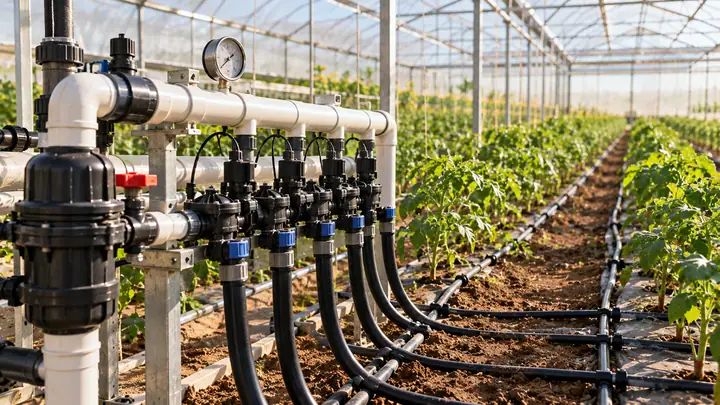
- Drip irrigation manifold (drip manifold): the pipe after a zone valve that feeds many drip laterals, often with a filter and pressure regulator at its inlet. In greenhouses it runs along the end of the bays; in orchards it runs across rows.
- Port manifold: a small multi-port block, often 4–12 outlets, that feeds micro tubing to individual pots, a common watering manifold for nurseries and research benches.
What are the parts of an irrigation valve?
The parts of an irrigation valve are the body, the bonnet (top cover), a rubber diaphragm that opens and closes the flow, a solenoid with a plunger and spring that releases pressure above the diaphragm, a flow control handle, and a manual bleed screw. Most agricultural solenoid valves run on 24 VAC from the controller; DC latching versions suit battery and solar controllers. Our irrigation valves guide compares valve types in detail.
How to build a drip irrigation valve manifold
A drip irrigation valve manifold is easy to build if you lay out parts in flow order and leave room for maintenance. A typical sequence for a commercial zone is:
- Start with a ball valve to isolate the whole manifold from the main.
- Add a union, then the zone solenoid valves on a PVC header, spaced so each valve can be removed.
- After each valve, fit a filter if there is no central filtration, then a pressure regulator matched to the zone flow.
- Install a pressure gauge port after the regulator so you can check working pressure.
- Transition from PVC to PE with a threaded adapter, then run the drip manifold across the laterals with start connectors.
- Add an air and vacuum relief valve at high points, and flush valves or a flush manifold at the far end.
- Pressure-test with the lateral ends open, flush debris, then close the ends.
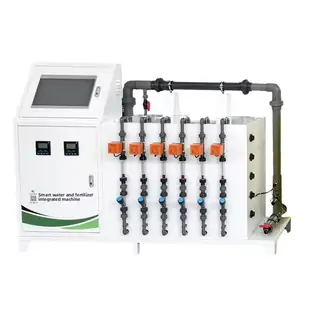
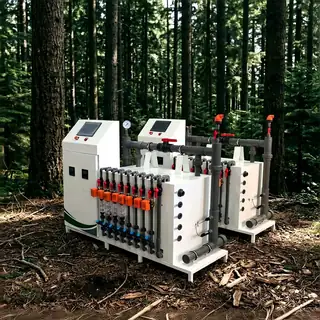
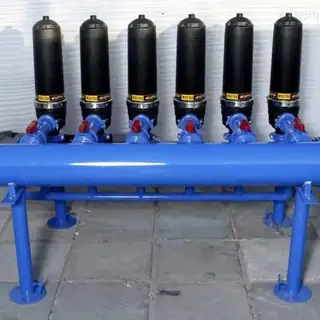
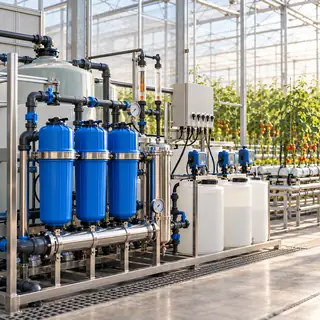
Where several zones share fertigation, a central head unit with an automatic disc filter and a smart fertigation machine replaces per-zone filters and keeps the field manifolds simple.
Irrigation parts and supplies checklist
A clear parts list prevents mismatched fittings, which is the most common irrigation supply mistake. When you request quotes for irrigation parts and supplies, specify:
- Pipe material, outside diameter, wall thickness or SDR, and pressure class for each level.
- Total zone flow in m³/h or gpm and the pressure required at the farthest outlet.
- Drip tubing OD and ID, and whether fittings must suit tape, thin-wall or thick-wall tubing.
- Number of zones, valve size, voltage (24 VAC or DC latching) and whether pressure regulation is built in.
- Burial depth and UV exposure, which determine PVC versus PE.
- Irrigation accessories such as air valves, gauges, flush valves, hole punches and spare couplers.
Choosing irrigation pipe carefully up front, with correct sizes and matching fittings, keeps pressure even and makes later repairs quick.
Getting a quote
Mars Vertical Farm supplies complete irrigation head units, filters, fertigation machines and greenhouse irrigation kits with matching pipe and manifold fittings. See the irrigation and fertigation range, or send us your layout, zone flows and pipe standard (metric or inch) for a factory-direct quotation sized to your project.