Short answer
A hydroponic fodder system sprouts cereal grain, most often barley, on trays for roughly 6–8 days, turning about 1 kg of dry seed into roughly 5–7 kg of fresh green mat. Most of that weight gain is water, so plan fodder as a fresh, highly palatable supplement to hay and concentrates rather than a full replacement, and size the system from daily fresh-feed demand per animal.
What is fodder, and what is a hydroponic fodder system?
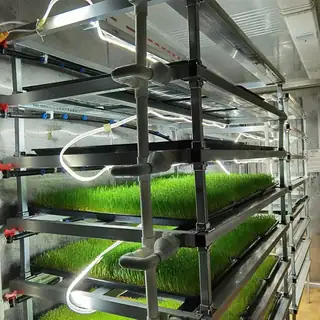
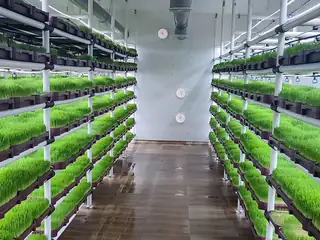
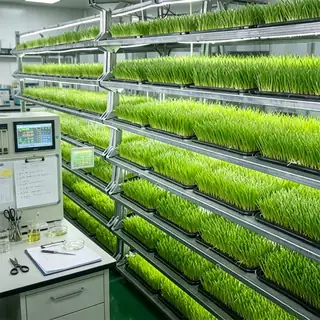
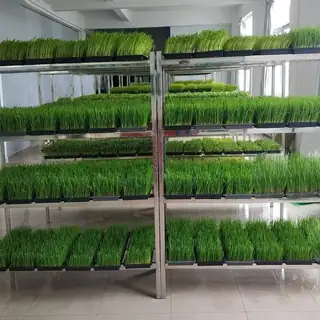
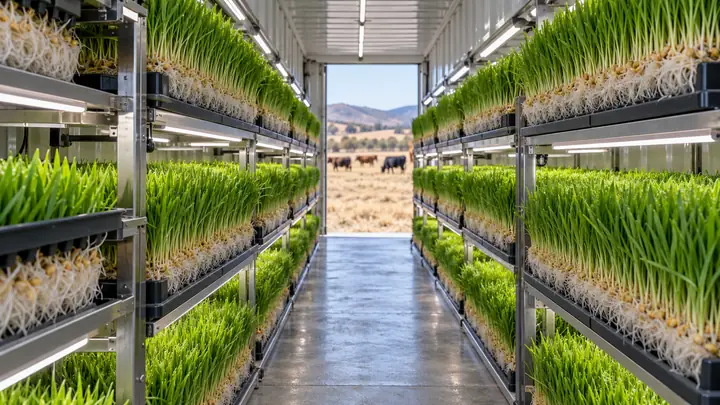
Fodder is feed grown or harvested for livestock, such as hay, silage, green chop, straw and sprouted grain, as opposed to what animals forage for themselves on pasture. A hydroponic fodder system is a climate-controlled set of trays or racks that sprouts cereal seed, usually barley, in water without soil and harvests a fresh green mat every day after roughly six to eight days.
In agriculture, the term fodder crops covers plants grown mainly for animal feed: grasses, legumes such as alfalfa and clover, maize and sorghum for silage, and cereals cut green. Farm fodder in the traditional sense comes from the field. Hydroponic fodder is different: it is not a separate crop but a way of turning stored grain into fresh, palatable green feed in a small indoor footprint, independent of season, rain or soil. That makes it attractive for dairies and feedlots in dry regions, farms with long winters, and smallholders with little land.
This guide explains how a fodder growing system works, how to size one for cattle, sheep, goats, horses or poultry, which seed to buy, how to avoid mold, what equipment is involved, and how to judge the economics honestly.
How does a hydroponic fodder system work?
The process repeats daily on a fixed cycle, so one batch is harvested every day:
- Clean and soak. Seed is washed to remove dust and broken grain, sanitized, then soaked for several hours to start germination.
- Load trays. Seed is spread evenly on trays, typically 1–2 cm deep.
- Irrigate. Short, frequent sprays or flood cycles keep the seed moist without standing water. Most systems use plain water; some add a light nutrient solution.
- Grow. Over 6–8 days the seed forms a dense root mat with green shoots around 15–25 cm tall. Light can be modest because the plant is still living mostly on the seed's own reserves.
- Harvest. The whole mat, roots and shoots, is lifted out and fed. Trays are cleaned and reloaded the same day.
How much fodder do I need per day?
Multiply the number of animals by the planned fresh fodder per head, then divide by the seed-to-fodder ratio to get daily seed use. Rations are a decision for you and your nutritionist; commonly used ranges are:
- Dairy cattle: roughly 10–20 kg fresh fodder per head per day, alongside forage and concentrates.
- Beef cattle: roughly 6–15 kg per head per day depending on stage and target gain.
- Sheep and goats: roughly 1–2 kg per head per day.
- Horses: commonly a few kilograms per day as a supplement, introduced gradually.
Worked example: 100 dairy cows at 15 kg each need 1,500 kg of fresh fodder per day. At a ratio of roughly 6:1, that is about 250 kg of dry seed per day. On a 7-day cycle you need tray space for seven daily batches at once, plus a spare day of capacity for cleaning and uneven growth.
Introduce fodder gradually over one to two weeks so the rumen adapts, and keep enough long fiber in the ration.
How do needs differ for cattle, horses and poultry?
- Cattle fodder: dairy and beef farms are the main users. Cows readily eat the whole mat, roots included. The key is balancing its high moisture with enough dry forage.
- Horse fodder: horses are sensitive to sudden diet changes and to mold, so introduce fodder slowly, feed only fresh, clean mats, and treat it as a supplement to hay. Oats and barley are the usual seeds.
- Hydroponic fodder for poultry: chickens and ducks peck at fodder mats as a fresh green supplement and for enrichment. It does not replace a balanced poultry ration, because birds need concentrated energy and protein.
- Sheep, goats and rabbits: small ruminants and rabbits eat fodder well; daily amounts are small, so a compact rack or portable system is often enough.
Which seed should I use?
| Seed | Strengths | Watch-outs | Typical use |
|---|---|---|---|
| Barley | Fast, even germination; dense root mat; widely used | Needs clean, high-germination seed; sensitive to heat | Default choice for most livestock |
| Wheat | Often easier to source locally | Mat can be less dense; check price per kg | Alternative where barley is expensive |
| Oats | Palatable, good for horses | Hull can hold moisture and mold; germination can be uneven | Horses, mixed rations |
| Maize (corn) | Tolerates warmer rooms | Large seed, slower to form a mat; higher seed cost per tray | Hot climates |
Whatever the grain, buy untreated seed with germination of roughly 90% or better. Seed treated with fungicide is not suitable for feed.
How do I check barley fodder seed before buying in bulk?
Seed is usually the largest running cost, and seed quality decides mold risk, so test every new lot:
- Ask for a germination certificate and confirm the seed is untreated and intended for feed or sprouting.
- Look at it. Reject lots with lots of dust, chaff, broken kernels, weed seed or a musty smell.
- Run a home germination test. Soak 100 seeds, place them on a damp towel at room temperature, and count how many sprout in three to four days.
- Grow a test tray through a full cycle in your own system before committing to a large order.
- Store seed dry, cool and rodent-proof, and use older stock first; germination falls with age and poor storage.
Wheat fodder and mixed seed can work where barley is scarce or expensive, but each grain behaves differently, so adjust soak time, seed rate and irrigation when you switch.
What climate does fodder need, and how do I prevent mold?
Most barley fodder systems are run at roughly 16–22 °C (about 60–72 °F) with relative humidity around 60–80% and constant gentle air movement. Mold is the most common reason fodder projects fail. Prevention:
- Clean seed. Dust, chaff and broken kernels feed mold. Wash until the rinse water runs clear.
- Sanitize. Many operators use a dilute hydrogen peroxide or chlorine soak; follow local feed rules and product labels.
- Do not overwater. Trays must drain fully between cycles. Standing water and anaerobic seed beds smell sour and grow mold.
- Keep air moving. Dead corners in a room or container are where mold starts.
- Control temperature. Above roughly 24 °C, mold and bacterial growth accelerate quickly.
- Clean trays daily. Wash and sanitize every tray after harvest.
Never feed moldy fodder. Some molds produce mycotoxins harmful to livestock.
Should I use a container or an open shed system?
| Factor | Container fodder system | Rack system in a shed or greenhouse |
|---|---|---|
| Climate control | Insulated, with built-in HVAC and controls | Depends on the building; harder in extreme heat or cold |
| Setup | Delivered as one unit; connect power and water | Assembled on site in an existing structure |
| Hygiene | Smooth, washable interior | Depends on floors, walls and drainage |
| Capital cost | Higher per tray | Lower per tray if a suitable building exists |
| Best for | Hot, dusty or cold sites; farms without a spare building | Mild climates; farms with an insulated shed |
Our range includes the fully automatic container fodder system, the PLC-controlled forage system and the portable PP fodder system for use inside a greenhouse or building. For a broader comparison of formats, see container farm vs. indoor plant factory.
How much water and labor does it take?
Water use is low compared with irrigated field forage. Commonly cited figures are roughly 2–3 liters per kg of fresh fodder, depending on whether irrigation water is recirculated. One study cited by University of Vermont Extension found fodder used only around 2–3% of the water needed to grow the same green feed as a field crop. Water should be clean and low in iron and suspended solids, because sprayers clog easily; see our comparison of disc, sand and screen filters.
Labor is a daily routine: soaking, seeding one batch, harvesting one batch and cleaning trays. Automated seeding, irrigation and climate control reduce time and mistakes, but plan for someone on site every day, including weekends.
What equipment is in a fodder growing system?
Whether it is a small fodder machine for a few goats or a container producing tonnes per day, a hydroponic barley fodder system contains the same parts:
| Component | Function | What to check |
|---|---|---|
| Fodder growing trays | Hold seed through the cycle | Food-safe plastic, smooth surface, drainage slope or holes, easy to wash |
| Racks or channels | Stack trays in tiers | Corrosion-resistant frame, slight fall for drainage, access for harvest |
| Irrigation | Spray or flood trays on a timer | Even coverage, clog-resistant nozzles, filtration on the supply |
| Soaking and cleaning tanks | Wash, sanitize and soak seed | Capacity for one day's seed, drain valve |
| Climate control | Hold temperature, humidity and airflow | Cooling and heating sized for your hottest and coldest weeks; fans that reach every tier |
| Lighting | Greens up shoots | Low-intensity LED is enough; light is optional for feed value |
| Controller | Runs irrigation, climate and lights | Simple interface, alarms, power-failure recovery |
| Enclosure | Room, greenhouse or insulated container | Insulation, washable interior, floor drain |
Automated designs such as our hydroponic fodder sprout machine reduce daily handling. Water quality matters too: sprayers clog easily, so filter the supply.
What should I ask before buying a fodder system for sale?
Fodder systems for sale range from simple shelf kits to fully automatic containers. Ask every supplier the same questions so quotes are comparable:
- What is the rated daily output in kg of fresh fodder, and at what seed rate, temperature and cycle length was it measured?
- What is the total electrical load, and what voltage, phase and frequency does the system need?
- How are trays irrigated, drained and cleaned, and what parts wear out first?
- Which climate range is the insulation and HVAC designed for?
- What spare parts ship with the unit, and how is remote technical support handled?
- How many trays are in the system, what is the seed load per tray, and is the cycle length adjustable?
You can compare options across our container and indoor plant factory range, which includes several fodder configurations.
How do I judge whether fodder pays?
The honest test is cost per kg of dry matter and the effect on animal performance, not the fresh weight multiplier. Sprouting does not create dry matter; it loses some through respiration. A University of Vermont Extension fact sheet summarizing research reports dry matter losses ranging from about 7% to 47% across studies, and notes that fodder is more than 80% water, so it should always be compared with other feeds on a dry matter basis. The same fact sheet cites one economic study in which fodder cost several times more per pound of dry matter than good-quality hay. The benefits are fresh, digestible, palatable feed in seasons or places where green forage is unavailable, and a predictable daily supply. Build your comparison from:
- Seed price per kg (usually the largest cost)
- Electricity for climate control and pumps
- Labor hours per day
- Equipment cost spread over its service life
- The price of the hay, silage or green chop it replaces
Fodder tends to pay best where hay and green forage are scarce, expensive or of poor quality, where water for irrigated forage is limited, and where palatability or a steady fresh supply has value for the herd. For a sense of how fodder fits alongside other controlled-environment crops, see our shipping container farm guide. When you are ready, send us your herd size, daily ration target and site climate and we will propose a system size and layout.