Short answer
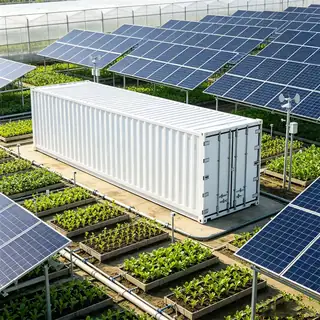
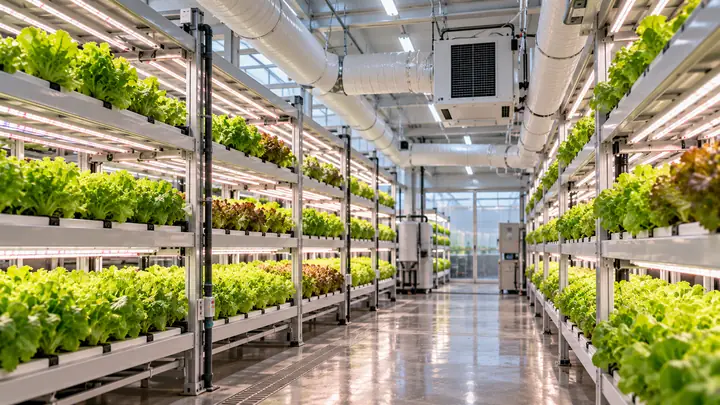
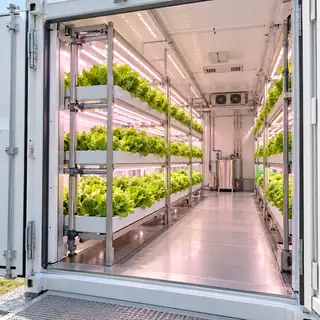
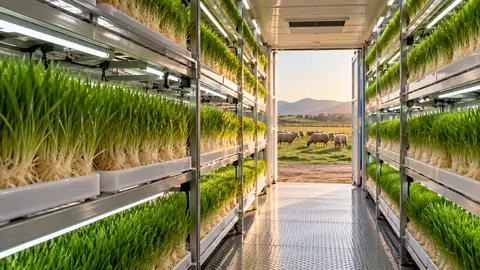
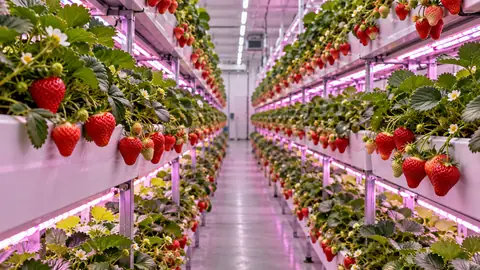
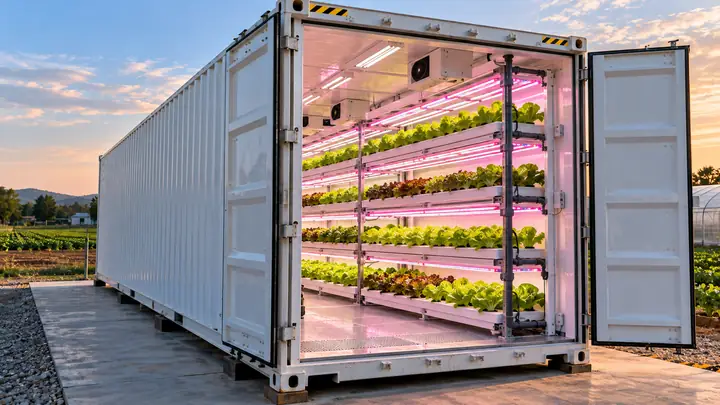
Shipping container modifications for farming turn a steel cargo container into a sealed growing room. A typical conversion uses a 40 ft high cube container with about 28 m² of floor and 2.69 m of internal height, then adds 50–100 mm of closed-cell insulation, a food-safe floor and lining, framed openings, a three-phase electrical supply, water and drainage, HVAC, dehumidification, LED lighting and racks.
What are shipping container modifications for farming?
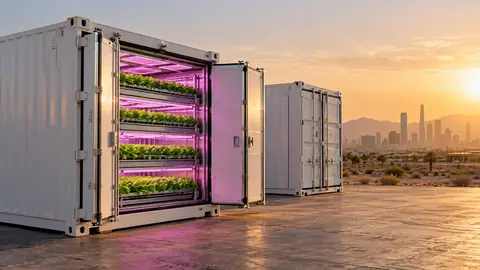
Shipping container modifications for farming are the structural, insulation, electrical, plumbing and climate-control changes that turn a steel cargo box into a sealed, food-safe growing room. A typical conversion adds insulation and a vapor barrier, a hygienic interior lining and floor, framed openings for doors and HVAC, a three-phase or heavy single-phase electrical supply, water and drainage, LED lighting, racks and a climate controller.
The result is often called a container farm, a grow pod or a container plant factory, and repurposed shipping containers of this kind are now used by growers, schools, restaurants and remote communities. This guide focuses on the conversion itself: choosing the right container, each modification step, insulation and lining options, power and water planning, and the trade-off between DIY container conversions and buying a factory-built unit. If you want an overview of how container farms work, which crops they suit and what they cost to run, read our shipping container farm guide first.
Which shipping container should you start with?
Most farm conversions start with a 40 ft high cube container, because the extra height allows more growing tiers and the length gives room for a work area. A 20 ft container suits pilot projects, nurseries and fodder or microgreen units. The table shows typical dimensions; exact values vary slightly by manufacturer.
| Container | External L × W × H | Typical internal L × W × H | Floor area inside | Farm use |
|---|---|---|---|---|
| 20 ft standard dry | 6.06 × 2.44 × 2.59 m (20 × 8 × 8.5 ft) | About 5.90 × 2.35 × 2.39 m | About 13.9 m² (150 ft²) | Pilots, seedlings, fodder, mushrooms |
| 40 ft standard dry | 12.19 × 2.44 × 2.59 m (40 × 8 × 8.5 ft) | About 12.03 × 2.35 × 2.39 m | About 28.3 m² (305 ft²) | Leafy greens with 3–4 tiers |
| 40 ft high cube dry | 12.19 × 2.44 × 2.90 m (40 × 8 × 9.5 ft) | About 12.03 × 2.35 × 2.69 m | About 28.3 m² (305 ft²) | Most vertical container farms, 4–6 tiers |
| 40 ft high cube reefer | 12.19 × 2.44 × 2.90 m | About 11.6 × 2.29 × 2.5 m | About 26.5 m² (285 ft²) | Already insulated; less work but less internal space |
Should you buy a new, used or refrigerated container?
- New or "one-trip" containers have straight walls, sound floors and little corrosion, which makes insulation and sealing easier. They cost more but save labor.
- Used cargo-worthy or wind-and-watertight containers are cheaper, but check for dents, rust holes, delaminated floors and previous cargo contamination before buying.
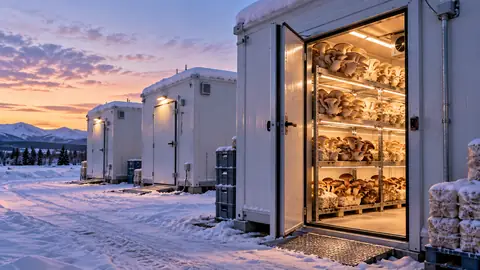
- Refurbished refrigerated (reefer) containers, used for cold-chain food transport, already have insulated walls and a food-grade interior. The original refrigeration unit is rarely suitable for a grow room, but the insulated box can shorten the conversion.
Whatever you choose, inspect the container in person or ask for photos of the floor, roof, corner castings and door seals. A used container is a good base only when the steel shell is sound.
How do you convert a shipping container into a farm?
Converting a shipping container into a farm follows a fixed order: structure first, then envelope, then services, then growing equipment. Changing the order usually means cutting into finished insulation later.
- Plan the layout and loads. Decide crop, growing system, number of tiers, work area, door positions and the location of HVAC, electrical panel and water tank before cutting steel.
- Inspect and repair the shell. Treat rust, weld holes, check door seals and confirm the roof does not pond water.
- Cut and frame openings. Add a personnel door, HVAC and cable penetrations and any service hatches. Every opening in the corrugated wall must be reinforced with a steel frame because the walls carry structural load.
- Deal with the floor. Standard container floors are hardwood plywood that is often treated with insecticides to meet quarantine rules. For food production, replace it or cover it with a sealed, food-safe floor such as a welded vinyl sheet, coated composite panels or a waterproof epoxy over a new subfloor.
- Insulate and seal. Install continuous insulation with a vapor barrier on walls, ceiling and, ideally, floor, avoiding thermal bridges at steel ribs and openings.
- Line the interior. Fit washable, moisture-proof panels, usually white for light reflection.
- Install electrical services. Fit a distribution board, protected circuits for lighting, pumps and HVAC, emergency lighting and ground fault or residual current protection suited to wet areas.
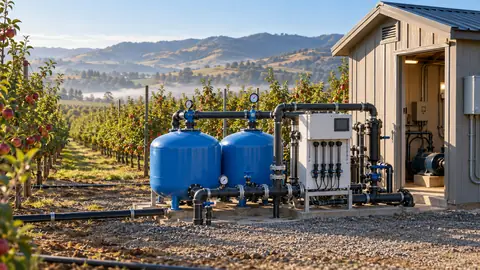
- Install water and drainage. Add a water tank or mains connection, filtration or reverse osmosis if needed, a nutrient reservoir, and a floor drain or sump for spills and condensate.
- Install climate control. Fit air conditioning, dehumidification and air circulation sized to the lighting load and crop transpiration.
- Install growing systems and controls. Add racks, hydroponic channels or trays, LED fixtures, dosing equipment and a controller with sensors and alarms, then commission and test before planting.
What insulation and interior finish work best?
The best insulation for a container farm is closed-cell and moisture-resistant, because a grow room runs at high humidity year-round and any condensation inside the wall will rust the steel and grow mold. Typical thicknesses are about 50–100 mm (2–4 in), more in hot or very cold climates.
- Closed-cell spray polyurethane foam fills the corrugations, bonds to steel and acts as its own air and vapor barrier. It needs professional application.
- PIR or PU sandwich panels combine insulation with a hygienic steel or plastic skin, so insulation and lining are installed in one step. This is the most common approach in factory-built container farms.
- Rigid foam boards (XPS or PIR) cut to fit between studs work for DIY projects, but every joint must be taped and sealed.
- Mineral wool and fiberglass absorb moisture and are generally a poor choice for a humid grow room.
For the inner surface, choose smooth, washable materials such as food-grade PVC panels, FRP (fiberglass-reinforced plastic) sheets or color-coated steel. White or reflective finishes return stray light to the crop, and coved corners at the floor make cleaning easier.
How much power and water does a container farm need?
Power is the largest service requirement in a container farm, driven mainly by LED lighting and the HVAC that removes its heat. Calculate it from the lit growing area and the light intensity your crop needs, then add pumps, fans, dehumidifiers and controls.
- Lighting: leafy greens at moderate intensity often need on the order of 80–130 W of efficient LED per square meter of growing surface. Multiply by the number of tiers and the area per tier. Our grow lights for indoor farming guide explains how to calculate it.
- Cooling and dehumidification: almost all electrical input becomes heat inside the box, and nearly all irrigation water becomes vapor; see indoor farm HVAC and dehumidification.
- Supply: a 40 ft farm container often needs a three-phase supply; confirm voltage and frequency, for example 380–415 V at 50 Hz or 208–480 V at 60 Hz, before equipment is ordered.
- Water: recirculating hydroponics uses little water, mostly what the crop transpires, and condensate can be recovered. Plan a clean water source, a drain and a small treatment step if water quality is poor.
Which shipping container accessories and parts does a farm need?
A farm container needs a different set of shipping container accessories than a storage box or office, chosen for hygiene, climate control and security. These are the parts most farm conversions include.
- Insulated personnel door with a tight seal, so staff do not open the cargo doors daily; a small vestibule or air curtain helps keep pests and outside air out.
- HVAC wall sleeves and cable glands that pass refrigerant lines, condensate pipes and cables through the wall without leaks or thermal bridges.
- Foundation blocks or leveling jacks, because racks, NFT channels and drains rely on a level floor.
- Exterior shade roof or reflective coating in hot climates to cut solar heat gain and cooling load.
- Lockbox and security lighting to protect the doors and equipment on remote sites.
- Interior racks, hydroponic channels and trays sized to the internal width of about 2.35 m, usually with one central or side aisle.
When you compare modified containers, ask exactly which of these parts are included, along with insulation thickness, electrical rating and the climate equipment model numbers.
DIY conversion vs buying a factory-built container farm
DIY shipping container conversions save cash on paper but transfer design risk to you, while a factory-built container farm costs more upfront but arrives tested as a complete system. The right choice depends on your skills, timeline and how many units you plan to run.
| Factor | DIY or local fabrication | Factory-built container farm |
|---|---|---|
| Upfront cost | Lower if you supply your own labor | Higher, but includes design, equipment and testing |
| Design risk | On you: insulation, HVAC sizing, electrics, layout | On the manufacturer, based on previous builds |
| Timeline | Often months of part-time work | Production time plus shipping |
| Customization | Unlimited, but each change needs design | Standard layouts with custom options |
| Documentation and warranty | Limited | Drawings, manuals, warranty, spare parts |
| Scalability | Each unit is a new project | Identical units, easier to replicate |
A middle route is to buy a shipping container modification kit, also called a conversion kit, that includes pre-cut racks, lighting, irrigation and controls, and have a local fabricator handle the shell. Factory-built units such as our turnkey container farm solution ship as standard containers, so they move through ports like any other cargo; our guide on importing farm equipment from China explains the logistics.
How is a container farm conversion different from a container home?
A container farm conversion prioritizes airtightness, moisture control, food-safe surfaces and high electrical loads, while a container home prioritizes windows, comfort, kitchens, bathrooms and residential building codes. Container homes need far more openings and finish work; farms are usually sealed boxes with one or two doors.
- Openings: homes cut large window and door openings; farms avoid windows to keep light, heat and pests under control.
- Humidity: a grow room runs at 60–80% RH constantly, so vapor control is far more demanding than in a house.
- Power density: a farm container can draw many times the electricity of a small home of similar size.
- Permits: both may need local zoning, electrical and building approvals. Check with your local authority before placing any modified container.
Many shipping container modification companies build homes, offices, shops or other retail conversions; fewer understand horticultural lighting, hydroponics and climate control. Ask any converter for previous farm projects and climate data, not only photos.
Next steps
Good shipping container modifications turn a cargo box into a reliable farm only when the insulation, power, climate and growing systems are designed together. Mars Vertical Farm manufactures container plant factories for leafy greens, strawberries, hydroponic fodder and mushrooms, in 20 ft and 40 ft formats with custom layouts, and also supplies racks, lighting and controls for local conversions. Browse the plant factories range, compare formats in container farm vs. indoor plant factory, or send us your crop, site and power details for a factory-direct proposal.