



Short answer
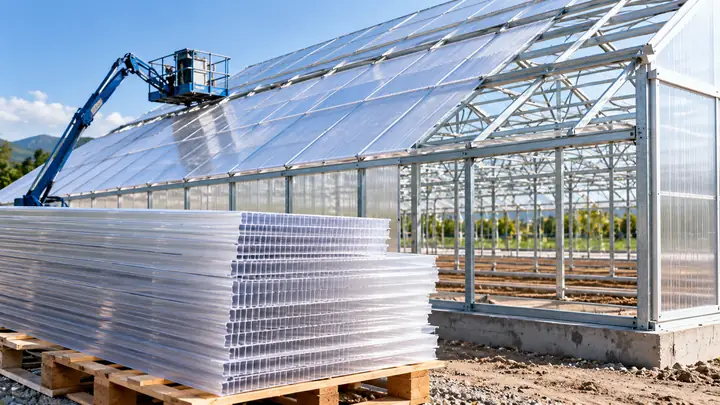
Polycarbonate sheets are lightweight, highly impact-resistant plastic glazing panels sold as solid, corrugated and multiwall (twin-wall or triple-wall) sheet. Clear solid sheet transmits about 85–90% of light, while 6–10 mm twin-wall transmits about 78–82% and insulates far better than single glass. UV-protected grades typically last 10–15 years on greenhouse roofs, sunrooms and patio covers.
What are polycarbonate sheets?
Polycarbonate sheets are rigid, lightweight plastic glazing panels made from polycarbonate resin, sold as solid flat sheet, corrugated (ribbed) sheet and hollow multiwall sheet such as twin-wall. Polycarbonate sheets are used for greenhouse glazing, roof panels, skylights, patio covers and wall panels because they combine high impact strength, good light transmission and, in multiwall form, useful insulation.
This guide is about the sheet material itself: the main formats, thickness and size options, light and insulation values, how to install panels so they last, and how to judge price and quality. If you are still choosing between coverings, our comparison of polycarbonate vs. glass vs. film greenhouse panels covers that decision.
What is polycarbonate plastic, and why use it for glazing?
Polycarbonate plastic is a tough, transparent thermoplastic with much higher impact strength than glass or acrylic, which is why it is the standard material for hail-prone greenhouse roofs and safety glazing. The properties that matter for growers and builders are:
- Impact resistance: polycarbonate is commonly described as roughly 200 times stronger than glass of the same thickness and many times tougher than acrylic. It resists hail, falling branches and handling damage.
- Weight: solid polycarbonate is about half the weight of glass, and twin-wall sheet is far lighter again, so frames can be lighter and spans longer.
- Light transmission: clear solid sheet transmits about 85–90% of visible light; clear twin-wall typically about 78–82%, falling as wall count rises.
- UV behavior: the resin itself yellows and turns brittle in sunlight, so outdoor sheet is co-extruded with a UV-protective layer on the exposed face. This layer is what determines service life.
- Temperature range and fire behavior: sheet typically works from about -40 °C to +120 °C (-40 °F to 248 °F), and many grades carry building-code fire classifications; check the manufacturer datasheet for the rating your project needs.
- Thermal expansion: polycarbonate expands roughly 0.065 mm per meter per °C, about 3 mm per meter over a 50 °C swing, so fixings must allow movement.
What types of polycarbonate panels are there?
Polycarbonate panels fall into three structural families, and each suits a different job. The table compares them.
| Type | Common thickness | Light transmission (clear) | Insulation | Typical uses |
|---|---|---|---|---|
| Twin-wall (double wall) | 4, 6, 8, 10 mm | About 78–82% | Good | Hobby and commercial greenhouse roofs and walls, sunrooms |
| Triple-wall and multiwall | 8–25 mm (often 16 mm) | About 60–75% | Very good | Cold-climate greenhouses, end walls, insulated roofing |
| Corrugated or ribbed | About 0.8–1.5 mm | About 85–90% | Low (single layer) | Plastic roofing sheets, sheds, carports, low-cost greenhouse roofs |
| Solid flat | 2–12 mm | About 85–90% | Low | Clear windows, wall panels, machine guards, glass replacement |
Twin-wall polycarbonate
Twin wall polycarbonate panels, also called double wall polycarbonate panels, have two skins joined by internal ribs, creating air channels (flutes) that trap heat. They are the most common polycarbonate panels for greenhouse use because they balance light, insulation, weight and price. Twin-wall in 6–8 mm suits small polycarbonate greenhouse kits; 8–10 mm is common on larger and commercial structures.
Multiwall polycarbonate
Multiwall polycarbonate sheet has three or more skins and is used where winter heat loss matters more than maximum light. A 16 mm triple-wall sheet is a popular end-wall choice on four-season houses and sunrooms.
Corrugated and ribbed polycarbonate roof panels
Ribbed polycarbonate panels, often sold simply as plastic roof panels or polycarbonate roofing sheets, match the profiles of metal roofing, so they can be mixed into a steel roof as skylights or used across a whole roof. They are cheap and bright but single-layer, so they add almost no insulation.
Solid clear polycarbonate sheet
Clear polycarbonate sheet in solid form looks like glass and is used where visibility matters: clear plastic wall panels, polycarbonate window panels, doors and guards.
What polycarbonate sheet thickness and sizes should you choose?
Choose polycarbonate sheet thickness by span between supports, snow and wind load, and how much insulation you need. As a rule of thumb, thicker multiwall spans further and insulates better but transmits less light and costs more per square meter.
| Thickness and structure | Approx. weight | Approx. U-value (W/m²K) | Typical role |
|---|---|---|---|
| 4 mm twin-wall | About 0.8 kg/m² | About 3.9 | Small hobby houses, cold frames |
| 6 mm twin-wall | About 1.3 kg/m² | About 3.6 | Hobby greenhouses, side walls |
| 8 mm twin-wall | About 1.5 kg/m² | About 3.3 | Greenhouse roofs, patio covers |
| 10 mm twin-wall | About 1.7 kg/m² | About 3.0 | Commercial roofs, longer spans |
| 16 mm triple-wall | About 2.5–2.8 kg/m² | About 2.3–2.5 | Insulated roofs and end walls |
| Single glass, 4 mm (for reference) | About 10 kg/m² | About 5.8 | Glass greenhouses |
Figures vary by manufacturer and rib design, so use them for comparison and confirm on the datasheet.
Sheet sizes. In North America, 4 × 8 ft (1.22 × 2.44 m) sheets are the standard retail size and are what most DIY greenhouse plans assume. Factory sizes for projects are usually 2.1 m (about 6.9 ft) or 1.22 m wide and cut to length, commonly up to 5.8 m or 11.8 m so they fit a shipping container. Ordering roof panels cut to the exact rafter length avoids cross joints, which are the most common source of leaks. Solid sheet of about 12 mm (1/2 in) is a heavy glazing product used for security and machine guarding rather than greenhouses.
Acrylic or polycarbonate: is plexiglass polycarbonate?
No. Plexiglass is a trade name for acrylic (PMMA), a different plastic from polycarbonate. In the polycarbonate vs plexiglass choice, acrylic is clearer, stiffer and more scratch resistant, while polycarbonate is far tougher and more flexible.
- Choose polycarbonate for greenhouse roofs, hail areas, curved glazing and anywhere breakage is a risk. It can be cold-bent into arches within the manufacturer's minimum radius.
- Choose acrylic for display windows and signage where optical clarity matters more than impact strength.
Clear plexiglass roof panels are sold, but acrylic can crack under hail or foot traffic, so most greenhouse and patio roofing uses polycarbonate. For polycarbonate vs glass, the main trade-off is impact strength and insulation against the highest light transmission and long-term clarity of glass.
How are polycarbonate panels used for greenhouses?
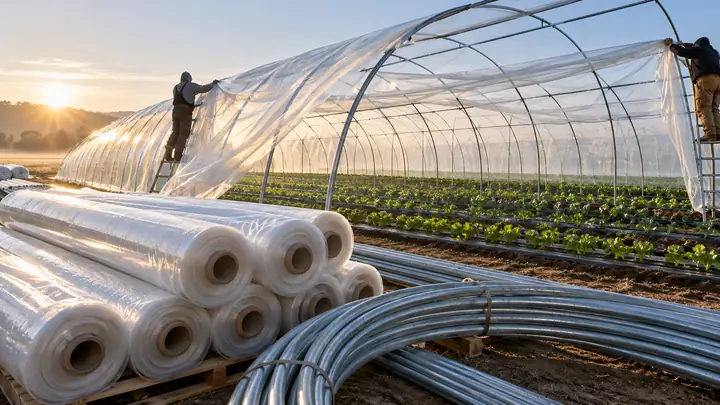
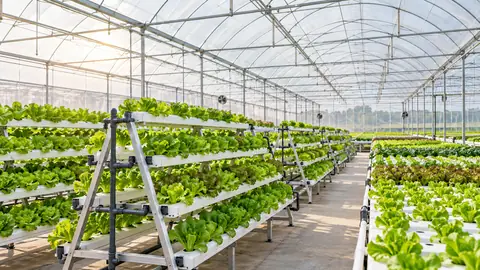
Polycarbonate sheets for greenhouse roofs and walls are chosen for insulation, hail resistance and diffused light that reduces leaf scorch. Greenhouse buyers should specify:
- Clear or diffused: clear polycarbonate roof panels give the most light, while diffused (light-scattering) sheet spreads light deeper into the canopy and reduces hot spots, useful for tomatoes, cucumbers and potted plants.
- UV layer and warranty: greenhouse grades typically carry around 10 years of warranty against yellowing and loss of light transmission, with service lives of 10–15 years or more.
- Anti-condensate coating: an inside coating makes condensation sheet off instead of dripping on crops.
- IR or heat-reflective grades for hot climates.
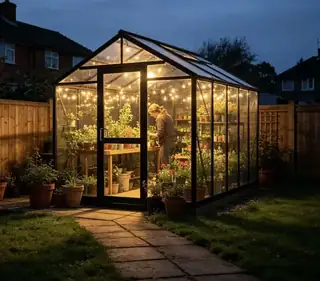
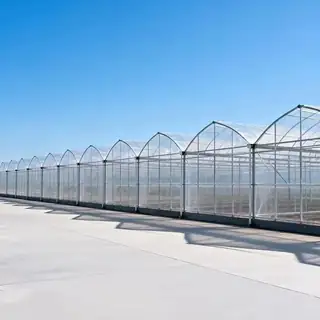
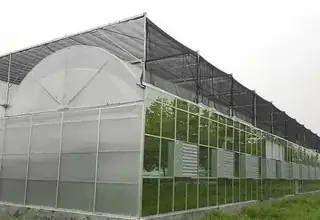
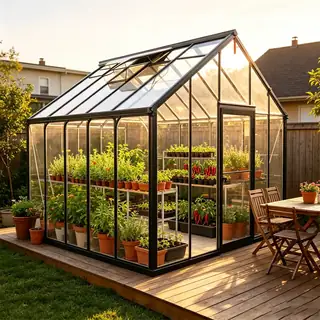
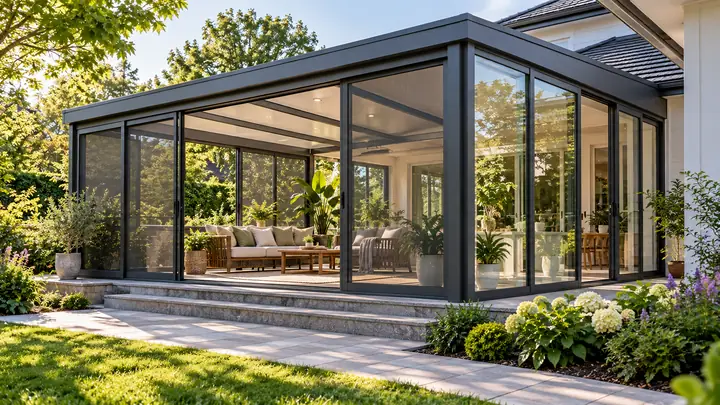
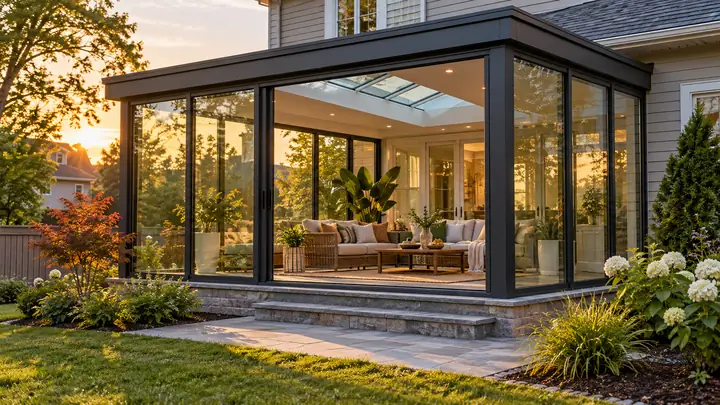
Twin wall polycarbonate panels for greenhouses work for everything from a small polycarbonate greenhouse in a backyard to a large polycarbonate greenhouse for year-round vegetables. For commercial projects, gear-driven roof vents and fertigation can be integrated with the structure, as in our agricultural polycarbonate gear greenhouse and the multi-span polycarbonate greenhouse. Polycarbonate also suits attached structures; see three-season vs. four-season sunrooms.
How do you install polycarbonate roof panels?
Most failures of a polycarbonate roof come from installation errors, not the sheet itself. Follow these steps for multiwall roofing and adapt them to the manufacturer's guide:
- Check the slope. Use a roof pitch of at least about 5° (roughly 1:12) so water and dirt run off.
- Orient the UV side out. The protected face is marked on the film; installing it inward voids most warranties.
- Run flutes downhill. Channels must run with the slope so condensation can drain.
- Seal the ends. Close the top edge with solid aluminum tape and the bottom edge with vented anti-dust tape, then fit U-profiles.
- Use proper profiles. Join sheets with aluminum or polycarbonate H-profiles or glazing bars with EPDM gaskets.
- Allow for expansion. Pre-drill oversized holes, use screws with sealing washers, and do not overtighten.
- Remove the film last. Peel the protective film right after fixing; left in the sun it bakes onto the sheet.
Polycarbonate roofing systems with snap-cap profiles speed up installation on commercial roofs. If you are planning a DIY polycarbonate greenhouse, our guide on how to build a greenhouse covers framing and foundations, and greenhouse frames compared helps you choose the structure.
How much do polycarbonate sheets cost?
Polycarbonate sheet price depends mainly on resin weight per square meter, UV layer quality, structure (twin-wall, multiwall or solid) and order quantity. Thicker and heavier sheet costs more, and solid sheet costs several times more than twin-wall of similar thickness. Typical drivers are:
- Weight per square meter: two 8 mm sheets with different weights are not equivalent; lighter sheet is cheaper but weaker.
- Virgin vs. recycled resin: recycled content lowers price but can reduce clarity and life.
- UV co-extrusion thickness and warranty length.
- Coatings such as anti-drip, diffusion and IR.
- Logistics: retail 4x8 polycarbonate sheets carry high handling margins per square foot; full container loads cut-to-size are much cheaper per square meter.
When comparing polycarbonate sheets for sale, compare weight per square meter, light transmission, UV layer, warranty and cut sizes, not only the price per sheet. Where to buy polycarbonate sheets depends on volume: home centers suit a few panels, while greenhouse projects are better served by a manufacturer that cuts to size and supplies matching profiles. Our greenhouse cost and sizes guide puts glazing into the full project budget.
Getting a quote
Polycarbonate sheets are the most versatile rigid glazing for greenhouses, sunrooms and roofs when you match structure, thickness and UV protection to the job. Mars Vertical Farm supplies twin-wall and multiwall polycarbonate greenhouses and sunrooms factory-direct, with panels cut to your frame. See our greenhouses and sunrooms, then send us your dimensions, climate and preferred thickness for a custom-sized quotation.