Short answer
A fertilizer injector adds concentrated fertilizer solution into irrigation water at a controlled rate. Venturi injectors are cheap but pressure-sensitive; water-powered proportional injectors hold a fixed ratio without electricity; electric dosing pumps with EC and pH sensors give the most accurate, automated fertigation. Install any injector after a backflow preventer and filter, and follow it with a safety screen.
What is fertigation, and what does a fertilizer injector do?
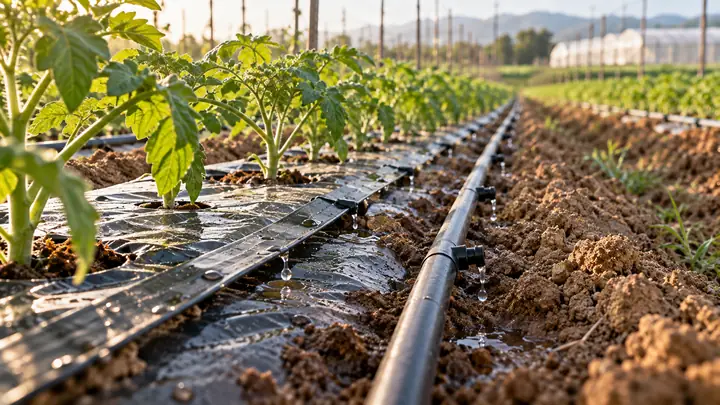
Fertigation is the application of dissolved fertilizer through the irrigation system, so that water and nutrients reach the root zone together in small, frequent doses. A fertilizer injector is the device that adds concentrated fertilizer solution into the irrigation line at a controlled rate, turning plain water into a nutrient solution on its way to the emitters.
The fertigation definition is simple, but the equipment ranges from a small inline fertilizer injector on a garden drip line to multi-channel, computer-controlled fertigation systems that dose several stock solutions and acid while holding EC and pH within tight limits. This guide explains how each type of injector works, where it fits, and how to install, calibrate and maintain it. If you already know the type you want and need to calculate injection rates and dosing channels, go straight to how to size a fertigation system.
Why use fertigation instead of granular fertilizer?
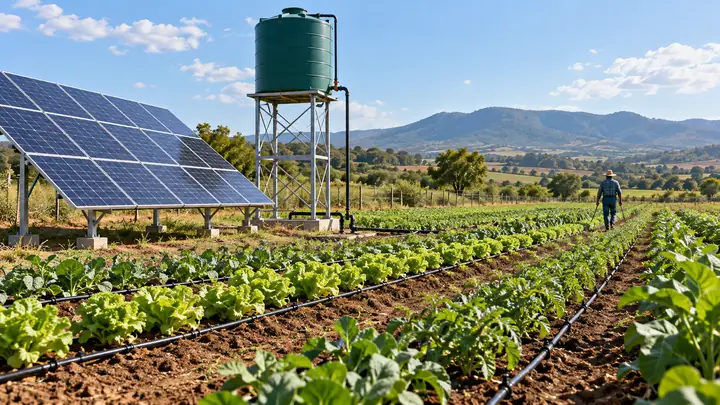
Precision fertigation puts nutrients where the active roots are, at the time the crop needs them. In drip-irrigated crops, this typically brings several practical benefits:
- Better nutrient use efficiency. Small, frequent doses reduce leaching compared with a few large granular applications, especially on sandy soils and in substrates.
- Control by growth stage. The recipe can shift from vegetative to fruiting feeds within a day, for example raising potassium for tomatoes or strawberries once fruit sets.
- Less labor and soil compaction. No spreading passes with machinery.
- Essential for soilless culture. In hydroponics and substrate growing, the irrigation fertilizer system is the plant's only nutrient source, so accurate dosing is not optional.
The trade-off is that a dosing mistake reaches every plant in the zone at once. A good fertigation system therefore includes measurement, alarms and backflow protection, not just an injector.
What types of fertilizer injector are there?
There are four main families of irrigation fertilizer injector. Each makes a different compromise between cost, accuracy, power needs and automation.
Venturi injectors
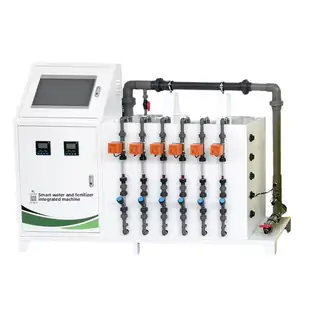
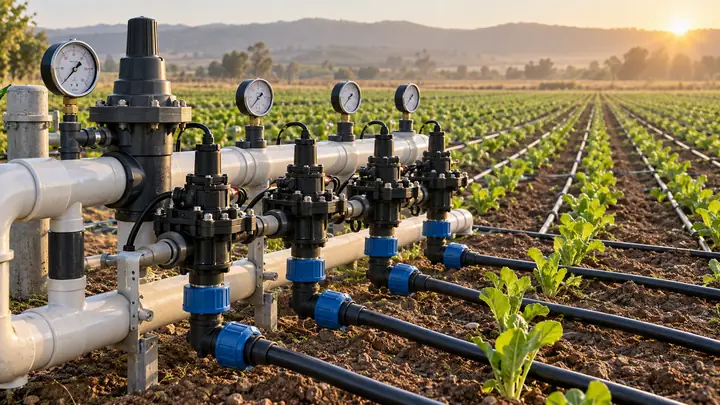
A venturi has a narrowed throat that creates suction as water passes through it, drawing fertilizer solution from a tank. Venturis have no moving parts and are inexpensive, which makes them common in drip irrigation fertilizer injector setups and as the injection element in many automatic fertigation machines. Their weakness is that suction, and therefore dose, changes with line pressure and flow, and they cause a noticeable pressure loss. In automatic units, each venturi channel is paired with a valve and controlled from EC and pH readings to correct for this.
Water-powered proportional injectors
A proportional injector uses the flow of irrigation water to drive a piston or diaphragm that injects a fixed ratio of concentrate, for example 1:100. Because the dose follows the water flow, the ratio stays roughly constant as flow changes, and no electricity is needed. They are a good choice as a fertilizer injector for an irrigation system on small farms, nurseries and greenhouses with one recipe. Limits are a fixed ratio range per model, a maximum flow per unit, and wear on seals.
Electric dosing pumps
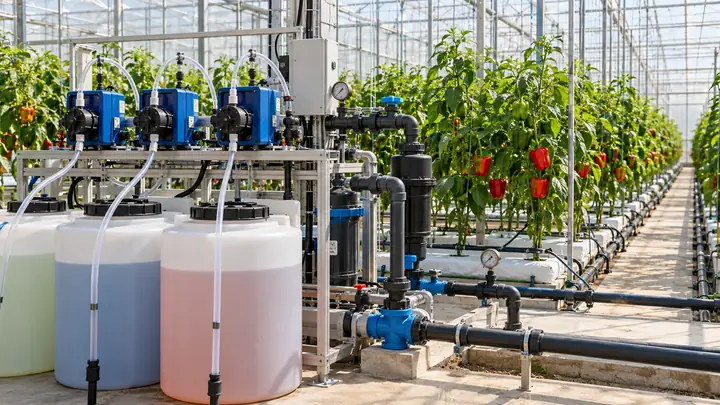
Diaphragm or piston metering pumps inject stock solution under the control of a timer or controller. Combined with sensors, they form an automated dosing system: the controller reads EC and pH downstream and adjusts each pump. A pH controller with dosing pump is the simplest version, used on its own for pH dosing of alkaline water. Multi-channel units used in commercial greenhouses and plant factories are often called nutrient dosing systems or chemical dosing systems.
Batch tanks and bypass tanks
The oldest method is to mix fertilizer in a fertigation tank and pump the solution out, or to divert part of the flow through a pressurized tank containing fertilizer. Batch tanks give stable EC and are common in recirculating hydroponics. Simple bypass tanks are cheap, but their concentration falls continuously as the fertilizer dissolves, so they are only suitable where dose accuracy is not critical.
How do fertilizer injector types compare?
| Type | Power needed | Dose accuracy | Automation | Typical use |
|---|---|---|---|---|
| Bypass tank | None | Low; concentration falls over time | None | Occasional feeding, orchards with simple programs |
| Venturi (manual) | None; uses pressure difference | Moderate; varies with pressure | Low | Small drip systems, field blocks |
| Venturi with valves and EC/pH control | Small electrical supply for controller and booster | Good | High | Greenhouses, large drip systems |
| Water-powered proportional | None | Good within rated flow | Low to moderate | Nurseries, small greenhouses, single recipe |
| Electric dosing pump with controller | Mains or reliable off-grid power | High | High | Hydroponics, plant factories, commercial fertigation systems |
| Batch mixing tank | Pump power | High once mixed | Moderate | Recirculating systems, small hydroponic farms |
Which fertigation system fits your farm?
The best fertilizer injector for drip irrigation depends mainly on scale, the number of recipes and how much the crop is affected by a dosing error.
- Residential fertigation systems and hobby drip lines: a small venturi or proportional inline fertilizer injector on the main line, after the backflow preventer and filter, is usually enough.
- Small farms and nurseries with one recipe: one or two water-powered proportional injectors, or a manual venturi with a flow meter.
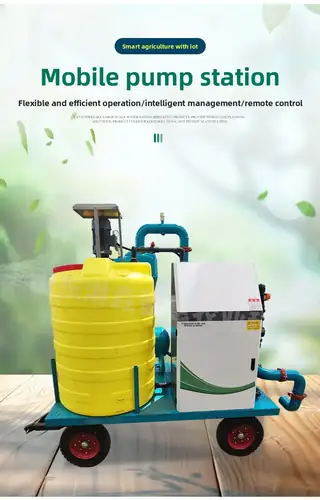
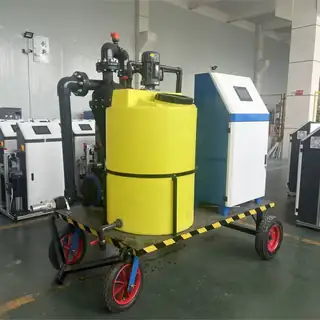
- Open fields and orchards with scattered blocks: a mobile unit that moves between pump points, such as a towed mobile water-fertilizer unit or a mobile automatic fertilizer applicator.
- Greenhouses, substrate and hydroponic crops: a multi-channel automatic unit with A and B fertilizer channels, an acid channel, EC and pH sensors and zone scheduling, such as our smart fertigation machine with dosing pump.
For target EC and pH values by crop, see our hydroponic nutrients, EC and pH guide.
How should a fertilizer injector be installed in a drip system?
Correct placement protects the water source, the injector and the emitters. A typical sequence from the water source to the field is:
- Pump or water supply, with a pressure gauge.
- Backflow prevention. A check valve, or a backflow preventer of the type required by local regulations, so that fertilizer solution can never siphon back into a well, municipal supply or surface water. Many jurisdictions require specific devices for chemigation; check local rules.
- Main filter sized for the water source. Our irrigation filters guide covers filter stations.
- Fertilizer injector or fertigation unit, with a flow meter so dose can be checked against water volume.
- Mixing point, such as a static mixer or mixing tank, followed by EC and pH sensors on automatic systems.
- Safety screen filter after injection to catch undissolved fertilizer or precipitates.
- Zone valves and pressure regulation to the drip lines. See the irrigation valves guide.
Interlock the injector with the irrigation pump, so that injection stops automatically if the pump stops or flow falls. This prevents concentrated fertilizer from filling the pipes or flowing back to the stock tank.
Which fertilizers can be used for fertigation?
Only fully water-soluble fertigation fertilizer grades should be used. Common choices include calcium nitrate, potassium nitrate, monopotassium phosphate, magnesium sulfate, potassium sulfate, urea and ammonium nitrate where permitted, and chelated micronutrients. Liquid fertilizer concentrates are easier to handle with a liquid fertilizer injector because nothing needs dissolving on site.
Keep calcium-based fertilizers apart from sulfates and phosphates in concentrated form. Mixing them in one stock tank forms insoluble precipitates that clog injectors and drip line filters. That is why commercial units use separate A and B tanks, explained in detail in the sizing guide linked above. Always do a jar test when trying a new combination: mix the stock solutions at the injected ratio in clear water and look for cloudiness.
How do you calibrate a fertilizer injector?
Even good injectors drift as seals wear and pressure changes. Calibrate when installing, when changing fertilizer, and on a regular schedule. Two practical methods are widely used:
- Volume method: measure how much concentrate the injector draws from a graduated container while a known volume of water passes through, then calculate the actual ratio.
- EC method: measure the EC of the water with injection off, then the EC with injection on. The difference should match the expected EC rise for that fertilizer and concentration.
On automatic systems, check the inline EC and pH sensors against a calibrated handheld meter and recalibrate them on a fixed routine. Log every calibration so drift can be spotted early.
What maintenance does a fertigation system need?
- Daily: check stock tank levels, suction strainers and alarm status; confirm EC and pH readings are in range.
- Weekly: clean suction filters, inspect tubing and fittings for leaks or crystallization, and flush the injector with clean water at the end of each fertigation cycle.
- Monthly: inspect seals, O-rings and diaphragms; run a calibration check.
- Seasonally: replace wear parts according to the supplier's schedule, clean stock tanks fully, and flush drip lines.
Handle acids and concentrated fertilizers with appropriate protective equipment, store them separately, and label every tank. Acid dosing lines should use chemically compatible materials.
What should you ask before buying a fertilizer injector system?
Before requesting quotations for drip system fertilizer injector equipment or full commercial fertigation systems, prepare:
- Peak flow of the largest zone and the operating pressure
- Number of zones and recipes, and whether crops differ between zones
- A water analysis including EC, pH and alkalinity
- Power availability on site
- The fertilizers you plan to use, liquid or solid
- Required control: manual, timer, or full EC/pH automation with remote monitoring
Mars Vertical Farm manufactures fertigation and water-treatment equipment in Shanghai with 20+ years of production experience, ISO 9001 quality management and CE-marked products. Browse the irrigation, fertigation and water treatment range, or send us your zone flow and water analysis for a fertigation proposal.